Planning a China trip with kids is exciting—until you open the map and realize just how big China really is.
And then comes the hotel question.
Should you stay near the main sights? Close to a metro station? In the middle of the city? Would a quieter neighborhood be easier with children? And will that beautiful-looking hotel actually work when you have two tired kids, a stroller, luggage, and a full day of sightseeing behind you?
I learned pretty quickly that where you stay in China can make a much bigger difference than I expected.
We’ve travelled through Beijing, Tianjin, Shanghai, Hangzhou, Chongqing, Chengdu, and Zhangjiajie with our family, and one thing became very clear: we didn’t need the same kind of hotel in every city.
In Chongqing, we had only about 24 hours, so I cared far more about being in the middle of everything than having a long list of hotel facilities.
In Chengdu, after more than a week of travelling, we wanted something completely different—we needed space, comfort, and somewhere to slow down. And in Zhangjiajie, being close to the national park mattered much more to us than staying in the city.
We also found that Chinese hotels can offer some surprisingly high-end touches—from modern technology and robot room deliveries to polished local hotel chains—without necessarily feeling like the kind of traditional luxury hotel you might picture at home.
That experience taught me something I wish I’d known before booking our first China hotels:
There isn’t one perfect area—or one perfect hotel—for every family. The right place depends on where you’re going, how long you’re staying, and what your family needs at the end of a long day.
So, if you’re planning your first family trip to China, this guide isn’t here to tell you to copy our route or book the same hotels we did.
Instead, I’ll help you work out where to base your family in each city, which neighborhoods make sightseeing easier, what the trade-offs are, and what I would check before booking a family hotel.
Think of it as the question I wish someone had answered for me before we started clicking “Book Now.”
Which part of the city will actually make our China trip easier with kids?
Once you’ve answered that, choosing the hotel becomes much simpler.
A Note from a Roaming Crew Mum
The recommendations in this guide combine our own family travel experiences with practical research into areas and accommodation options we haven’t personally tried. I’ll make that distinction clear, so you can understand which advice comes from our stays and which options are worth researching for your own trip.
Booking tip for international families:
Before paying for a hotel in China, confirm a few details directly with the property or through your booking platform:
- International guest acceptance: Confirm that the specific hotel can accommodate foreign nationals and ask whether it requires any particular check-in documents.
- Passports and check-in: Make sure every family member has the required travel documents (passports) available, and check the hotel’s current check-in requirements before arrival.
- Room occupancy: Enter your children’s actual ages when searching, then check the maximum occupancy for the exact room you plan to book. A room listed as a double or twin may not automatically accommodate two adults and two children.
- Cots and extra beds: If you need a cot, extra bed, or connecting rooms, confirm availability with the hotel before booking. Don’t assume a request is guaranteed simply because the booking platform lets you add it.
Hotel facilities, room policies, prices, and transport connections can change. Check the details for your travel dates, and if something is essential to your family, get confirmation before paying.
This post contains affiliate links. If you book through them, we may earn a small commission at no extra cost to you. Read our full Affiliate Disclosure.
Quick Answer: Where Should Families Stay in China?
If you’re looking at a map of China and wondering where to base your family, start with this overview.
These are the areas I’d compare first in the main cities covered in this guide. There isn’t one universally right choice for families. The best fit depends on your sightseeing plans, how many nights you’re staying, your transport connections, and whether you need a central base or more space to unwind.
| City | Areas to compare | Main family accommodation decision |
|---|---|---|
| Beijing | Guomao · Dongcheng / Qianmen · Wangfujing | Convenient metro access or a more historic setting |
| Shanghai | People’s Square · The Bund · Jing’an · Pudong | A central Puxi base or a location better suited to a Disney-focused stay |
| Xi’an | Qujiang · Old City | Tang-era evening atmosphere or the historic city center |
| Chengdu | Chunxi Road · Tianfu Square · Cultural Heritage Park | Central sightseeing or more space and a slower stay |
| Chongqing | Jiefangbei · Yuzhong | A central base that reduces travel during a short visit |
| Zhangjiajie | Wulingyuan · Zhangjiajie City | National Forest Park access or convenience for Tianmen Mountain and transport |
| Hangzhou | Hubin / West Lake · Central Hangzhou · Xixi | Easy access to city sights or a quieter, nature-focused stay |
| Tianjin | Railway Station · Heping / Five Great Avenues | Convenient rail connections or a neighborhood-focused stay |
This isn’t a ranking of the best Chinese cities for families. It’s a starting point for choosing where to stay within each city once you’ve decided which destinations belong in your itinerary.
In the sections below, I’ll break down the main neighbourhoods, explain what each area is useful for, and highlight the trade-offs I’d consider when travelling with children.
Don’t choose a hotel based on its photos or star rating alone. Check its actual location, the route to transport, and whether the room works for your family. Those practical details can make a bigger difference to your stay than an impressive-looking hotel listing.
If you’ve already chosen your cities, start with the section for each destination below. If you’re still working out the practical details of your first family trip to China, our China with Kids beginner’s guide can help you prepare before you book.
Where to Stay in Beijing With Kids
Beijing was our first stop in China, and it quickly taught me how much the right neighborhood can affect a family’s travel experience.
The city is huge, so I wouldn’t choose a hotel simply because it has a high rating or looks close to the Forbidden City on a booking map. With children, the practical details matter: access to public transport, nearby places to eat, the walk back to your hotel, and whether the room works for your family.
These are the main areas I’d compare when deciding where to stay in Beijing with kids.
Beijing areas at a glance
| Area | Consider it if you want… | Main trade-off |
|---|---|---|
| Guomao | A modern, well-connected base | Less traditional Beijing atmosphere |
| Dongcheng / Qianmen | Historic Beijing and central sightseeing | Some streets can be less practical with luggage or a stroller. |
| Wangfujing | Central convenience, shopping, and restaurants | You may pay more for the location. |
| Chaoyang | Modern hotels and everyday facilities | Some historic sights may take longer to reach |
| Gulou | Hutongs and a traditional neighborhood feel | Smaller streets and properties can be less practical. |
| Jiagongmen / Chongwenmen | Central transport connections and practicality | More functional than atmospheric |
1. Guomao—our choice for a practical first stay
Guomao is the Beijing neighborhood we know from our own family stay.
We stayed at JEN Beijing by Shangri-La, around a five-minute walk from Guomao Metro Station. As our first stop in China, it gave us the comfortable base and convenient transport connection we wanted after a long journey with the children.
Guomao is part of Beijing’s modern central business district, with contemporary hotels, restaurants, shopping, and transport connections. The atmosphere is very different from staying among traditional hutongs and older streets, but that wasn’t our priority at the beginning of the trip.
The trade-off is that you won’t have the traditional Beijing atmosphere right outside your hotel. If that’s an important part of your experience, compare Guomao with Dongcheng, Qianmen, or Gulou.
Guomao makes sense if you want a modern base with convenient metro access and don’t mind staying away from Beijing’s most traditional neighborhoods.
Compare family-friendly hotels in Guomao →
2. Dongcheng and Qianmen—for a historic Beijing experience
If you want your accommodation to feel connected to historic Beijing, Dongcheng and Qianmen are two areas I’d compare first.
They’re worth considering if your plans revolve around central historic sights, hutongs, and the older side of the city. Qianmen has its own metro station, and the surrounding area offers historic streets, restaurants, and places to explore on foot.
The main thing to check is the exact hotel location. Dongcheng covers a broad area, and properties described as being in Qianmen can differ in how easily you can reach them from a main road or metro entrance. Some smaller historic streets may be less convenient with a stroller or large suitcases.
Dongcheng or Qianmen makes sense if you want historic Beijing to be part of your stay, rather than somewhere you only visit during the day.
Compare hotels near Beijing’s historic sights—for families prioritizing historic Beijing.
3. Wangfujing—for central convenience
Wangfujing is worth considering if this is your first Beijing visit and you want central sightseeing, restaurants, shopping, and a broad choice of accommodation nearby.
Having everyday conveniences close to your hotel can make family travel simpler, particularly when you don’t want to plan every meal or evening outing.
The trade-off is the cost of centrality. A hotel in a convenient location isn’t automatically the most practical choice, so check the actual route to the metro, nearby dining options, and the room’s occupancy rules for your children’s ages.
Wangfujing makes sense if you want a central base with plenty of accommodation and dining options.
Compare family accommodation around Wangfujing — a separate central option for families comparing shopping, dining and sightseeing convenience.
4. Chaoyang — for modern hotels and everyday facilities
Chaoyang feels very different from historic Beijing. I’d consider it if your family prefers modern hotels, shopping malls, restaurants, cafés, and contemporary city life.
It can also suit a slower-paced visit when you want modern facilities nearby between sightseeing days.
The main trade-off is location. Chaoyang is a large district, so check the actual journey from your hotel to the attractions on your itinerary rather than assuming every part of the district is equally convenient.
Chaoyang makes sense if modern facilities and a contemporary neighbourhood matter more to your family than staying among historic streets.
5. Gulou — for hutongs and a traditional stay
If you picture Beijing as hutongs, courtyard-style accommodation and traditional streets, Gulou is an area I’d investigate.
Here, you’re choosing the neighbourhood experience as much as the hotel itself. It may suit families who enjoy exploring slowly rather than spending every day rushing between major attractions.
Some hutong streets are narrow, and smaller properties can have very different layouts from larger modern hotels. Before booking, check taxi or DiDi drop-off, the walk from the main road, elevator access, and room size.
Gulou makes sense if you want your accommodation to be part of your Beijing experience and are happy to trade some hotel convenience for atmosphere.
Compare family-friendly hotels around Gulou →
6. Jianguomen and Chongwenmen — practical central alternatives
Jiajiagongmen and Chongwenmen are worth comparing if you want central transport connections without necessarily staying in the middle of the busiest tourist streets.
They can work as practical bases when you’re balancing different parts of Beijing. Chongwenmen is worth comparing with Qianmen if you’re looking at the southern-central part of the city, while Jianguomen may suit families who prefer a functional base with central connections.
Before choosing either area, check the specific hotel’s metro connections against your sightseeing plans. The neighbourhood name alone won’t tell you how convenient the journey will be.
Jiajiagongmen or Chongwenmen makes sense if transport and practicality matter more to you than having the most atmospheric neighbourhood outside your hotel.
So, which Beijing area should your family choose?
Use your family’s priorities to narrow the choice:
- Modern, practical first base: Guomao
- Historic streets and central sightseeing: Dongcheng or Qianmen
- Central convenience and plenty of hotel choice: Wangfujing
- Modern facilities and contemporary city life: Chaoyang
- Hutongs and traditional atmosphere: Gulou
- Central transport connections: Jianguomen or Chongwenmen
Our stay in Guomao worked well because convenient transport and a comfortable base mattered most to us at the start of the trip. Another family might prefer historic surroundings or a different location depending on their sightseeing plans.
Whichever area you choose, check the hotel’s exact location, room occupancy, and nearby dining options before booking.
Once you’ve chosen your base, you can plan your sightseeing around it. Our Beijing family travel guide covers the places to visit and practical details to consider when exploring the city with children.
Planning the rest of your China trip
If you’re still deciding whether Beijing or Shanghai makes more sense for your family, read our Shanghai vs Beijing with Kids comparison.
If you’re working out how Beijing fits into a 7-, 10-, or 14-day family trip, our China Itinerary With Kids can help you plan the route before booking your hotels.
Shanghai: Where Should Families Stay?
Shanghai is enormous, and choosing the right base can make exploring the city with children much easier.
For a first family trip, the biggest decision is usually whether to stay in Puxi or Pudong.
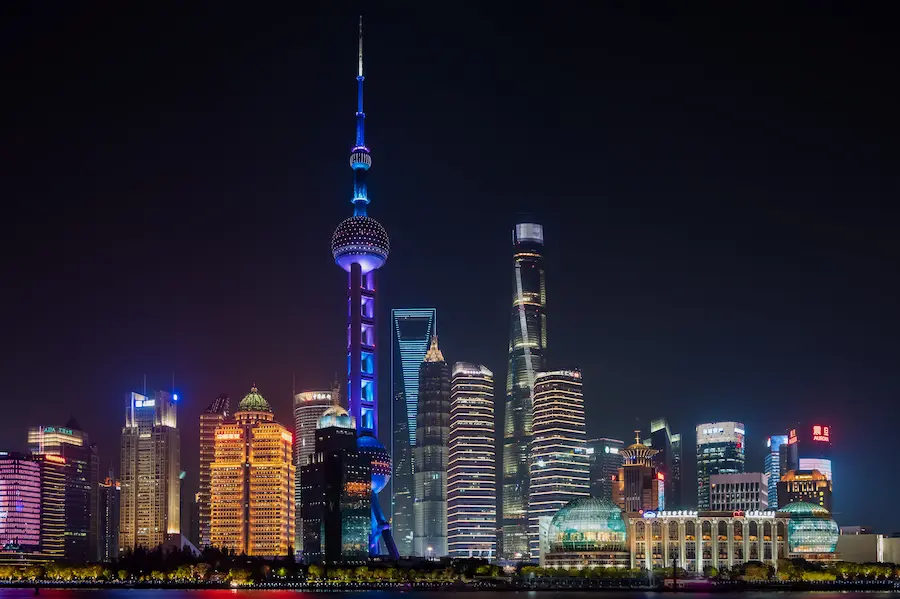
Puxi includes many of Shanghai’s historic neighbourhoods, The Bund, People’s Square and the Former French Concession. Across the Huangpu River, Pudong offers a different experience, with its futuristic skyline, Lujiazui and Shanghai Disney Resort.
Before choosing a neighbourhood, I’d make one decision first:
Planning more than one day at Disney?
Consider staying near Shanghai Disney Resort. If Disney is just one day within a wider Shanghai trip, I’d usually keep the family base in central Shanghai.
That can save you from moving hotels unnecessarily or spending more of your trip travelling between your accommodation and the places you want to visit.
Shanghai areas at a glance
| Area | Best suited to | Main family trade-off |
|---|---|---|
| People’s Square | A central base for a first visit | Busy, but convenient for exploring Puxi |
| The Bund | Iconic skyline and river views | Prime locations can cost more |
| Jing’an | Modern Shanghai and everyday convenience | Less of a historic sightseeing atmosphere |
| Former French Concession | Architecture and slower neighbourhood walks | Not equally convenient for every attraction |
| Pudong / Lujiazui | Skyline, modern attractions and contemporary hotels | More cross-river travel for Puxi sightseeing |
| Shanghai Disney Resort | A Disney-focused trip | Less convenient for exploring central Shanghai |
| Shanghai Old Town | Historic surroundings near Yu Garden | Street access and hotel locations vary |
1. People’s Square — an easy first base
If this is your first time in Shanghai with children, People’s Square is one of the first areas I’d compare.
You’re close to People’s Park, Nanjing Road, and several major attractions, while the metro connections make it easier to explore other parts of the city without changing hotels.
For a family spending two or three days in Shanghai, that central location can simplify your plans. You can explore different parts of the city while keeping one base.
If you’re travelling with a stroller, it’s worth thinking beyond the hotel’s location alone. Read our guide to whether Shanghai is stroller-friendly before deciding how you want to get around the city.
The trade-off is the busy, urban atmosphere. If you prefer quieter streets and a more residential feel, compare the Former French Concession as well.
People’s Square is a good place to start if you want a central base for a first Shanghai visit and plan to spend most of your time exploring Puxi.
Compare family-friendly hotels around People’s Square →
2. The Bund — for the iconic Shanghai skyline
If you picture Shanghai as the Huangpu River, glowing skyscrapers, and evening skyline views, staying around The Bund puts that scenery close to your accommodation.
After a day of sightseeing, you can enjoy dinner and a riverside walk before heading back to your room. For families who want the skyline to be a highlight of their visit, that can be a memorable part of the stay.
The trade-off is price. A Bund address can command a premium, particularly for a room with river views. Also check the exact hotel location and metro access rather than assuming every property nearby is equally convenient for exploring the rest of Shanghai.
The Bund is worth comparing if the skyline is a major part of your trip and you’re happy to pay more for the location.
Compare family-friendly hotels near The Bund →
For families who specifically want the waterfront and iconic views; remind readers to check the actual route to transport and sights.
3. Jing’an — for modern Shanghai and everyday convenience
Jing’an offers restaurants, cafés, shopping, parks, and modern city life. It’s worth considering if you want to experience Shanghai beyond its main tourist sights.
For families staying several nights, having food and everyday amenities nearby can make evenings simpler. You can eat locally, take a walk, and return to the hotel without turning every outing into another sightseeing mission.
Jing’an may suit your family if you want a modern neighbourhood with plenty of everyday conveniences, especially for a longer stay.
4. Former French Concession — for atmosphere and slower exploring
The Former French Concession is worth considering if your family enjoys architecture, tree-lined streets, cafés and exploring at a slower pace.
It feels different from staying beside People’s Square or The Bund, and it may suit families who want some unhurried neighbourhood time between major attractions.
The trade-off is that it isn’t necessarily the most convenient base for every sight on a city-wide itinerary. Check the specific location and transport connections against your plans.
Choose the Former French Concession if neighbourhood atmosphere and relaxed exploring matter more to you than being right beside the main tourist hubs.
5. Pudong and Lujiazui — for the futuristic side of Shanghai
Cross the Huangpu River, and you’ll find a different side of Shanghai. Pudong and Lujiazui are known for their futuristic skyline, including Shanghai Tower and the Oriental Pearl Tower.
If your children are fascinated by skyscrapers, observation decks, and big-city views, staying here can make that side of Shanghai easier to explore.
The main consideration is the rest of your itinerary. If most of your plans are in Puxi—including The Bund, People’s Square and the Former French Concession—you’ll need to account for cross-river journeys.
Pudong or Lujiazui may suit your family if modern Shanghai and the skyline are priorities, or you prefer contemporary surroundings.
Compare family-friendly hotels in Pudong and Lujiazui →
A genuinely different base from central Puxi.
6. Shanghai Disney Resort — when Disney is a major part of the trip
Disney can change where it makes sense to stay in Shanghai.
If you’re planning multiple days at Shanghai Disney Resort, staying nearby can reduce the journeys before and after long park days. That can be especially helpful when you’re travelling with younger children.
If Disney is just one day within a wider Shanghai visit, however, I’d think carefully before moving your entire hotel base away from central Shanghai. For a short city break, one central base and a planned Disney day may be simpler.
Stay near Shanghai Disney Resort if Disney is a main focus of your trip rather than one attraction within a wider city visit.
Compare family-friendly hotels near Shanghai Disney Resort →
7. Shanghai Old Town (Nanshi) — for historic surroundings
Shanghai Old Town is worth considering if you’d like to experience a more historic side of the city and stay closer to places such as Yu Garden and the older streets around it.
The area offers a different atmosphere from a modern business district, but accommodation and street access vary from one property to another.
Before booking with children, check the exact hotel entrance, road access, walking distance to the metro, and room facilities. Don’t rely on the label “Old Town” alone to judge convenience.
Shanghai Old Town may suit your family if historic surroundings matter more than staying in a large modern hotel district.
So, where should your family stay in Shanghai?
I’d choose based on what your family wants to do most, rather than trying to find one universally best neighbourhood.
- First visit and central sightseeing: People’s Square
- Iconic skyline and river views: The Bund
- Modern city life and everyday convenience: Jing’an
- Architecture and slower neighbourhood exploring: Former French Concession
- Skyscrapers and modern attractions: Pudong / Lujiazui
- Multiple Disney days: Shanghai Disney Resort
- Historic surroundings near Yu Garden: Shanghai Old Town
If you’re staying for only two or three nights, you probably don’t need to change hotels to experience two different sides of Shanghai. Choose the area that best fits your plans, then use public transport to explore the rest.
Our family accommodation rule for Shanghai is simple:
If an attraction takes up only one day of your trip, don’t automatically move your entire hotel base for it. Choose the neighbourhood that makes most of your days easier.
Continue planning your China trip
Still deciding between Shanghai and Beijing? Our Shanghai vs Beijing With Kids comparison can help you compare the two cities before finalising your route and accommodation. Also, our Shanghai travel guide can help you plan the sightseeing side of your trip before you settle on your hotel.
Once you’ve chosen your destinations, use our China Itinerary With Kids to work out how the cities fit together before booking your hotels.
Where to Stay in Chengdu With Kids
Chengdu offers several different types of family bases, from busy central districts with restaurants and shopping to quieter areas where you may find more space. The right choice depends on your sightseeing plans, how long you’re staying, and whether you want to be close to the main attractions or have somewhere more relaxed to return to.
Chengdu areas at a glance
| Area | Consider it if you want… | Main family trade-off |
|---|---|---|
| Chunxi Road / Taikoo Li | Restaurants, shopping and central convenience | Busy and urban |
| Tianfu Square / People’s Park | A central all-round base | Less of a distinct neighbourhood feel |
| Kuanzhai Alley | Traditional architecture and a slower atmosphere | Check property access and room layout |
| Wuhou Temple / Jinli | History, culture and local food | May be less convenient for other parts of the city |
| Wenshu Monastery | A quieter central option | Less suited to those wanting the busiest commercial area |
| Cultural Heritage Park | More space and a slower stay | Further from central Chengdu |
| Panda Base area | A panda-focused visit | Less convenient for exploring the rest of the city |
1. Chunxi Road and Taikoo Li — for central convenience
Chunxi Road and Taikoo Li are worth comparing if you want restaurants, shopping, and central transport close to your hotel.
For families, the appeal is straightforward: you’ll have plenty of food and everyday options nearby without needing to plan every evening around another journey.
The trade-off is the busy, urban atmosphere. If your family prefers a quieter place to return to after sightseeing, another neighbourhood may suit you better.
This area is a good fit if central convenience, restaurants and shopping are high on your list.
Compare family-friendly hotels around Chunxi Road and Taikoo Li →
2. Tianfu Square and People’s Park — for an all-round central base
Tianfu Square and the area around People’s Park are worth considering if you want a central base without making shopping the main reason for your location.
This can be a useful middle ground for families who want access to central Chengdu while keeping parks and everyday neighbourhood options nearby.
Before booking, check the hotel’s specific metro connections against the places you plan to visit. A central-sounding address doesn’t necessarily mean every attraction will be easy to reach.
This area is a good fit if you want a practical central base for exploring different parts of Chengdu.
Compare family-friendly hotels around Tianfu Square →
3. Kuanzhai Alley — for traditional Chengdu atmosphere
If your family enjoys traditional architecture, teahouses, and slower neighbourhood exploring, Kuanzhai Alley offers a different feel from Chengdu’s modern commercial districts.
Here, the attraction is as much the atmosphere as the convenience.
With children, I’d check the exact hotel location, room size, and access from the main road before booking, particularly if you’re travelling with luggage or a stroller.
This area is a good fit if you want a traditional Chengdu atmosphere and don’t mind trading some convenience for the neighbourhood experience.
4. Wuhou Temple and Jinli — for history and local food
Wuhou Temple and Jinli are worth considering if history, local culture and food are high on your Chengdu list.
Staying nearby can make it easier to enjoy the area’s atmosphere without travelling back across the city at the end of the day.
Compare the location with the rest of your itinerary, especially if you’re planning to spend significant time in other parts of Chengdu.
This area is a good fit if history and local atmosphere are important to your experience.
5. Wenshu Monastery — for a quieter central stay
Wenshu Monastery is another option if you want to remain relatively central but prefer a calmer atmosphere than the busiest commercial areas.
It may suit families who don’t need to be surrounded by shopping and restaurants every time they leave the hotel.
As with any area, compare the exact property location and transport connections with your plans rather than relying on the neighbourhood name alone.
This area is a good fit if you’d prefer a quieter base while remaining in Chengdu.
6. Cultural Heritage Park — when space and comfort matter more
After around eight or nine days of travelling through China, our family’s accommodation priorities had changed. We no longer wanted to sacrifice space simply to stay in the most central neighbourhood.
We chose Oaks Chengdu at Cultural Heritage Park for more room, comfort, and a place to slow down, while still having public transport access.
For us, it was the right decision. By that point in the trip, having a comfortable place to return to mattered more than stepping straight out into Chengdu’s busiest neighbourhoods.
Cultural Heritage Park is further from central Chengdu, so compare journey times with your sightseeing plans before choosing it. It may be less convenient if you want to spend most of your time exploring the central districts.
This area is a good fit if you’re on a longer multi-city trip, value space and comfort, or want a slower stay rather than being in the centre all the time.
Compare accommodation around Cultural Heritage Park →
7. Panda Base area — if pandas are the main reason for your stay
If the Chengdu Research Base of Giant Panda Breeding is the main reason for your stop, staying closer to the Panda Base may reduce travel on the day you visit.
If you’re spending several days exploring Chengdu beyond the pandas, though, I’d choose your base around the wider itinerary rather than moving your entire stay for one attraction.
This area is a good fit if seeing the pandas is the main focus of your visit and the location works for your other plans.
Compare family-friendly hotels near the Panda Base →
So, where should your family stay in Chengdu?
Use your family’s plans to narrow the choice:
- Restaurants, shopping and central convenience: Chunxi Road / Taikoo Li
- A practical central base: Tianfu Square / People’s Park
- Traditional architecture and atmosphere: Kuanzhai Alley
- History and local food: Wuhou Temple / Jinli
- A quieter central option: Wenshu Monastery
- More space and a slower stay: Cultural Heritage Park
- A panda-focused visit: Panda Base area
You don’t necessarily need to stay in the busiest part of Chengdu to enjoy the city. A central base may suit a short visit focused on sightseeing, while a quieter location could work better if you’re staying longer or need more room to recharge between travel days.
My advice: choose your neighbourhood based on what your family needs from this particular stop, not simply on how central it looks on the map.
If you’re planning a longer stay in Chengdu, our Chengdu family travel guide will help you plan what to do around your chosen base.
Planning the rest of your China trip
If you’re deciding how Chengdu fits into your route, use our China Itinerary With Kids to compare trip lengths and city combinations before booking your accommodation.
Where to Stay in Xi’an With Kids
If you’re adding Xi’an to your China route, I’d choose your accommodation based on the experience you want after sightseeing, rather than simply looking for the most central point on the map.
For families, the Grand Tang Mall/Qujiang area is particularly worth comparing if you want restaurants, evening activities, and Tang-era surroundings close to your hotel.
By contrast, the Old City makes more sense if your priority is staying close to Xi’an’s historic centre.
1. Grand Tang Mall / Qujiang — for Tang-era atmosphere and easy family evenings
The Grand Tang Mall and Qujiang area is an appealing option for families who want more than just a place to sleep.
You’ll find restaurants, cafés, shopping, evening entertainment and Tang-style architecture around the area, with attractions such as the Big Wild Goose Pagoda nearby.
The advantage for families is that the neighbourhood itself can become part of your evening.
After a full day of sightseeing, dinner and an evening walk can happen close to your hotel instead of becoming another transport decision.
If you’re travelling with children and like having somewhere to wander after dinner, that’s worth considering when comparing Xi’an hotels.
Consider Grand Tang Mall/Qujiang if: you want Tang-era surroundings, restaurants and evening activity close to your accommodation.
A family-friendly hotel to consider: Canopy by Hilton Xi’an Qujiang
If you’re looking around Qujiang, Canopy by Hilton Xi’an Qujiang is one hotel worth comparing.
I haven’t personally stayed here, so I’d treat it as a researched option rather than a Roaming Crew recommendation based on first-hand experience. Before booking, check the current room configuration, occupancy rules, breakfast, and cot availability for your specific dates.
Consider it if: you want to stay within the Qujiang/Grand Tang Mall area and prefer a contemporary hotel with family-friendly room options.
Compare hotels in Xi’an’s Qujiang area — for families interested in evening atmosphere, restaurants, and the Tang-themed surroundings.
2. Xi’an Old City — for historic Xi’an
If your main reason for visiting Xi’an is its historic centre, compare hotels inside or close to the Old City.
This puts you closer to major sights such as the Bell Tower, Drum Tower and city walls, and can make sense if you want the historic character of Xi’an to be part of your stay.
For families, I’d still check the exact hotel entrance, metro access, road access, and room size rather than choosing purely because a property is labelled “Old City.”
Consider the Old City if: historic Xi’an and central sightseeing are more important to you than Tang-era evening atmosphere.
Compare hotels near Xi’an’s historic centre — for families who want to focus on the Bell Tower, Drum Tower and city walls.
3. Muslim Quarter — visit for the experience, not necessarily the hotel
The Muslim Quarter is one of Xi’an’s well-known areas for food and street atmosphere, but I wouldn’t automatically choose your hotel here simply because it’s a popular place to visit.
With younger children, you may prefer to stay somewhere a little calmer and visit the Muslim Quarter when it fits your sightseeing plans.
Consider the Muslim Quarter as an evening food and cultural experience rather than necessarily your family’s accommodation base.
So, where should your family stay in Xi’an?
I’d keep the decision simple:
- Want Tang-era atmosphere, restaurants, and evening activity? → Grand Tang Mall / Qujiang
- Want the Bell Tower, Drum Tower, and historic centre nearby? → Xi’an Old City
- Want food and street atmosphere? → Visit the Muslim Quarter rather than choosing your hotel around it
If you’re travelling with children, I would also compare what your evenings will look like, not just how close the hotel is to your daytime sightseeing.
Before settling on an area, make sure it fits the sights you actually want to visit. Our guide to the best places in China to visit with kids can help you decide which experiences belong on your family’s route.
Where to Stay in Chongqing With Kids
Chongqing is different from many of the other cities in this guide.
The city is hilly, multi-level, and surprisingly difficult to judge from a simple map. A hotel that looks close to an attraction may still involve stairs, steep streets, or a much longer route than you expect.
We had around 24 hours in Chongqing, so our accommodation strategy was simple:
Put us in the middle of the action.
For a short family stay, I would prioritise location over an impressive list of hotel facilities.
Chongqing at a glance
| Area | Consider it if you want… | Family trade-off |
|---|---|---|
| Jiefangbei / Yuzhong | Central sightseeing and easy access to restaurants | Busy and more urban |
| Hongyadong area | River views and Chongqing’s evening atmosphere | Hilly, busy, and check the exact hotel access |
| Other parts of Chongqing | A hotel suited to a specific longer-stay itinerary | More travel may be needed for first-time sights |
1. Jiefangbei / Yuzhong — best for a short first visit
For a 24–48-hour stay, I’d start the hotel search around Jiefangbei in Yuzhong District.
You’ll be close to restaurants, shops, and many of the experiences first-time visitors come to Chongqing for. More importantly, staying centrally can reduce the amount of unnecessary travelling when you have limited time.
With children, that matters even more in a city where hills, stairs and multiple levels can turn a short-looking journey into a tiring one.
What we prioritised
With only about one day in Chongqing, we cared more about:
- central location
- easy access to sightseeing
- restaurants nearby
- evening atmosphere
- a comfortable room
than having an extensive list of hotel facilities.
That was the right choice for us.
One researched option to compare around the Jiefangbei/Hongyadong area is Vista High-Rise River View Hotel, particularly if you’re interested in a central location and river or skyline views.
I haven’t personally stayed at this property, so I’d treat it as a hotel to investigate rather than a first-hand recommendation. Hotel names, room configurations, and availability can change, so check the current details for your dates.
Compare family-friendly hotels around Jiefangbei→
If you’re staying longer in Chongqing
If you’re spending several days in Chongqing, you have more flexibility.
Rather than automatically choosing Jiefangbei, I’d look at your actual sightseeing plans and then work backwards to the accommodation location.
The same rule still applies:
In Chongqing, check the real walking route—not just the distance shown on the map.
Look at the route from the hotel entrance to the road, metro station, or attraction entrance, especially if you’re travelling with a stroller or younger children.
So, where should your family stay in Chongqing?
For most first-time family visits, I’d keep the decision simple:
- Only 24–48 hours? → Jiefangbei / Yuzhong
- Want Hongyadong and river/skyline atmosphere nearby? → Compare hotels around Hongyadong/Jiefangbei
- Staying several days? → Choose based on your wider sightseeing plans rather than automatically staying in the centre
Our own 24-hour stay taught us that in Chongqing, saving time and unnecessary walking can be more valuable than having extra hotel facilities.
Chongqing’s multi-level streets and steep terrain can make getting around feel different from travelling in a flatter city. Before finalising your base, read our Ultimate Chongqing guide for families to help plan your time in the city.
Where to Stay in Zhangjiajie With Kids
Zhangjiajie is one destination where choosing the right hotel location matters more than the hotel’s star rating.
When you search for accommodation, you’ll often see properties listed under “Zhangjiajie.” But that name can refer to two different bases: Wulingyuan, beside Zhangjiajie National Forest Park, and Zhangjiajie City, closer to Tianmen Mountain and the main transport connections.
For families, the decision is straightforward:
- Visiting Zhangjiajie National Forest Park? Look at Wulingyuan first, ideally near the park entrance you’ll use.
- Focusing on Tianmen Mountain or catching an early train or flight? Zhangjiajie City may be more practical.
1. Wulingyuan — for Zhangjiajie National Forest Park
This is where we stayed, and it was the right choice for our family.
We flew from Chengdu to Zhangjiajie and had around two days to explore the area before returning to Chengdu for our flight home. Because the National Forest Park was our main priority, we chose accommodation right beside the park rather than staying in Zhangjiajie City.
With two children and full days of exploring ahead of us, being close to the entrance made the logistics much easier. We didn’t have to add a long journey between our hotel and the park each morning or after a tiring day out.
We stayed at Zhangjiajie National Park NVUE Resorts. The location was the biggest advantage for us, and having a local restaurant right next to the hotel made breakfast and dinner simple. After hours of sightseeing, we appreciated being able to eat nearby rather than organise another journey.
We booked around a week before our stay. That worked for us, but I wouldn’t rely on last-minute booking as a way to save money. If your dates are fixed, booking earlier gives you more time to compare availability, room types and prices.
When comparing Wulingyuan hotels, check:
- How close the property is to the park entrance you plan to use
- Whether restaurants and convenience stores are within easy walking distance
- Room size and occupancy for your family
- Breakfast availability and nearby dining options
- Taxi access and the actual walking route from the hotel entrance
For a trip focused on the National Forest Park, I’d start by comparing properties around Wulingyuan’s East Gate rather than searching across the whole Zhangjiajie area.
2. Zhangjiajie City — for Tianmen Mountain and transport connections
Zhangjiajie City may make more sense if Tianmen Mountain is your main attraction, or if you’re arriving late or leaving early by train or plane.
For a short overnight stop, being closer to your transport connection can save time and make travelling with luggage and children easier. However, if most of your sightseeing is planned around the National Forest Park, staying in the city may mean additional transfers to and from the park.
Consider Zhangjiajie City if your plans centre on Tianmen Mountain, your arrival or departure logistics, or a short stop before continuing your journey.
Booking warning: Check the map before you pay
“Zhangjiajie” on a booking platform doesn’t always mean you’re staying beside Zhangjiajie National Forest Park. Zhangjiajie City and Wulingyuan are different bases, and choosing the wrong one can add unnecessary travel to your days.
Open the property’s map and check its actual location—not just the destination name in the listing. Confirm the distance to the specific park entrance or transport station you need, and check the route rather than relying on straight-line distance.
3. Wulingyuan or Zhangjiajie City: Which should your family choose?
| Your main priority | Where to look first |
|---|---|
| Exploring Zhangjiajie National Forest Park | Wulingyuan, preferably near your intended park entrance |
| Spending multiple days exploring the sandstone mountains | Wulingyuan |
| Visiting Tianmen Mountain | Zhangjiajie City |
| Staying one night before an early departure | Compare hotels near your actual transport connection |
| Travelling with children and wanting to minimise transfers on park days | Wulingyuan, if the National Forest Park is your focus |
For our family, staying beside the park was the right decision because we had limited time and wanted to make our park days as straightforward as possible. Your best choice may differ if Tianmen Mountain or transport connections are the main reason for your visit.
My advice: decide which part of Zhangjiajie you’re visiting first, then choose your accommodation. In this destination, checking the map carefully can matter more than choosing a hotel with a higher star rating.
Compare family-friendly hotels in Wulingyuan and Zhangjiajie →
Once you’ve decided whether to stay near the national park or in Zhangjiajie City, use our Zhangjiajie family travel guide to plan the experiences and transport that will shape your stay.
Where to Stay in Hangzhou With Kids
We stayed in Hangzhou for just one night, so our priorities were simple: an easy arrival, a convenient base for sightseeing, somewhere nearby for dinner, and straightforward onward travel the next day.
With such a short stay, convenience mattered more to us than choosing a secluded hotel or making the accommodation itself part of the holiday.
For families, I’d start with one question: Do you want to explore West Lake and the city, or spend more time enjoying a quieter, nature-focused stay? Your answer will help narrow down the best area for your trip.
Hangzhou areas at a glance
| Area | Consider it if you want… | Main family trade-off |
|---|---|---|
| Hubin / Longxiangqiao | Convenient access to West Lake and central Hangzhou | Busier and more central |
| Wulin Square / Fengqi Road | Shopping, restaurants and transport connections | Less of a lakeside atmosphere |
| Hefang Street / Wushan | Traditional streets and local atmosphere | Popular areas can be busy |
| West Lake West Shore / Lingyin | Nature and a quieter stay | More transport planning may be needed |
| Xixi Wetland | A resort-style experience | Less convenient for a short sightseeing stop |
| Hangzhou East Railway Station | An overnight rail stop or onward journey | Less atmosphere for a sightseeing-focused stay |
1. Hubin / Longxiangqiao — for a first family visit
If West Lake is the main reason for your visit and you have only one or two nights, Hubin and Longxiangqiao are the first areas I’d compare.
The appeal is the combination of access to West Lake, central transport connections, and nearby places to eat. For a short family stay, that convenience can matter more than choosing a beautiful but secluded hotel.
This is the kind of location I’d prioritise when you want to spend most of your time sightseeing rather than travelling between your hotel and the places you want to visit.
Best suited to: Families visiting Hangzhou for the first time who want West Lake and central sightseeing to be the focus.
Compare family-friendly hotels around Hubin and Longxiangqiao →
2. Wulin Square / Fengqi Road — for everyday convenience
Wulin Square and Fengqi Road are practical alternatives if you value restaurants, shopping, and transport connections more than staying directly beside West Lake.
This can work well for families who like having everyday facilities nearby and don’t mind travelling to the lake for sightseeing.
Best suited to: Families who want a convenient city base with plenty of everyday options.
3. Hefang Street / Wushan — for traditional Hangzhou
If your family enjoys historic streets, local food and neighbourhood atmosphere, Hefang Street and Wushan are worth comparing.
The appeal is experiencing a more traditional side of Hangzhou rather than staying exclusively in a modern commercial district.
Check the exact hotel location and access before booking, particularly if you’re travelling with children and luggage. Properties within the same general area can offer quite different levels of convenience.
Best suited to: Families who value traditional surroundings and local atmosphere.
Compare family-friendly hotels around Hefang Street and Wushan →
4. West Lake West Shore / Lingyin — for a slower stay
If you’d rather wake up around greenery and spend time exploring at a gentler pace, the West Lake West Shore and Lingyin areas are worth considering.
The trade-off is transport. A quieter, more scenic base may mean longer journeys to restaurants, transport connections, or attractions elsewhere in Hangzhou.
For a short sightseeing stop, check travel times before choosing a more secluded property. With two or three nights or more, you may have greater flexibility to prioritise scenery and a slower pace.
Best suited to: Families who value nature and a quieter atmosphere more than central convenience.
Compare hotels near West Lake — for families prioritising convenient city sightseeing during a short stay.
5. Xixi Wetland — when the hotel is part of the holiday
Xixi Wetland is worth considering if you want accommodation to be part of the Hangzhou experience rather than simply a place to sleep between sightseeing days.
A resort-style stay makes more sense when you have enough time to enjoy the property and its surroundings. Banyan Tree Hangzhou is one example to research if you’re looking for this type of stay.
For a one-night visit focused on West Lake and central Hangzhou, a resort farther from your main plans may add unnecessary travel.
Best suited to: Families with enough time to enjoy a quieter, resort-style break.
Compare nature-focused stays near Xixi Wetland — for families considering a quieter stay where the hotel environment is part of the experience.
6. Hangzhou East Railway Station — for an overnight travel stop
If Hangzhou is mainly a stop between other cities, staying near Hangzhou East Railway Station can make an overnight stay more straightforward.
You won’t get the same lakeside atmosphere as you would around West Lake, but proximity to your train connection may be more valuable if you’re arriving late or leaving early with children and luggage.
Best suited to: Families making a short stop where an easy onward train journey is the main priority.
Compare family-friendly hotels near Hangzhou East Railway Station →
So, where should your family stay in Hangzhou?
I’d base the decision on how much time you have and what you want from the stop.
- First visit with West Lake as the priority: Hubin / Longxiangqiao
- Restaurants, shopping and everyday convenience: Wulin Square / Fengqi Road
- Traditional streets and local atmosphere: Hefang Street / Wushan
- Nature and a quieter base: West Lake West Shore / Lingyin
- A resort-style family break: Xixi Wetland
- A short stop before an onward train: Hangzhou East Railway Station
Our one-night stay taught me that convenience can be the most useful thing to prioritise when time is limited. With more nights, you have greater freedom to choose somewhere for the scenery, atmosphere, or experience of the stay itself.
My advice: decide what you want to do in Hangzhou first, then choose the area that makes those plans easiest.
If you’re only spending a night or two in Hangzhou, choosing your activities first can make the hotel decision easier. Our Hangzhou family travel guide can help you decide what to prioritise during your stay.
Where to Stay in Tianjin With Kids
Tianjin wasn’t originally a major stop on our China trip. We spent one day there between Beijing and Shanghai, and it turned out to be a lovely contrast to the bigger cities.
Because we were travelling onwards by high-speed train, choosing where to stay was straightforward: we wanted to be close to Tianjin Railway Station.
For families, I’d make the same decision based on how long you’re staying. If Tianjin is a one-night stop between cities, convenient transport may matter more than neighbourhood atmosphere. With more time, you can choose an area for its historic architecture, riverside walks or local character.
Tianjin areas at a glance
| Area | Consider it if you want… | Main family trade-off |
|---|---|---|
| Tianjin Railway Station | An easy overnight stop before an onward train | More practical than atmospheric |
| Heping / Five Great Avenues | Historic architecture and neighbourhood walks | May be less convenient for your train |
| Haihe Riverside / Italian Style Town | Riverside scenery and evening walks | Check transport for the rest of your plans |
1. Tianjin Railway Station — for a convenient one-night stop
This is where we stayed.
Our hotel was about a three-minute walk from Tianjin Railway Station. As we were continuing by high-speed train, that location worked perfectly for our plans.
We could check in, explore Tianjin, return to the hotel and head to the station the next morning without arranging another transfer. With children and luggage, that simplicity mattered more to us than staying in the city’s most atmospheric neighbourhood.
I’d prioritise this area if you’re staying for one night, travelling onwards by train, or want to keep your arrival and departure as straightforward as possible.
Compare family-friendly hotels near Tianjin Railway Station →
2. Heping and Five Great Avenues — for historic architecture
If you’re staying longer or want Tianjin’s architectural character to be part of your visit, compare accommodation around Heping and Five Great Avenues.
This area is worth considering if your family enjoys historic buildings and exploring on foot rather than organising the day around transport connections.
The trade-off is that a more atmospheric neighbourhood may be less convenient if you’re catching an early train the next morning. Check the journey to your departure station before booking.
I’d consider this area if you have time to explore Tianjin and want its historic character to be part of your stay.
Compare family-friendly hotels around Five Great Avenues →
3. Haihe Riverside and Italian Style Town — for an atmospheric evening
If you’d like to enjoy Tianjin’s riverside scenery and city lights, the Haihe Riverside and Italian Style Town areas are worth comparing.
They can suit families who want a relaxed evening after sightseeing, with time for dinner and a walk rather than another planned attraction.
Check the exact hotel location and transport connections against the rest of your itinerary, particularly if you also plan to visit places outside the central area.
I’d consider this area if riverside scenery and evening walks matter more than being right beside the railway station.
Compare family-friendly hotels around Haihe Riverside and Italian Style Town →
So, where should your family stay in Tianjin?
For a short visit, I’d keep the decision simple:
- One night before an onward train: Tianjin Railway Station
- More time to explore historic architecture: Heping / Five Great Avenues
- Riverside scenery and evening walks: Haihe Riverside / Italian Style Town
Our one-night stop taught us that the most convenient hotel can be the right choice even when it’s not in the most atmospheric neighbourhood.
My advice: if Tianjin is one stop on a longer China itinerary, make the travel logistics easy. If you have more time, choose the neighbourhood for the experience you want.
Check current family-friendly hotel options in Tianjin →
If Tianjin is a short stop between two larger destinations, transport connections can make a real difference. Our guide to China’s high-speed trains with kids explains what to consider when planning the rail journeys between your stops.
How Long Should You Stay in One Family Hotel in China?
The length of your stay can change what matters most when choosing accommodation.
- One night: Prioritise convenience. A hotel close to your railway station or your main reason for visiting may save more effort than extra facilities.
- Two or three nights: Choose a neighbourhood that makes most of your planned sightseeing easy, with restaurants and everyday essentials nearby.
- Four nights or longer: Give more thought to room space, laundry, breakfast, transport and whether your family will enjoy spending time in the neighbourhood between outings.
These are starting points, not strict rules. A Disney-focused stay or a resort break may call for a different approach. The aim is to choose accommodation that suits the way you’ll actually use it.
Choosing the right hotel is only one part of getting ready for China. If you’re still organising the practical details, our China family trip planning guide is a useful next step.
Before You Book Your China Family Hotel: 10 Things I Actually Check
One thing I learned while travelling around China with children is that a beautiful hotel isn’t necessarily the easiest hotel for a family.
A property can look perfect in photos, have a great star rating, and still leave you dragging tired children and luggage along a long pavement to reach the metro.
So before I book a hotel in China, I look beyond the photos and reviews. These are the practical details I check to make sure the hotel will work for our family, not just look good on a booking site.
1. Check whether the hotel accepts international guests
Don’t assume that every property listed on a booking platform will be suitable for international travellers.
Before booking, confirm that the hotel can accommodate foreign guests and that its check-in requirements are clear. Keep your passports available for check-in, and contact the property or booking platform if you’re unsure about its policy.
This is particularly worth checking when you’re considering a smaller, independently run property rather than a well-established hotel.
2. Check the actual walking route to the metro
Don’t look only at the distance shown on a booking map.
A hotel that looks 500 metres from a station can feel very different when you’re walking there with a stroller, luggage, and tired children.
Open the map and check the walking route from the hotel entrance to the station entrance. Look for stairs, busy roads, long crossings, and whether the route seems manageable with your family.
3. Check the hotel’s entrance and taxi drop-off
A hotel pin on a map doesn’t always tell you where a taxi or DiDi can actually drop you.
This matters particularly around hutongs, pedestrian streets, large complexes and hotels with multiple entrances.
Check the hotel’s precise location and, if necessary, message the property to confirm the best drop-off point. A short walk from the main road can make a real difference when you’re carrying luggage or travelling with a stroller.
4. Check elevator access
If you’re travelling with a stroller or young children, look for information about lifts, stairs and access from the street.
Don’t assume that a hotel with an elevator will have step-free access all the way from the entrance to your room.
Recent guest reviews and hotel photos can help you understand the layout. If accessibility is essential for your family, confirm the details directly with the property.
5. Check the exact room occupancy
Don’t assume that a room that looks large enough will automatically allow your whole family.
Check the maximum occupancy of the exact room type you’re booking, including your children’s ages and whether an extra bed or cot is available.
If you need connecting rooms, ask whether they can be guaranteed or are simply available on request. Room configurations and child policies can vary even within the same hotel.
6. Check breakfast carefully
Check whether breakfast is included in your selected rate rather than assuming it comes with the room.
With children, having breakfast downstairs can be a convenient way to start a busy sightseeing day. If it’s not included, check the additional cost and whether there are easy breakfast options nearby.
7. Look for laundry facilities
After several days of trains, sightseeing and changing hotels, laundry becomes much more important than it sounds on day one.
If you’re travelling around China for a week or two, check whether the hotel has self-service laundry, a laundry service or a convenient laundrette nearby.
This can be especially useful when you’re packing for several climates or trying to travel with fewer bags.
8. Check what’s available within a short walk
I don’t just look at the hotel itself. I also check whether there are restaurants, cafés, convenience stores, or somewhere easy to grab food nearby.
This sounds like a small thing—until you’re back at 8 PM with two hungry children and nobody wants to walk another 20 minutes for dinner.
Look at the surrounding streets on the map and recent reviews rather than relying only on the hotel’s description of its location.
9. Read the cancellation conditions before paying
When you’re travelling internationally and moving between several Chinese cities, plans can change.
I check the cancellation deadline, refund conditions and payment terms before booking, especially when we’re arranging several hotels for the same trip.
Don’t assume that two rooms at the same hotel have the same cancellation policy. Always check the conditions attached to your specific rate.
10. Think about the neighbourhood after dark
And there’s one more question I now ask myself:
Would I actually enjoy walking around this neighbourhood with my children at 7:30 PM after a full day of sightseeing?
Are there places to eat? Is the route back to the hotel straightforward? Would we feel comfortable going out for a short walk, or would we rather be somewhere else?
That question has become surprisingly useful.
Because when you’re travelling with children, the hotel isn’t just somewhere you sleep. The neighbourhood becomes part of your family travel experience too.
A hotel doesn’t need to be perfect in every respect. It simply needs to fit the way your family travels, the places you plan to visit, and the amount of energy you’ll have at the end of the day.
The accommodation that suits your family will also depend on how long you’re travelling and what else you plan to spend on. Use our China trip cost guide for families alongside your hotel shortlist to help plan your overall budget.
What Our China Trip Taught Us About Choosing Family Accommodation
We didn’t use the same accommodation strategy throughout China, and looking back, that was probably one of the most useful lessons from our family trip.
Some stops called for a central hotel that made sightseeing easier. Others were about making an onward train journey simple. And by the time we reached Chengdu, after more than a week of travelling, space and comfort mattered more to us than staying in the busiest part of the city.
Here’s what mattered most to us in each place:
| City | What mattered most to us |
|---|---|
| Beijing | A convenient base for sightseeing and metro connections |
| Tianjin | Walking distance to the railway station for our one-night stop |
| Shanghai | A central base for exploring the city |
| Hangzhou | A convenient base for a one-night stay and onward travel |
| Chongqing | A central location for our 24-hour visit |
| Chengdu | More space and comfort after a long stretch of travel |
| Zhangjiajie | Easy access to the national park |
Our choices reflected the way we were travelling, how long we had in each city and what our family needed at that point in the trip.
Your priorities might be completely different. You might be travelling with a baby, planning several Disney days, staying longer in one city or looking for a quieter hotel where the children can recharge between outings.
Use our experience to understand the decisions behind choosing a hotel—not to copy our hotel list blindly.
The best family accommodation isn’t necessarily the most central, the most luxurious, or the highest-rated property. It’s the one that makes sense for your destination, your plans, and your family’s needs.
Plan Your China Route Before Booking Your Hotels
Before you start booking accommodation across several Chinese cities, it’s worth deciding how your family will travel between them.
A hotel that’s perfectly located for one stop might be inconvenient for the next part of your journey. And if you’re only spending one night in a city, proximity to a railway station or a convenient transport connection might matter more than the neighbourhood itself.
We learned this while travelling through China: choose your route first, then choose accommodation that makes each stop easier.
If you haven’t decided which cities to include or how many nights to spend in each, start with these guides:
- Planning your route: China Itinerary With Kids: 7–10–14-Day Family Travel Plan — compare trip lengths and work out how to fit the cities together.
- Planning your first trip: China With Kids: A Beginner’s Guide — get familiar with the practicalities of travelling around China as a family.
- Getting between cities: China High-Speed Trains With Kids — understand your train travel options before choosing hotels around your departure and arrival points.
- Before you go, you may also want to review our essential China travel tips for practical details beyond choosing where to stay.
Once your route is settled, return to the city sections above and compare neighbourhoods based on your sightseeing plans, travel connections and how long you’ll stay.
A simple rule we follow: plan the journey first, then book the hotel that makes that part of the trip easier.
What Type of Accommodation Works Best for Families Visiting China?
Once you’ve chosen your area, consider what type of accommodation will work best for your family and how long you’re staying.
Hotels
Hotels are often the simplest option for short stays and busy sightseeing days. Depending on the property and rate, you may have breakfast, housekeeping, on-site dining, and front-desk support. Check what’s actually included before booking.
Serviced Apartments
For longer stays, an apartment may give your family more room to spread out, a kitchen for simple meals and laundry facilities. Confirm that the property accepts international guests and check its current family and check-in policies before booking.
Family Rooms and Suites
If you’re travelling with two children, don’t assume a standard twin or double room will accommodate all four of you. Check the maximum occupancy for the exact room, whether children’s ages affect the rate, and whether an extra bed or cot is available.
Resort Hotels
A resort can make sense when the accommodation is part of the experience, such as a relaxing stay around Hangzhou’s natural attractions. If you’re spending most of your time sightseeing, however, a well-located hotel may be more practical than paying extra for facilities you won’t use.
Final Thoughts: Where Should Your Family Stay in China?
Choosing where to stay in China with kids isn’t about finding one perfect hotel. It’s about finding the right base for each part of your trip.
Before you book, consider how long you’re staying, what you want to see, how you’ll get around, and what your family needs at the end of a busy day. A central hotel may make sightseeing easier, while an apartment might offer more room for a longer stay. For an overnight stop, being close to the railway station could matter more than hotel facilities.
As our family trip through China taught us, the best accommodation choice can change from one city to the next.
My advice? Decide on your route first, choose the neighbourhood that fits your plans, and then compare properties based on room occupancy, location, transport connections and your budget. Don’t book on photos or star ratings alone.
You don’t need to find the perfect hotel for every stop. You need accommodation that makes travelling through China with your children more comfortable, practical and manageable.
Plan the Rest of Your China Family Trip
Once you’ve narrowed down where to stay, these guides will help you plan the next steps.
Plan your route and budget
- China Itinerary With Kids: 7, 10 & 14 Days — work out which cities fit your trip.
- Planning China With Kids — organise the practical details before you go.
- China Trip Costs for Families — plan your family travel budget.
- China With Kids: A Beginner’s Guide — start here if this is your first visit.
Choose your destinations
- Best Places in China With Kids — compare destinations for a family trip.
- Beijing With Kids
- Shanghai Travel Guide
- Chengdu With Kids
- Chongqing With Kids
- Zhangjiajie With Kids
- Hangzhou With Kids
- Tianjin With Kids
Prepare for getting around
- China High-Speed Trains With Kids — understand your options for travelling between cities.
- How to Use Alipay and WeChat Pay in China — prepare for everyday payments.

FOUNDER • FAMILY TRAVEL WRITER • MUM OF TWO
About the Author
Hi, I’m Shivani, the founder of Roaming Crew.
Based in Singapore and having lived in different parts of Asia—including two years in India—I’ve explored 18+ destinations across the region, with 12+ of those journeys taken alongside my young kids.
From choosing family-friendly destinations and navigating local transport to budgeting, accommodation, and practical travel logistics, Roaming Crew is created with a parent-first mindset.