Planning to take China’s high-speed trains with kids? The train itself is usually the easy part. The questions most parents have are about child tickets, seats, strollers, luggage, and navigating the huge stations.
The biggest thing to know before booking is that China’s child train ticket rules are now age-based. Children under 6 can travel free without their own seat when accompanied by a paying adult, children aged 6 to under 14 generally need a child discount ticket with a seat, and passengers aged 14 and over need a full-price ticket.
We travelled around China by high-speed rail with our kids and found the experience far easier than we expected. Once you understand how tickets, seats, luggage, strollers, security and boarding work, travelling by train becomes one of the simplest ways for families to move between Chinese cities.
This guide covers the practical details we wish we’d known before our first journey.
- The Stroller Secret: Exactly where folded strollers actually go on the train (and what size fits).
- The New Rules: The updated child ticket rules that many older blogs still get completely wrong.
- The Security Gauntlet: What happens during security checks with baby milk, formula, and water bottles?
- The Seat Debate: Is First Class truly worth the extra money for families?
- Station Survival: How to navigate giant Chinese stations smoothly without feeling completely lost.
Because honestly? The hardest part is usually not the train ride itself. It’s simply knowing what to expect before you arrive.
Planning your first China family trip? Our detailed China With Kids Beginner Guide helps explain what to realistically expect before you even arrive.
China High-Speed Train Child Ticket Rules (2026)
The current system is age-based, not the old height-based system many older China train guides still mention.
Children aged 6 to under 14 generally need a child discount ticket. For seat tickets, the child fare is 50% of the applicable adult seat fare, and the child ticket uses the same seat type as the accompanying adult.
| Child’s age | Ticket | Own seat? |
|---|---|---|
| Under 6 | Free with an accompanying paid adult | No |
| 6 to under 14 | Child discount ticket | Yes. |
| 14+ | Full-price ticket | Yes. |
*One adult with a paid ticket can accompany one child under 6 on a free, non-reserved child ticket.
The simple rule:
If your child is 6 or older, plan on buying a ticket with a reserved seat. Under-6 children can travel free when accompanied by a paying adult, but they do not receive a reserved seat.
In our experience, China’s high-speed trains are one of the easiest ways to travel between cities with kids—just make sure you understand the child ticket rules before booking.
This post contains affiliate links. If you book through them, we may earn a small commission at no extra cost to you. Read our Affiliate Disclosure.
China High-Speed Rail Child Ticket Rules (2026)
If you’re planning to travel around China with kids, this is the section you’ll want to read before booking your tickets.
China Rail now uses an age-based ticketing system for all children, including those traveling on foreign passports. While the rules are fairly straightforward, there are a few details that many family travel blogs still miss.
| Child’s Age | Ticket Type | Seat Included? |
|---|---|---|
| Under 6 years old | Free fare | No—the child shares a seat with an adult. |
| Ages 6–13 | Discounted child ticket | Yes – assigned seat included |
| Age 14+ | Full adult ticket | Yes – assigned seat included |
Two Rules Most Parents Miss
Before booking, there are two important things many parents don’t realize:
- One Adult = One Free Child: Each paying adult may bring one child under six free of charge. If you’re traveling alone with two children under six, you’ll need to purchase a child ticket for the second child.
- Passport/ID details matter: China Railway uses real-name ticketing. Foreign travelers can use valid passports on the official 12306 system, while children without their own qualifying ID may be booked using an accompanying adult’s identity information where permitted. Make sure the passenger information matches the documents you will travel with.
What If You’re Traveling With Children of Different Ages?
Families with children in different age groups simply follow the ticket rule for each child. For example, a family with a 4-year-old and an 8-year-old would generally need one free, non-reserved child ticket for the 4-year-old and a discounted child ticket with a reserved seat for the 8-year-old.
Each adult with a paid ticket can accompany one under-6 child free of charge; additional under-6 children need child tickets.
Do Children Get Their Own Seat on China High-Speed Trains?
Yes, children travelling on a child discount ticket have their own seat. Children under 6 travelling free with an accompanying adult do not receive a reserved seat. If you want a young child to have their own seat, you need to buy a child ticket for them.
The child’s ticket should use the same seat class/type as the accompanying adult, and the child’s destination cannot extend beyond the adult’s destination.
What Ticket Does My Child Need?
My child is 6.
A 6-year-old falls into the child-ticket age group and generally needs a child discount ticket with their own seat.
My children are 7 and 9.
Both children are in the 6-to-under-14 age group, so both generally need child discount tickets and their own seats.
My child is 12.
A 12-year-old generally qualifies for a child discount ticket rather than a full adult fare.
My child is 14.
Once the passenger is 14, a full-price ticket is required.
Booking China Train Tickets as a Foreign Family
Booking China train tickets for the first time with kids can feel intimidating, especially when you’re juggling passports, luggage, seat choices, train classes, and figuring out whether your toddler really needs their own seat for a five-hour journey.
Once we understood how the system worked, though, booking trains in China became much easier than we expected—especially for longer family itineraries between cities like Beijing, Shanghai, Chongqing, and Xi’an.
If you’re still planning your route through the country, our Planning a China Family Itinerary guide can help you decide which cities connect best by train before you start booking tickets.
Is Trip.com the Easiest Booking App for Foreign Families?
For most international families, it probably is.
There are official railway booking platforms in China, but Trip.com tends to feel far more straightforward when dealing with the following:
- foreign passports
- International bank cards
- English-language support
- seat selection
- ticket changes
- managing multiple train journeys in one trip
We also found it easier to keep everybody’s passport details saved in one place instead of re-entering information repeatedly while traveling between cities.
For larger multi-city China trips, having all train bookings inside one app makes travel days feel far less chaotic.
How Early Should Families Book China Train Tickets?
Earlier than you think—especially during weekends, public holidays, and school vacations (like Golden Week in October or Lunar New Year).
Popular routes between cities like Beijing, Shanghai, Xi’an, Chengdu, and Chongqing can fill surprisingly quickly, particularly if you want seats together as a family.
Booking early matters even more when traveling with young kids because:
- Families usually need grouped seating
- First-class cabins have fewer seats available.
- The stroller and luggage space become more important on busy departures
- Crowded boarding days are much harder with tired children
For busy travel periods inside China, we’d personally try to book tickets as early as possible once dates are fixed.
Don’t Forget Mobile Data for Train Travel Days
One thing that surprised us during train travel in China was how often we needed our phones. Train tickets, station information, translation apps, maps, ride-hailing services, and hotel directions all depended on having a reliable internet connection.
We found it much easier to arrive with mobile data already set up rather than searching for Wi-Fi between connections. Families planning a multi-city trip can check out Litugo’s China eSIM service before departure so everything is ready from the moment they land.
And if you’re still deciding which cities are easiest to combine with young kids, our China With Kids Beginner Guide can help you avoid overly rushed transfer days.
Is China’s High-Speed Rail Family Friendly?
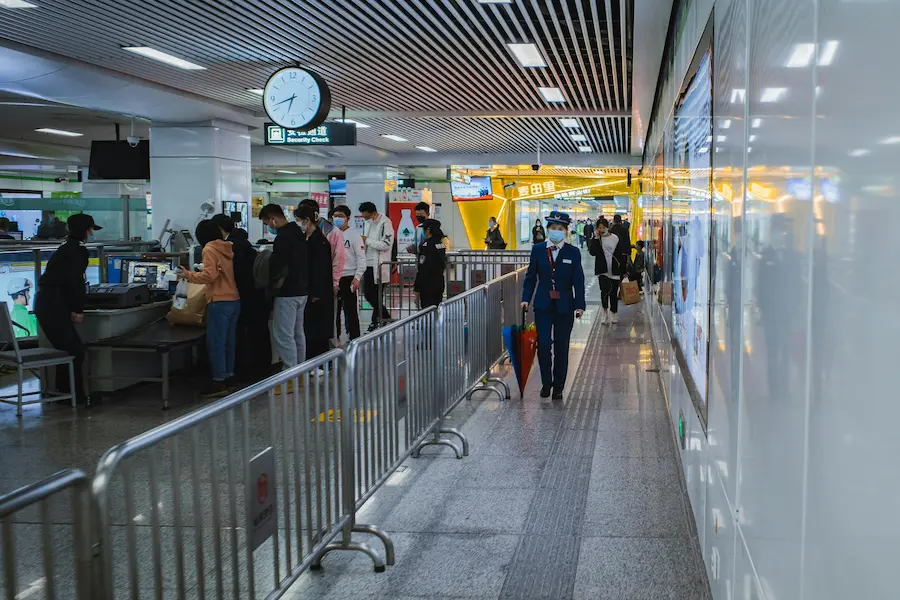
Yes—China’s high-speed rail is generally very manageable with children once you understand the station and ticketing process.
Before our first train journey in China with kids, we imagined confusing stations, stressful boarding, language barriers, and crowded platforms while trying to manage a stroller and multiple bags. But once we actually experienced the system, we quickly realized why so many families in China rely on high-speed rail for long-distance travel.
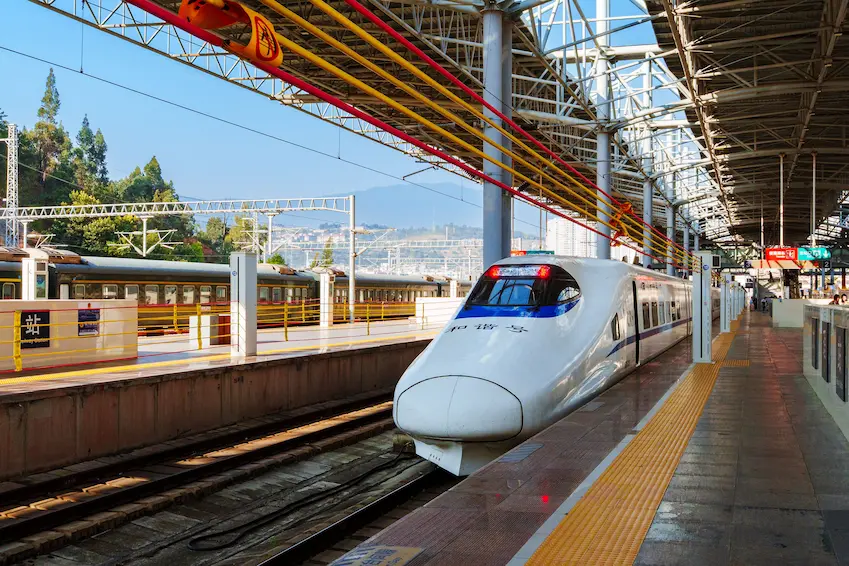
The trains are fast, clean, surprisingly organized, and much easier on young kids than constant airport transfers. And for families planning to visit multiple cities, China’s rail network often makes travel days feel smoother and less exhausting overall.
If this is your first time with young kids, I’d also recommend reading our complete Planning a China Family Itinerary guide first, especially if you’re still deciding how to move between cities naturally and comfortably.
Why Many Families Prefer Trains Over Flying in China
One of the biggest surprises for us was how much less chaotic the actual train ride felt compared to flying with toddlers.
There’s no stressful stroller gate-check process, there are fewer baggage restrictions, there’s more freedom to move around, and you arrive directly in city centers instead of dealing with long airport transfers afterward.
On longer China itineraries covering places like Beijing, Chongqing, Hangzhou, or Zhangjiajie, this can make a huge difference when traveling with younger kids.
We also found train schedules easier to build around nap times and slower family travel days. Once onboard, the experience felt calmer than many short-haul flights we’ve taken in Asia with kids.
What Surprised Us Most About China Rail With Kids
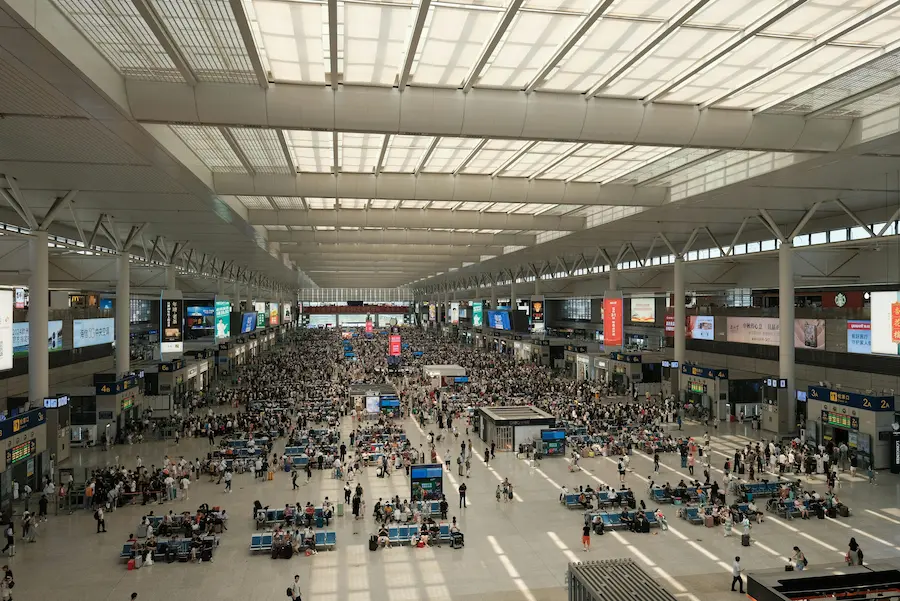
The stations were much bigger than we expected—they look and feel like hyper-modern international airport terminals—but they are also far more organized once you understand the basic flow.
There were clear boarding gates, security lines moved quickly, and staff were used to families traveling with large luggage and kids.
We also didn’t expect to find a few things, like—
- Unlimited Hot Water: Every single high-speed carriage features a hot water station, making it incredibly easy to prep baby formula or warm up food pouches mid-ride.
- Western Toilets: Clean, Western-style sit-down restrooms are available on almost all major high-speed lines (G and D-class trains).
- Smooth rides: The trains glide so smoothly at 350 km/h that your kids can color, play with stickers, or build towers without things sliding off their tray tables.
Our kids were vastly more relaxed on the rails compared to busy, high-friction airport travel days.
Is Train Travel in China Overwhelming for First-Time Visitors?
At first, it definitely can feel intimidating.
Especially when you’re standing outside a massive station holding passports, snacks, jackets, a stroller, and trying to keep overtired kids moving in the right direction.
But in reality, most of the stress comes from not knowing the process beforehand. Once you understand how ticket checks, security, waiting halls, and boarding work, the system becomes surprisingly predictable.
After our first ride, the anxiety dropped dramatically—and by the second or third train journey, it honestly started feeling far easier than navigating airports.
First Class vs. Second Class on China Trains With Kids
This ended up being one of the biggest decisions affecting our overall comfort during train travel in China—especially on longer journeys with luggage, snacks, tired kids, and a stroller constantly being folded and unfolded.
At first glance, the difference between first and second class may not seem huge while booking. But once you’re actually on board with young children, personal space starts mattering a lot more than many parents expect.
| Feature | First Class | Second Class |
| Seating Layout | 2 + 2 (No middle seats) | 3 + 2 (Includes middle seats) |
| Seat Width | ~19 inches (47 cm) | ~17 inches (42 cm) |
| Legroom Space | 16–20 inches (40–50 cm) | ~16 inches (40 cm) |
| Aisle Width | ~24 inches (60 cm) | ~18 inches (45 cm) |
| Tray Tables | Folds out from your own armrest | Attached to the seatback in front |
| Atmosphere | Quieter, fewer passengers per car | Busier, higher foot traffic |
Whether First Class is worth it really depends on:
- Your train duration
- How much luggage you are carrying
- stroller size
- Your kids’ ages
- and how overwhelmed your family tends to get during busy travel days
For shorter rides, Second Class is usually completely manageable. But on crowded long-distance routes, the quieter 2+2 First Class layout can feel dramatically less stressful for families traveling with more gear or younger children.
Is First Class Worth It for Families?
For many Western families, honestly, yes—especially on longer train journeys.
China’s First Class cabins are not luxury in the airline sense, but the extra breathing room can make a noticeable difference once you add the following:
- backpacks
- snacks
- jackets
- toys
- sleeping toddlers
- and a folded stroller into the mix
The biggest advantage for us wasn’t fancy seating. It was simply feeling less cramped.
The 2+2 seating layout gives families more personal space, quieter aisles, and easier movement when kids need bathroom breaks or want to climb around after sitting too long.
On some journeys, we were also able to keep a compact folded stroller directly near our feet without constantly blocking other passengers, which felt much harder in busier Second Class cabins.
For shorter routes under a few hours, we’d probably still choose second class most of the time. But for longer travel days between major cities, First Class can genuinely feel like paying for sanity rather than luxury.
Why Second Class Can Feel Cramped With Strollers
The second class on China’s high-speed trains uses a 3+2 seat layout, and when the train is full, the cabins can start feeling surprisingly tight for families carrying extra gear.
This usually becomes noticeable during:
- boarding
- snack time
- nap transitions
- stroller storage
- and bathroom trips with toddlers
The train itself is still comfortable and clean, but once suitcases, backpacks, winter jackets, and folded strollers start filling the aisle space, movement becomes more awkward—especially during busy holiday periods.
We also noticed that compact travel strollers made a huge difference compared to larger full-size models. Small folding strollers are much easier to tuck beside seats, under leg space, or near luggage racks without creating stress during boarding.
If you’re planning multiple train rides across China, this is one area where packing lighter genuinely improves the experience.
Best Seat Choices for Families With Toddlers
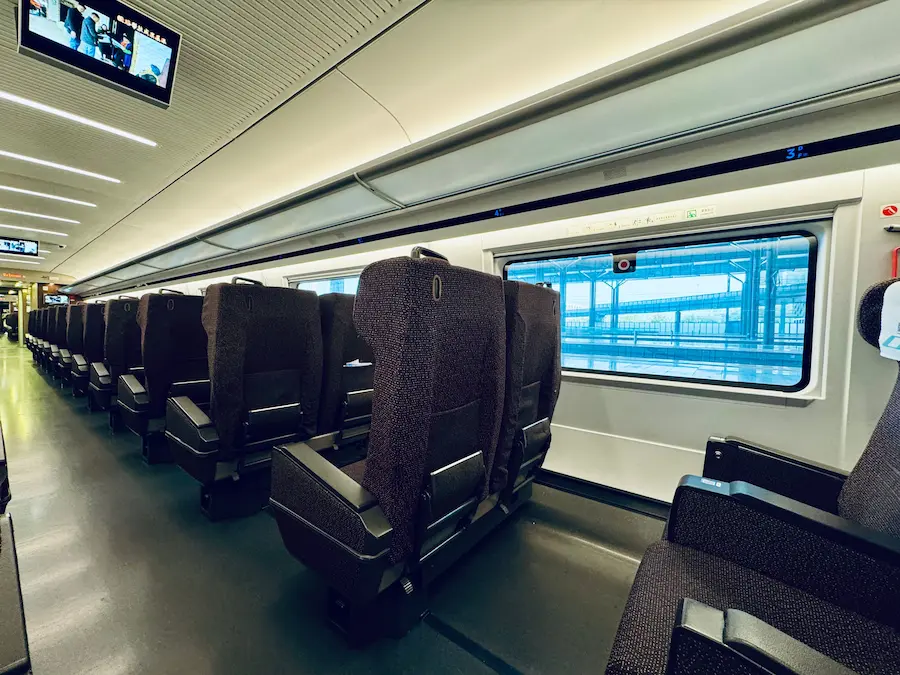
For families with younger kids, seat selection matters more than many people expect.
Whenever possible, we’d personally try to:
- Book seats together in the same row
- Avoid splitting across the aisle with toddlers
- Choose seats closer to luggage storage on longer rides
- and avoid overly isolated seating if traveling with very active children
For four-person families, first-class seating can work especially well because the 2+2 layout naturally keeps everybody together on one side without strangers directly beside you.
If you’re using a compact stroller like a travel stroller or pocket stroller, having that extra floor space nearby also makes boarding and settling in much smoother.
What We’d Personally Choose for Longer Train Rides
After doing multiple train journeys across China with our kids, we’d honestly mix both classes depending on the route length.
For shorter rides, second class usually feels completely fine. We took the Chongqing to Chengdu route in second class, and for a journey of around 2.5 hours, it was comfortable, easy, and didn’t feel stressful at all. If you are planning this exact route, check out our Chengdu with Kids for the best ways to see the pandas without the morning crowds.
We used our stopover day to see if Chongqing’s famous monorails and futuristic layered streets worked for our family—you can see our full breakdown of the city’s monorails, stairs, and food in our Chongqing with Kids Survival Guide.
But for our much longer Shanghai to Chongqing train ride, booking First Class made a huge difference to the overall experience. We started our journey by spending a few days exploring the Bund and family-friendly spots using our Shanghai Family Travel Guide.
The extra space mattered more than we expected once we added:
- backpacks
- snacks
- winter jackets
- tired kids
- and a folded stroller into the mix
The quieter 2+2 cabin layout felt calmer immediately, especially compared to the busier feeling of packed second-class carriages. The kids could stretch out properly, move around more comfortably, and eventually fall asleep without constantly bumping into bags or other passengers.
One thing we genuinely loved was how smooth the ride felt. Even at over 300 km/h, the train barely felt like it was moving at times. Our daughter spent part of the journey happily walking the aisle for snacks, while we actually got to relax a little instead of feeling stuck in survival mode.
For us, the biggest benefit of First Class wasn’t luxury—it was simply reducing overstimulation during a very long travel day.
So if you’re doing:
- shorter daytime journeys
- quick city connections
- or simple 2–3 hour routes
Second class is usually more than enough.
But for major cross-country train days with young kids, heavy luggage, or multiple transfers afterward, we’d personally pay extra for First Class again without hesitation.
Can You Bring a Stroller on a China High-Speed Train?
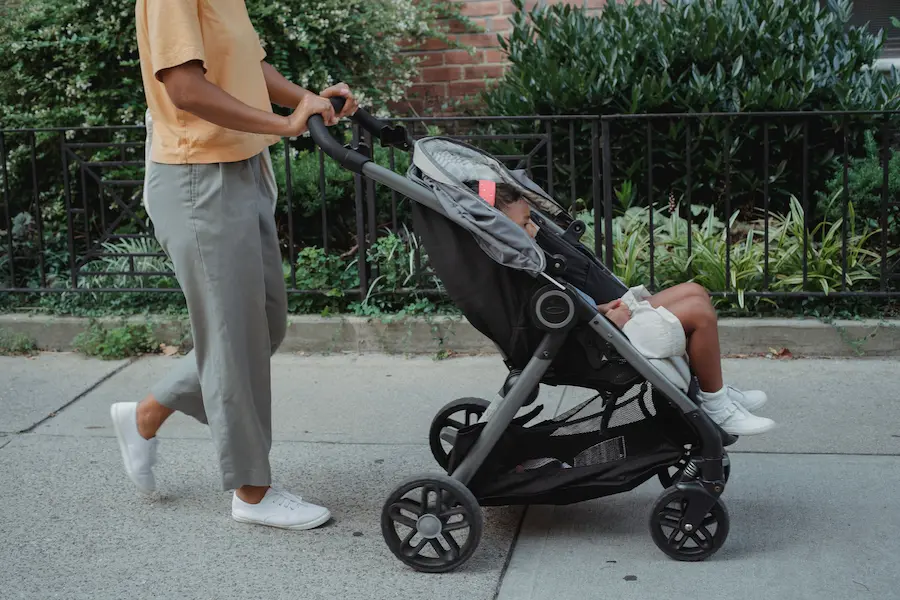
Yes. You can bring a stroller on China’s high-speed trains, and we found travelling with one much easier than we expected.
The main thing to think about is how easily your stroller folds. China’s train stations can involve long walks, busy elevators, and quick boarding, so a compact stroller that folds easily is much more practical for family travel.
Do China Trains Allow Baby Strollers?
Yes. Folded strollers are allowed on China’s high-speed trains, and we regularly saw local families travelling with them too.
You generally keep the stroller with you rather than checking it in like you would at an airport. The important part is being ready to fold it before boarding, especially when the platform becomes busy.
A stroller that folds quickly is particularly helpful when you are also carrying passports, bags, and snacks or managing a tired toddler.
Where to Store a Folded Stroller on the Train
Once onboard, there are several places where a compact folded stroller may fit, depending on the carriage and available space:
- behind the last row of seats
- in the luggage storage areas near the carriage ends
- on overhead racks if the stroller is small and light enough
For us, the space behind the last row was usually the easiest option because the stroller stayed close without blocking the aisle.
On some first-class journeys, we were also able to keep a small folded stroller near our seats because of the additional space.
Are Large Strollers a Bad Idea in China?
For a multi-city China trip, we would strongly prefer a compact travel stroller.
The stations are large, transfers can involve plenty of walking, and boarding can move quickly once the gates open. A bulky stroller becomes much harder to manage through crowded stations, elevators, and train doors.
A compact stroller is easier because it:
- folds quickly
- takes up less storage space
- is easier to carry through busy stations
- and makes boarding less stressful
Whether you are dealing with the hills and stairs of Chongqing with kids, moving through Zhangjiajie with kids, or exploring Beijing with a young child, keeping your stroller lightweight can make the whole travel day easier.
Best Travel Strollers for China Train Travel
For train travel in China, we’d look for:
- a lightweight travel stroller
- a quick one-hand fold
- a compact folded size
- and something you can carry easily when stairs or crowded areas make rolling difficult
The feature we valued most wasn’t extra storage or fancy accessories. It was simply being able to fold the stroller quickly when boarding.
What Actually Happens During Boarding With a Stroller
The first boarding experience felt intimidating because everything speeds up once the gates open.
For us, the process usually looked like this:
Waiting hall → passport check → platform → fold stroller → board train
You can normally use the stroller through the station and onto the platform, but we recommend folding it before reaching the train door.
Once you’re ready to board:
- Fold the stroller
- Organize your bags
- Pick up younger children if necessary
- and board together
The biggest mistake is waiting until you’re standing in the doorway to work out how the stroller folds.
Have it ready before boarding starts, and the whole process feels much calmer—especially when travelling with toddlers.
Navigating Chinese Train Stations With Kids
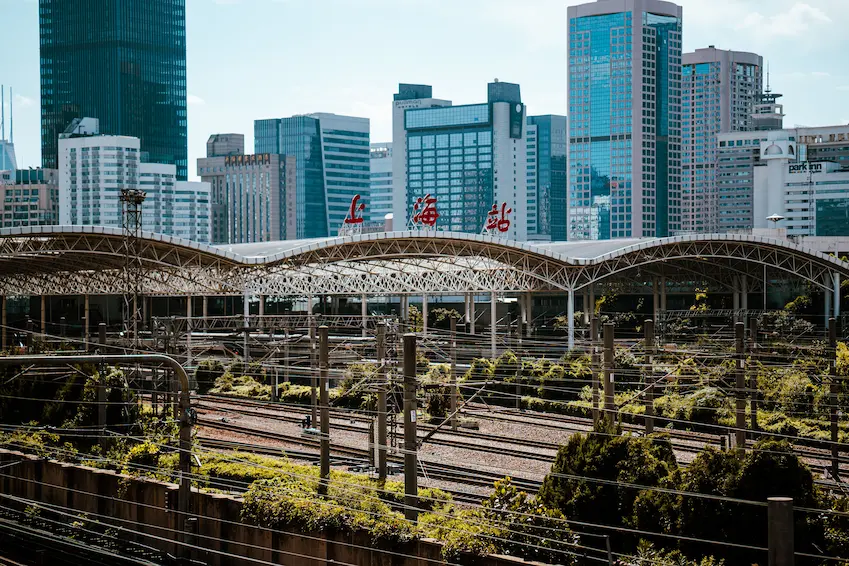
If you’re visiting China for the first time with young kids, the stations will probably feel overwhelming at first.
Our first reaction wasn’t
“Wow, this is easy.”
It was:
“Why does this feel like an airport mixed with a shopping mall and a stadium?”
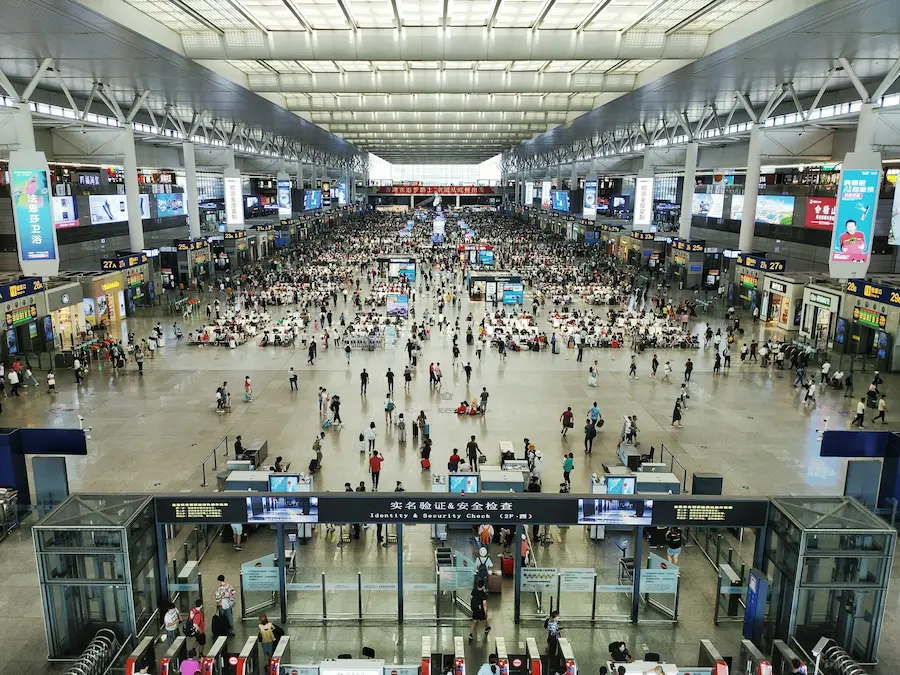
China’s major train stations are enormous. There are security lines, passport checks, giant waiting halls, escalators everywhere, and hundreds of people moving at once—especially in big cities like Beijing, Chongqing, and Shanghai.
But once you understand the sequence, the system starts feeling much more predictable.
And honestly, after our first train ride, the stations became far less stressful than we expected.
What Chinese Train Stations Really Feel Like
The biggest surprise for us was how airport-like everything felt—except even bigger.
When we first entered Shanghai Railway Station with our kids, I honestly felt completely mind-blown for a few minutes. The station was massive, modern, crowded, and honestly felt larger than many Western airports we’ve traveled through.
There were multiple stages before even reaching the platform:
- passport checks
- ticket scanning
- security screening
- giant waiting halls
- escalators and elevators everywhere
And with kids, backpacks, and a stroller, it initially felt overwhelming trying to figure out where we were supposed to go next.
But one thing that genuinely helped calm the situation was how supportive locals were once we looked confused.
Shanghai felt especially easy for us as first-time visitors, as many staff members were familiar with international travelers, and even a few nearby locals helped point us toward the correct platform and restrooms before boarding.
That small kindness honestly made a huge difference during our first train experience in China.
After the first station, everything started making much more sense, and the process became far less intimidating on later journeys.
Step 1: Ticket & Passport Checks
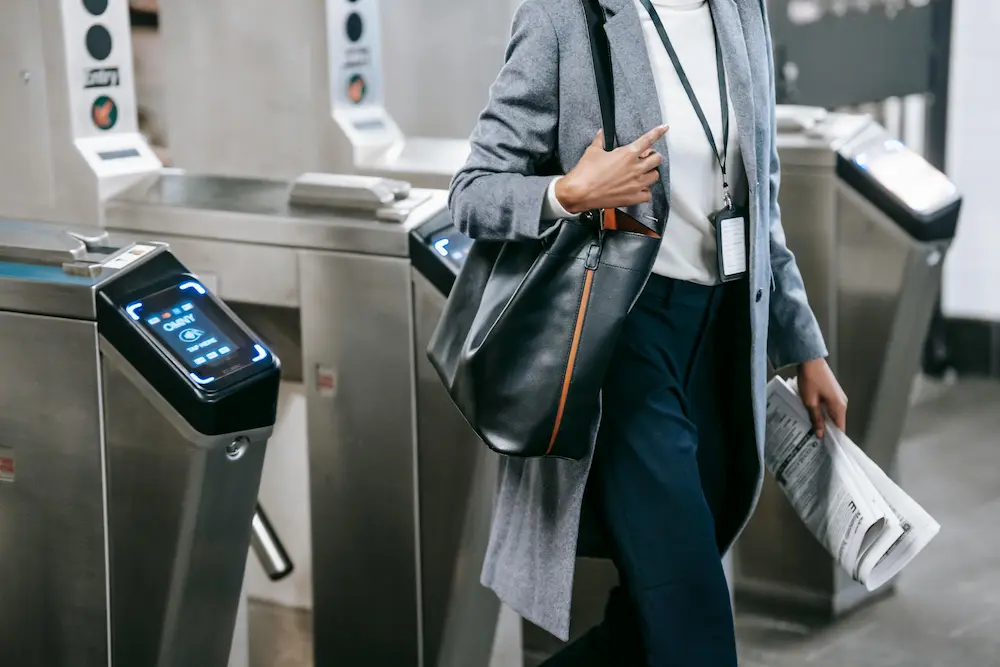
Before entering the station, staff usually check passports and ticket details at the entrance gates.
Foreign travelers normally use the manual passport lanes rather than the automated gates used by locals, so keep everybody’s passports easy to reach instead of buried deep inside backpacks.
One thing we learned quickly is that station entry becomes much smoother when:
- Passports stay in one pouch
- Snacks are already accessible
- And kids don’t need last-minute bathroom trips before security
Step 2: Security Screening With Kids
This was probably the most chaotic part of the process with young kids.
Every bag goes through X-ray screening, which means parents suddenly end up lifting suitcases, backpacks, snacks, and folded strollers onto conveyor belts while also trying not to lose sight of toddlers.
One thing that caught us off guard was security staff asking us to sip from our child’s thermos to prove the liquid was safe. It’s completely normal and only takes a second, but knowing beforehand removes a lot of stress.
Milk, water bottles, snacks, and formula were never a problem for us, but keeping them easy to access definitely helped speed things up.
Step 3: Waiting Halls, Crowds & Family Areas
After security, you enter a massive waiting hall where passengers stay until boarding begins.
These halls can look intimidating at first because they’re huge and busy, especially during holidays or weekends. But they’re also surprisingly organized, with clear train numbers, boarding gates, and departure screens throughout the station.
In larger stations, we occasionally found:
- family waiting areas
- quieter seating corners
- convenience stores for emergency snacks
- and cleaner family restrooms than we expected
This is usually the best moment to
- refill water
- reorganize bags
- Let kids move around briefly
- and mentally prepare for boarding
This waiting period is your best opportunity to refill your formula thermoses with hot water, reorganize your daypacks, let your kids burn off some energy walking around, and mentally prepare for the boarding call.
Step 4: Boarding the Train Without Panic
The station atmosphere changes very quickly once boarding starts.
One moment, everybody is sitting quietly. The next, entire sections of the hall suddenly stand up and begin moving toward the gates together.
The first time felt chaotic, mostly because we didn’t know the rhythm yet.
What helped us most was the following:
- having passports already in hand
- folding the stroller before reaching the train door
- and avoiding last-minute bag rearranging on the platform
Once you’re actually onboard and seated, the stress level drops almost immediately.
Our tip: Collapse your stroller completely on the platform before you step through the narrow train door. Do not wait until you are blocking the carriage entryway to figure out how your stroller folds.
The Red Cap Porter Service Parents Should Know About
This was one of the best insider tips we discovered during train travel in China.
In many large stations, you’ll spot porters wearing bright red caps—often called the “Red Cap” (Xiao Hong Mao) porter service.
For a small fee (typically around 20 to 30 RMB / $3 to $4 USD per large bag), these porters will pile your heavy suitcases onto a trolley and guide your entire family past the massive gate queues. They will lead you down private service elevators straight to the train platform before general boarding even begins.
With tired kids, multiple suitcases, and a stroller, this can genuinely make a huge difference on busy travel days.
The service was especially helpful in larger stations where
- Transfers involved long walks. The
- Elevators were crowded.
- Or we had too much gear for a smooth boarding process
Honestly, this is one of those small things that can completely change the mood of a stressful train travel day with kids.
If your China itinerary includes day trip cities like Hangzhou, Tianjin, Chengdu (with kids), or Xi’an, with larger stations or the smaller ones where stairs or multiple transfers are common, it’s absolutely worth knowing this service exists before you arrive.
China High-Speed Train Luggage Rules: What Families Should Know
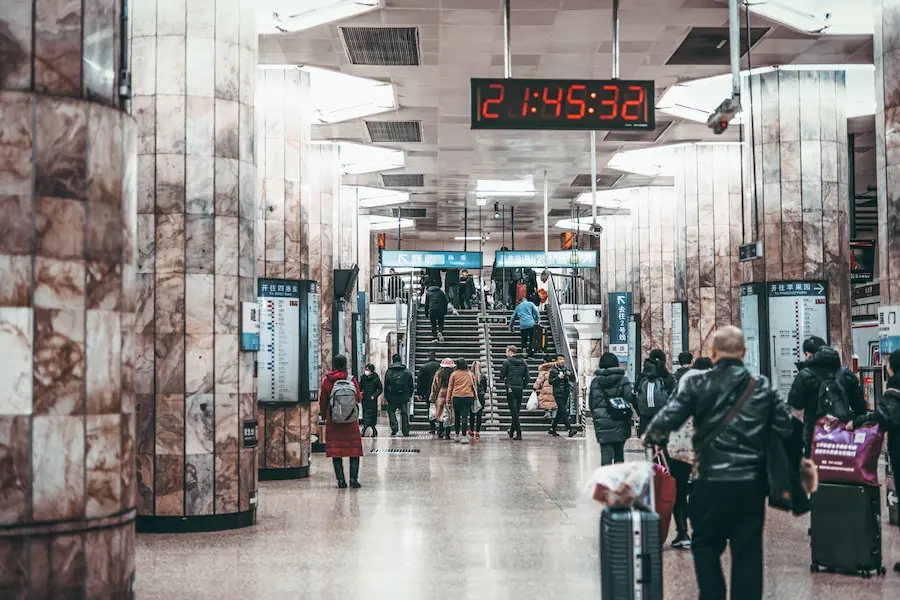
One thing we underestimated before traveling through China with kids was just how much luggage affects the entire train experience.
The trains themselves are comfortable, but moving multiple suitcases through giant stations while managing tired kids and a stroller can quickly become exhausting if you overpack.
After a few train journeys, we realized that lighter luggage honestly mattered more than having extra “just in case” items.
Official Weight and Size Limits: How Much Can You Actually Bring?
China’s high-speed rail network (China Railway) is generally much more relaxed about baggage than commercial airlines, and they rarely—if ever—physically weigh your bags at the gate. However, there are official limits you should be aware of to ensure your bags aren’t turned away at security.
| Ticket Class | Adult Allowance | Child Allowance (Free Tickets) | Maximum Dimensions |
| First Class & Second Class | Up to 20 kg (44 lbs) per person | Up to 10 kg (22 lbs) per person | Total length + width + height cannot exceed 130 cm (51 inches). |
The Reality for Families:
We traveled with multiple large suitcases, daypacks, kids’ backpacks, snack tote bags, and a folded travel stroller without a single issue from station staff. Folded strollers, wheelchairs, and baby gear do not count against your personal weight quota.
That said, just because the train network allows you to carry a massive amount of gear doesn’t mean you should.
The ultimate challenge isn’t the train ride itself—it’s lifting those bags onto security conveyor belts, hauling them up stairs if elevators are backed up, and loading them onto the train quickly during a three-minute platform stop.
Where Heavy Suitcases Actually Go Onboard
Once you step into your assigned carriage, you need to stash your large luggage immediately before navigating down the aisle to your seats.
You have three primary options for large bags inside Chinese trains:
- The Shared Luggage Racks: Located right inside the automatic sliding doors of each carriage, these are multi-tiered, open metal racks designed specifically for oversized suitcases.
- The Space Behind the Last Row: If you are lucky enough to be seated near the back wall of the carriage, there is a wide, triangular floor gap behind the last row of seats where you can slide large suitcases horizontally.
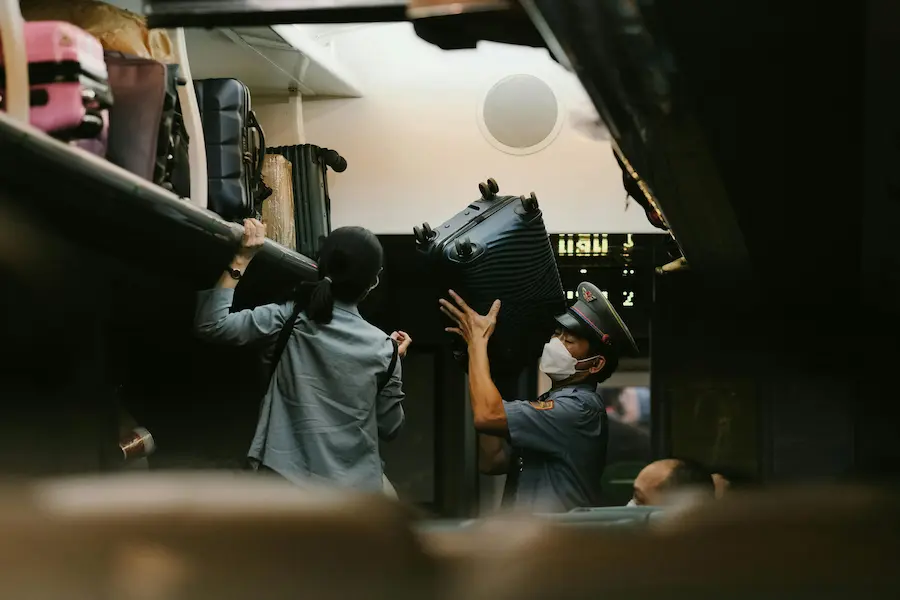
- The Overhead Shelves: Running the full length of the cabin, these shelves are incredibly deep and can easily support medium-sized roller bags and duffels. However, you must be strong enough to lift them completely over your head.
🎒 The “Daypack Separation” Rule: We quickly learned never to pack immediate essentials inside our large suitcases. Once the train fills up, accessing a bag at the bottom of a luggage rack is highly inconvenient.
Keep a dedicated family daypack at your feet containing snacks, wet wipes, formula, water bottles, iPads, chargers, and your passports.
What We’d Pack Differently Next Time
Honestly, we’d pack less.
After moving through several stations with kids, elevators, security lines, and long walking distances, we realized that every extra bag eventually starts feeling heavy.
The things we were happiest to have were
- lightweight luggage
- a compact stroller
- easy-access snack bags
- spare clothes for the kids
- and backpacks that kept our hands free
The things we probably didn’t need?
Too many “just in case” items that we never actually used.
For multi-city China trips involving places like Beijing, Chongqing, or Zhangjiajie with bigger stations and transfers, lighter packing genuinely makes the entire experience feel calmer.
Once your train bookings are sorted, don’t forget the other practical part of travelling around China: paying on the go. Our Alipay & WeChat Pay guide explains how foreign families can set up mobile payments before they arrive.
Onboard Amenities: What It’s Actually Like for Families
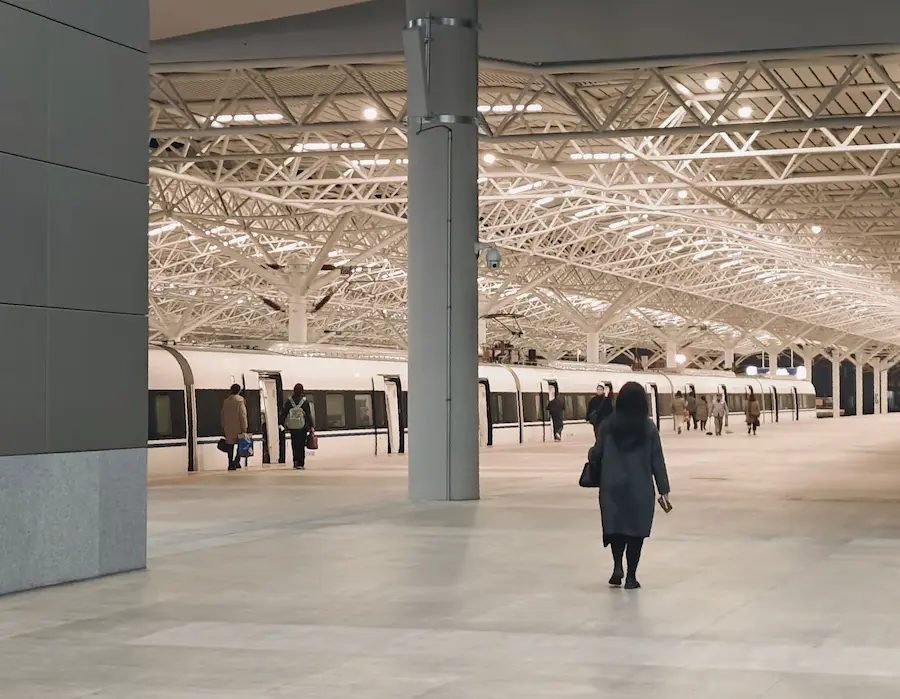
Once you finally clear the station gates, step onto the train, and stash your stroller, the hard part is officially over. The onboard experience on China’s high-speed rail network is incredibly smooth, stable, and surprisingly family-friendly.
Here is exactly what you can expect regarding the day-to-day logistics of keeping your kids clean, fed, and entertained at 300 km/h.
Are China Train Toilets Family-Friendly?
Honestly, better than we expected.
Most high-speed trains we used had both Western-style toilets and squat toilets available inside each carriage area. The Western toilets were what we mostly used with the kids, especially during longer journeys.
In terms of cleanliness, the experience was much closer to airplane bathrooms than old-style train toilets. They weren’t luxurious, but they were usually cleaned regularly throughout the trip and stayed surprisingly manageable even on busy routes.
Some trains also had larger accessible bathrooms with fold-down changing tables, which helped a lot with younger children and diaper changes during longer rides.
That said, we still always carried:
- tissues
- wipes
- hand sanitizer
- and a small emergency diaper kit
because supplies can run low later in the journey.
Is There Hot Water for Baby Formula?
Yes—and this ended up being one of the most helpful things for traveling families.
Every high-speed train we used had free hot water stations onboard, usually located near the carriage connections.
We constantly saw local families using them for:
- baby bottles
- instant noodles
- tea
- and kids’ meals
If you’re traveling with formula-fed babies or toddlers who prefer warm milk, this makes train travel in China much easier than many parents expect.
We’d still recommend carrying:
- your own bottle
- formula portions ready
- and a small thermos for convenience during busy travel moments
But overall, finding hot water onboard was never difficult for us.
What Food Is Available on China Trains?
Most trains had snack carts moving through the aisles regularly selling:
- drinks
- packaged snacks
- instant noodles
- rice meals
- and simple hot food options
Some larger routes also had dining carriages or boxed meal options available during the ride.
The food itself was usually fine for adults, but honestly, we still relied heavily on our own snacks for the kids.
Before boarding, we normally grabbed:
- fruit
- bread
- crackers
- yogurt
- juice
- and familiar comfort snacks
inside the station because travel days always felt smoother when the kids already had food they recognized.
Can Toddlers Walk Around During the Journey?
Yes—and honestly, this is one reason train travel felt easier than flying with young kids.
Once the train settled after departure, we regularly saw children:
- walking the aisles
- stretching near carriage doors
- looking out the windows
- and moving around with parents
The ride is incredibly smooth, so walking around usually feels stable even at very high speeds.
On longer routes, those little movement breaks helped a lot when the kids became restless after sitting too long.
We still tried to avoid the following:
- busy snack cart moments
- boarding periods
- and crowded carriage connections
But overall, the trains felt very manageable with toddlers.
How We Kept Kids Entertained on Long Rides
Honestly, snacks did half the work.
But beyond that, we found that train journeys in China were naturally entertaining for kids because there was constantly something new happening:
- giant stations
- fast-moving city views
- tunnels
- mountains
- snack carts
- ticket checks
- and people moving through the train
For longer rides, the things that helped us most were:
- sticker books
- downloaded cartoons
- coloring pads
- surprise snacks
- window seats
- and letting the kids walk around occasionally instead of forcing constant sitting
One thing we learned quickly was not to give out all the entertainment too early.
Saving a few “special” snacks or activities for the second half of the journey made a huge difference on longer train days.
Mistakes Families Make on China Trains
Honestly, most of the stress we experienced on our first train journey in China came from simply not knowing what to expect yet.
After multiple train rides with kids, there were a few things we’d absolutely do differently next time—especially when traveling through larger stations like Shanghai, Beijing, or Chongqing.
Arriving Too Late
This is probably the biggest mistake families can make.
Chinese train stations are huge, and getting from the station entrance to your actual platform can easily take much longer than many first-time visitors expect.
You’re usually moving through:
- passport checks
- security screening
- waiting halls
- escalators or elevators
- boarding gates
- and long platform walks
With kids, luggage, snacks, and a stroller, everything naturally moves slower.
For our first journey, arriving early removed a huge amount of pressure and gave us time for restroom stops, snacks, and simply figuring out where we were going.
Bringing Oversized Strollers
We were very glad we packed a compact travel stroller instead of a bulky full-size one.
Large strollers become difficult during:
- crowded boarding
- elevator queues
- luggage storage
- and narrow train aisles
China’s stations involve far more walking than many parents expect, especially in cities like Chongqing where stairs, transfers, and long station corridors are common.
A lightweight stroller that folds quickly makes the entire experience dramatically easier.
Underestimating Station Size
The stations honestly shocked us at first.
Shanghai Railway Station especially felt larger than many airports we’ve traveled through in Europe and Asia.
Once inside, there can still be:
- multiple security stages
- giant waiting halls
- long escalators
- platform corridors
- and crowds moving in different directions
The good thing is that stations are usually organized well, but mentally preparing for the scale beforehand helps a lot.
Forgetting Snacks & Water
This sounds small until you’re suddenly stuck inside a busy waiting hall with tired kids and a delayed boarding call.
Most stations do have shops and food options, but travel days felt much smoother when we already had:
- water bottles
- crackers
- fruit
- wipes
- and a few comfort snacks ready before entering the station
Honestly, snacks solved a surprising number of toddler problems during train travel days.
Assuming Boarding Works Like Europe
This was one of our biggest mindset adjustments.
In many European train stations, you can often walk directly onto the platform shortly before departure. China’s high-speed rail system feels much closer to airport boarding.
There are:
- security checks
- waiting zones
- boarding gates
- passport scans
- and organized boarding flows before you ever reach the train itself
The first experience can feel overwhelming, but once you understand the sequence, the process becomes much more predictable on later journeys.
Is Taking the Train Better Than Flying in China With Kids?
After doing both, we personally found train travel much easier for most multi-city trips around China with young kids.
That doesn’t mean flights are always a bad idea—especially for very long distances—but for many popular family routes, the train simply felt less exhausting overall.
Why We Preferred Trains for Multi-City China Trips
The biggest difference for us was how much smoother the travel days felt once we were actually onboard.
With trains, we didn’t have to deal with:
- stroller gate-checking
- strict liquid rules
- long airport transfers outside the city
- or waiting around baggage belts with tired kids
Most high-speed stations connect directly into major cities, which made transfers much easier with luggage and a stroller.
The train rides themselves also felt calmer. The kids could move around occasionally, snacks were easy, and we weren’t constantly strapped into airplane seats during delays or turbulence.
For routes like
- Shanghai to Chongqing
- Beijing to Xi’an
- or Chongqing to Chengdu
We’d personally choose the train again without hesitation.
When Flying Still Makes More Sense
For extremely long distances, flights can still save a lot of time.
If your itinerary includes places very far apart—especially with limited travel days—flying may simply be more practical.
Flights also made more sense for us when:
- Train journey times became very long
- We were already exhausted from sightseeing
- Or we wanted to avoid overnight travel with the kids
China is huge, and sometimes choosing the faster option helps everybody stay happier during the trip.
Which Option Is Easier With Toddlers?
For our family, trains felt easier most of the time.
The stations initially looked intimidating, but once we understood the process, the actual journeys became surprisingly manageable.
Having:
- more space
- easier snack access
- smoother rides
- city-center arrivals
- and the ability to move around
made a big difference with younger kids.
Most importantly, the train days simply felt calmer emotionally compared to airport travel days.
Are China’s high-speed trains with kids worth it?
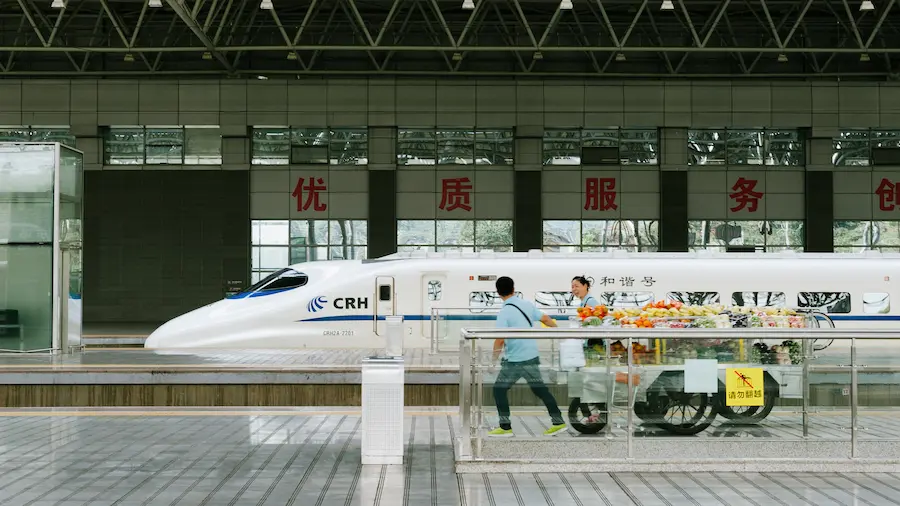
Absolutely—especially once you get past the first journey.
Our first station experience in China honestly felt overwhelming. There were giant halls, security checks, passport scans, luggage, crowds, and tired kids all happening at once.
But after that first ride, everything started making sense much faster than we expected.
The trains themselves were:
- cleaner
- calmer
- smoother
- and far more family-friendly than we imagined before visiting China
Were there stressful moments? Of course.
But there were also moments where we looked out the train window at mountains, cities, and countryside flying past at 300 km/h while the kids quietly snacked beside us—and realized the travel day actually felt easier than many airport days we’d done before.
If you’re currently feeling nervous about navigating China’s rail system with kids, that feeling is completely normal.
But once you understand how the stations work, where luggage goes, and how boarding happens, the whole experience becomes far less intimidating than it first appears.
And by the second or third ride, there’s a good chance you’ll start wondering why train travel with kids feels this much easier in China than in many other places.
If you’re building your full route, our Best Places in China With Kids guide can help you choose destinations that feel exciting without becoming overwhelming for younger kids.
China High-Speed Train Child Ticket FAQ
1. Can My 8-Year-Old Ride China’s High-Speed Train for Free?
No. Children aged 6 to 13 require a discounted child ticket with their own assigned seat. If your child is 8 years old, you should expect to purchase a child ticket when booking.
2. Can a Child Under 6 Travel Free on China’s High-Speed Train?
Yes. A child under 6 can travel free with a paying adult, but the child does not receive a reserved seat. Each adult can accompany one free under-6 child; additional under-6 children need a child ticket.
3. Does China Use Age or Height for Child Train Tickets?
China Rail now uses an age-based ticketing system for all passengers, including foreign visitors. Parents should still carry passports for verification during their journey.
4. Can a Child Travel Alone on China’s High-Speed Rail?
China’s railway policies for unaccompanied minors can vary, so families should always check the latest guidance before booking. In practice, most younger children travel with an accompanying adult.
5. Can a 10-Year-Old or 15-Year-Old Travel Alone in China?
While older children may be able to travel independently under certain circumstances, we would personally recommend that younger travelers be accompanied by an adult whenever possible—especially if it’s their first time navigating China’s railway system.
6. Are Strollers Allowed on China’s High-Speed Trains?
Yes. Compact folding strollers are permitted and are commonly used by both local and international families traveling throughout China.
7. Is First Class Worth It for Families?
For longer journeys, First Class can be worth considering because the 2+2 layout provides more space and fewer seats per row. Whether the extra cost is worthwhile depends on your journey length, children’s ages, luggage, and budget.
8. Is China’s High-Speed Rail Better Than Flying With Kids?
For most multi-city itineraries, we found train travel less stressful than flying. City-center stations, smoother journeys, and easier luggage handling make high-speed rail an excellent option for families.
🗺️ Plan Your Next Family Stop in China
Ready to map out the rest of your China adventure with kids? These detailed family guides helped us plan smoother routes, easier transfers, and far less stressful travel days across the country.
- Planning China With Kids Guide: Everything we wish we knew before our first trip—including essential apps, mobile payments, transport, safety, and realistic family pacing across China.
- Our Easy China Itinerary With Kids: The exact multi-city route we used with young kids, including what worked well, where we slowed down, and the train connections that felt easiest as a family.
- Alipay & WeChat Pay Setup Guide: How we set up mobile payments as foreign travelers before arriving in China—including the small mistakes that saved us major stress later.
- Beijing With Kids Guide: Navigating Beijing’s huge attractions, subway system, stroller logistics, and family-friendly neighborhoods without feeling overwhelmed.
- Shanghai With Kids Guide: Why Shanghai ended up feeling like one of the easiest first cities in China for families, especially with strollers and younger kids.
- Beijing or Shanghai First? A realistic breakdown of which megacities feel easier for first-time visitors to China with children.
- Hangzhou With Kids Guide: Slower-paced lake walks, tea villages, calmer scenery, and one of the most relaxing family stops we had after bigger cities.
- Tianjin With Kids Guide: An underrated stop near Beijing featuring European-style streets, riverside walks, and a much calmer atmosphere for families.
- Chongqing With Kids Survival Guide: What it’s really like navigating the city’s famous staircases, monorails, steep streets, and giant stations with kids and luggage.
- Chengdu With Kids Guide: How to visit the giant panda base without the overwhelming crowds, plus the calmer side of Chengdu family travel.
- Zhangjiajie With Kids Guide: Mountain elevators, glass bridges, complex transfer logistics, and what families should realistically expect with strollers and younger children.
- Our Great Wall With Kids Experience: The sections that felt most manageable with children, stroller realities, and how we avoided turning the day into an exhausting climb.

FOUNDER • FAMILY TRAVEL WRITER • MUM OF TWO
About the Author
Hi, I’m Shivani, the founder of Roaming Crew.
Based in Singapore and having lived in different parts of Asia—including two years in India—I’ve explored 18+ destinations across the region, with 12+ of those journeys taken alongside my young kids.
From choosing family-friendly destinations and navigating local transport to budgeting, accommodation, and practical travel logistics, Roaming Crew is created with a parent-first mindset.