
Bali wasn’t new to us.
We had already seen it once—fast, carefree, a little chaotic in the best way. Scooters, sunsets, temples, and days that didn’t need much planning.
But coming back with our daughter changed the way we experienced everything.
This time, the questions were different.
Not “What should we see?”
But…
“Will this feel easy with a child?”
“Where can we actually slow down?”
“Is Bali really as family-friendly as everyone says?”
We landed in Denpasar after a stopover in Singapore, a necessary breather before the final hop to Indonesia, carrying snacks, a tired toddler, and a quiet hope that this trip would feel manageable—not overwhelming.
And what we discovered is this:
Bali can be one of the most rewarding places to travel with kids—
But only if you understand the new way it works.
Because Bali isn’t one single experience.
There’s the busy, buzzing side—traffic, crowds, beach towns full of energy.
And then there’s the softer side—morning light over rice fields, quiet villas, warm smiles, and days that unfold slowly.
We found that balance in places like Ubud, where our mornings were calm and unhurried, and in Seminyak, where beach days meant shell collecting, watching older kids surf, and simply letting our daughter be.
Some days were beautifully slow.
Others were messy, humid, unpredictable—like hiking up Mount Batur at sunrise with a half-awake toddler asking endless questions.
And that’s exactly the point.
Bali doesn’t need to be perfect to be incredible with kids.
It just needs to be planned right.
This guide is here to help you do that.
Not just where to go,
But how do you choose the right areas, avoid common mistakes, and create a trip that actually feels easy—whether you’re traveling with a toddler or school-aged kids?
So if you’re planning your first family trip to Bali with kids and wondering
👉 If you’re feeling nervous about the logistics, read my guide on Is Bali Safe for Families? where I break down the real risks we faced with our 2- and 5-year-olds.
👉 Where should we stay?
👉 How do we get around without stress?
You’re in the right place.
Because once you understand Bali a little better, it becomes something rare:
A destination where adventure and rest exist side by side—
and where both kids and parents find their own version of joy.
The Reality of Bali: What the Instagram Photos Don’t Tell You
Before you fall in love with Bali on Instagram, there’s something important you should know:
Bali isn’t a perfectly polished tropical island—and that’s actually part of its charm.
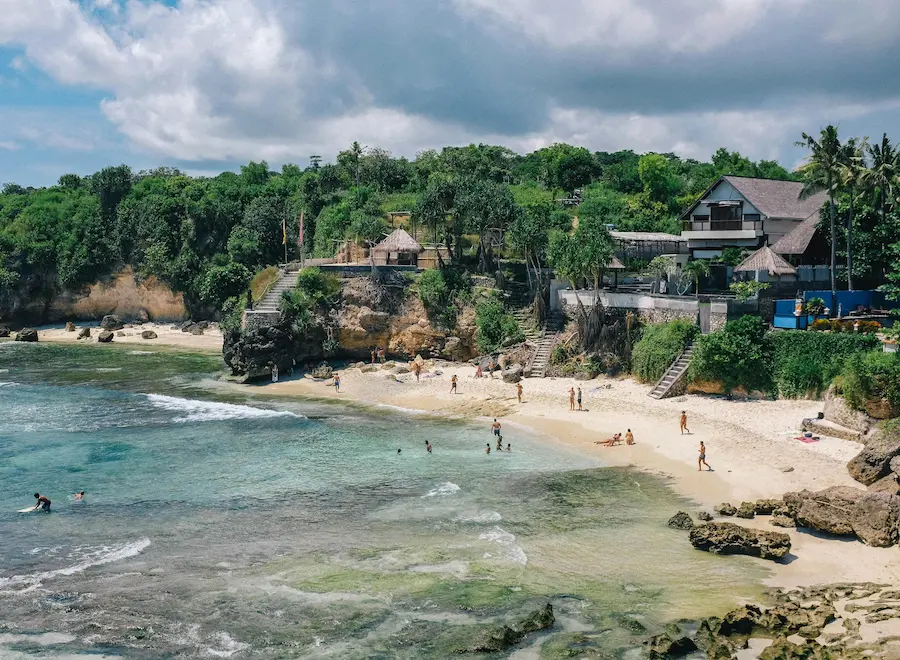
If you’re imagining untouched white beaches everywhere, quiet roads, and seamless travel days… Bali might surprise you.
Some beaches (especially in certain seasons) can have seaweed or rough waves.
Traffic in popular areas like Seminyak or Canggu can feel slow and chaotic; the secret is in how you choose your bases—which we’ll get to in a moment.
And moving between places often takes longer than it looks on the map.
It’s a place where nature is close—sometimes even inside—but that’s part of the authentic jungle experience.
But here’s what no one tells you clearly enough:
👉 Bali works beautifully for families when you plan it the right way.
Because once you step into the right spaces, everything shifts.
Private villas offer something many destinations don’t—
space to breathe, your own pool, quiet mornings, and room for kids to just be.
Resorts are thoughtfully designed for families, with kids’ clubs, safe environments, and incredibly warm hospitality that makes traveling with children feel easier than expected.
And then there’s the part that truly stays with you:
The culture.
You’ll see daily offerings of flowers and incense placed outside homes and temples.
You’ll hear soft chants in the background, notice small rituals woven into everyday life, and feel a kind of calm that’s hard to explain—but easy to remember.
Bali isn’t about perfection.
It’s about balance.
A little chaos, a lot of beauty, and just enough comfort to make it all feel manageable with kids.
If you come expecting a flawless beach destination, you might feel disappointed.
But if you come knowing what Bali really offers—
👉 space, warmth, culture, and flexibility—
You’ll find it’s one of the most rewarding places to travel as a family.
And in the rest of this guide, I’ll show you exactly how to plan it so it feels that way from day one.
Weighing Your Island Options?
If you are worried about Bali’s heavy traffic with a stroller, a lesser-known alternative is Vietnam’s biggest holiday island. We did a side-by-side comparison of the vibes, traffic, and toddler safety in our review: Is Phu Quoc Worth Visiting With Kids? (Phu Quoc vs. Bali).
How Families Actually Travel Bali (The 3-Base Route That Works)
One of the biggest mistakes first-time visitors make in Bali is trying to see too much.
On a map, everything looks close. In reality, traffic, narrow roads, and the island’s layout can make even short distances feel long—especially with kids.
That’s why most families who truly enjoy Bali follow a simple, flexible structure:
👉 The 3-base strategy
Instead of moving every couple of days, you choose 2–3 well-connected areas and explore slowly from there.
Here’s what that looks like in real life:
🌿 1. Sanur — The Gentle Start
If you’re arriving after a long-haul flight, Sanur is one of the easiest places to begin.
- Calm, shallow beaches (great for younger kids)
- Walkable promenade (the famous 5km boardwalk) — one of the only places in Bali where you can truly push a stroller without stress.
- Short transfer from the airport (around 30–40 minutes)
It’s not flashy, but that’s exactly why it works.
👉 Think of Sanur as your soft landing: a place to recover from jet lag, settle in, and ease into Bali’s rhythm.
Mum Tip: Don’t try to fight the 3 AM wake-up call on your first night. We’ve found that Sanur’s sunrise is the best way to reset your body clock. If you’re worried about the kids being wide awake at midnight, check out my Long-Haul Jet Lag Survival Guide for the exact steps we take to survive the first 48 hours
🌾 2. Ubud — Nature, Culture, and Space
After a few relaxed days, most families move inland to Ubud with the kids.
- Rice fields, jungle views, and quieter villa stays
- Easy access to temples, waterfalls, and cultural experiences
- A slower pace that works surprisingly well with kids
Yes, Ubud can get busy in parts—but if you choose your stay carefully (slightly outside the center), it feels completely different.
👉 This is where Bali starts to feel meaningful, not just beautiful.
Don’t miss our guide to Ubud With Kids, where we share our family’s honest experience exploring Bali’s cultural heart—from temples and koi ponds to the Monkey Forest and scenic jungle walks.
🌊 3. Seminyak (or Canggu) — Beach + Comfort
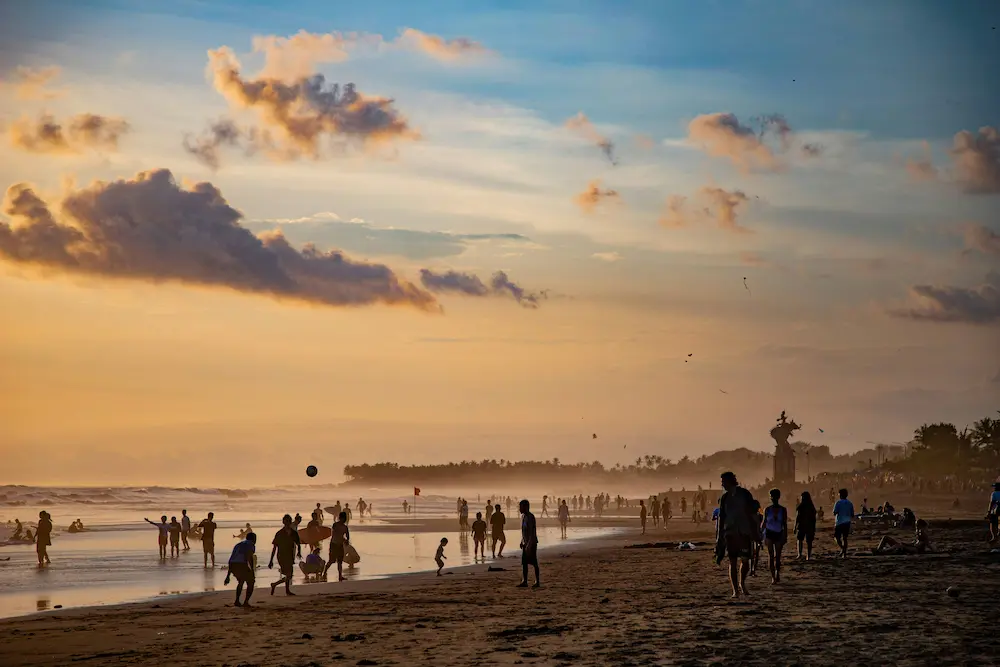
To end the trip, the parents head back toward the coast.
Seminyak (or nearby areas) offers:
- Easy access to restaurants and cafes (great for picky eaters)
- Beach time without needing long drives
- Comfortable villas and resorts with everything close by
It’s more lively—but by this stage, that energy often feels fun rather than overwhelming.
👉 This is your wind-down phase: beach walks, sunsets, relaxed evenings.
✨ Why This Route Works So Well for Families
This isn’t just a random itinerary—it’s a flow that matches how families actually travel:
- You start easy (Sanur)
- You experience Bali deeply (Ubud)
- You end comfortably (Seminyak)
No rushing. No constant packing. No exhausted kids.
✔ A Simple Way to Plan Bali with Kids
If you’re visiting for 7–10 days, a balanced version looks like:
- 2–3 nights in Sanur
- 3–4 nights in Ubud
- 2–3 nights in Seminyak
You can adjust based on your pace—but keeping fewer bases almost always leads to a smoother trip.
Because once you stop trying to “see all of Bali” and start traveling it this way…
👉 it becomes calmer, easier, and far more enjoyable—for both you and your kids.
Is Bali Safe and Clean for Kids?
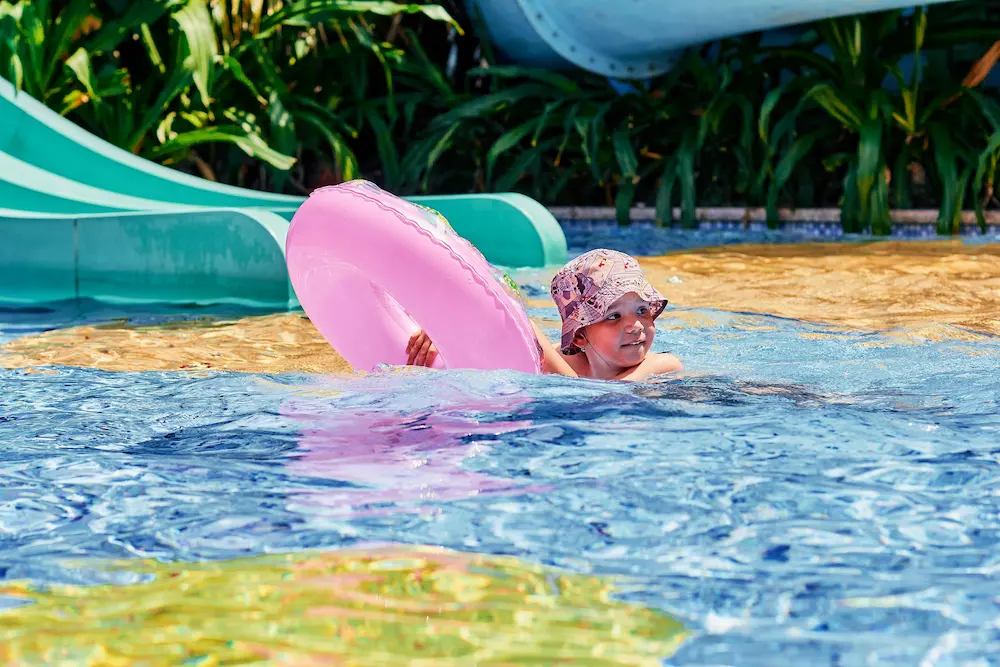
This is usually our biggest worry before booking Bali with kids—and it’s a fair one.
Because when you’re traveling with kids, especially to a tropical destination, “safe” doesn’t just mean crime. It means:
👉 clean food
👉 reliable healthcare
👉 manageable environment
In our experience, yes—Bali is safe and comfortable for families…
If you choose the right areas and stay.
However, if you are bringing very young kids, there are unique logistical hurdles you’ll want to plan for. Check out our breakdown of what we wish we knew before booking Bali toddler travel to avoid the most common layout mistakes.
Here’s what that really looks like:
🍽️ Food Hygiene (and “Bali Belly” — what parents should know)
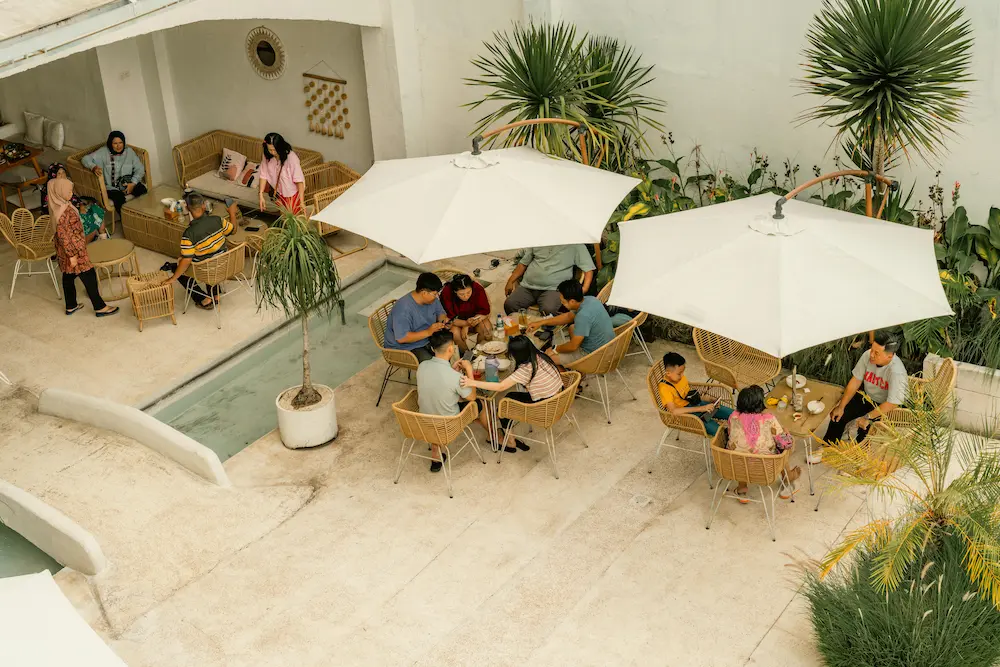
Let’s talk about the thing everyone worries about, but few explain properly: Bali Belly.
It’s essentially traveler’s stomach upset caused by new bacteria, food handling differences, or even just a sudden change in diet.
And yes—it can affect kids more quickly than adults.
We’ve seen families where kids felt completely fine… and others where the first 2–3 days were rough with:
- upset stomach
- low energy
- loss of appetite
👉 This doesn’t mean Bali is unsafe—it just means it’s different.
How to reduce the risk:
- Stick to well-reviewed restaurants, cafes, and hotel food
- Avoid tap water (including brushing teeth for very young kids)
- Be cautious with ice in smaller, unknown places
- Start with simple, familiar meals on days 1–2
👉 I recommend carrying basic medication for the full family, especially for kids (after consulting with your doctor), just in case.
Most importantly:
Even if it happens, it usually passes quickly.
🧼 Cleanliness standard in Bali — What to Expect
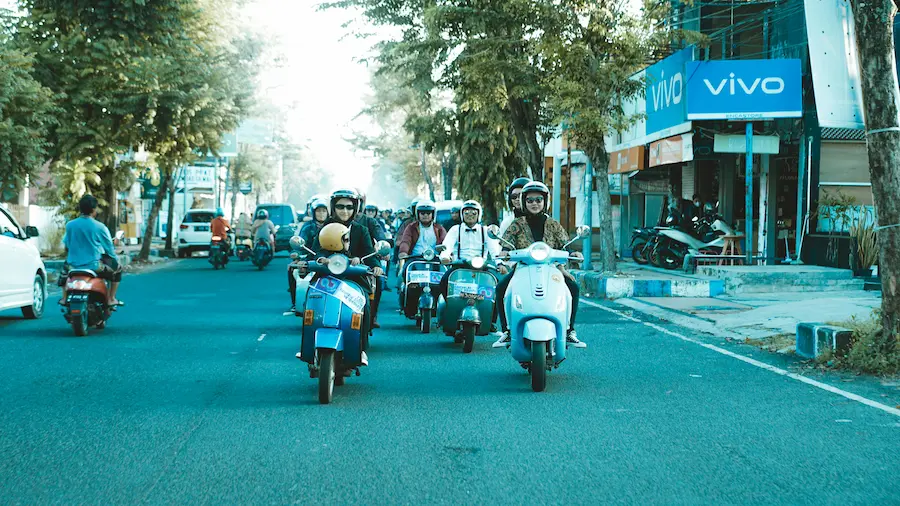
Bali isn’t uniformly “clean” in the way some Western destinations are.
- Streets in busy areas can feel messy
- Some beaches have seaweed or debris (seasonal)
- Public spaces vary a lot
But here’s the key difference:
👉 Your experience depends heavily on where you stay.
- Villas and resorts are usually very clean and well-maintained
- Family-friendly accommodations prioritize hygiene and comfort
- Restaurants in tourist areas follow good standards
Now, most cafes and beach clubs use purified ice cubes, so that sunset smoothie is usually much safer than it was a decade ago.
So while Bali as a whole feels mixed, your day-to-day environment can still feel very comfortable.
🦟 Mosquitoes, Bali Spiders & Tropical Climate
Bali is tropical—so yes, mosquitoes are part of the environment.
For most families, this just means being prepared, not worried.
- Use child-safe mosquito repellent (especially in the evenings)
- Choose a stay with good airflow or air conditioning
- Pack light, breathable clothing
👉 You might also come across mentions of Bali spiders. You might see a golden orb weaver in the trees—they stay in their webs and actually eat the mosquitoes you’re worried about.
Here’s the reality:
- Most spiders in Bali are harmless and avoid humans
- You may occasionally see larger spiders in gardens or outdoor areas
- Villas surrounded by nature tend to have more visible insects than hotels
👉 For families, this is usually more of a “surprise moment” than a real concern.
Simple precautions help:
- Keep doors and windows closed when possible
- Choose well-maintained accommodations
- Ask staff if you’re unsure—they’re used to helping guests
👉 It’s also worth noting:
Some kids take time to adjust to the heat + humidity.
You might notice:
- low energy for the first couple of days
- irritability
- dehydration if not careful
Solution? Slow down. Hydrate. Don’t over-plan.
🏥 Healthcare & Hospitals
This is where Bali does really well as a tourist destination.
In areas like:
- Seminyak
- Sanur
- Ubud
For total peace of mind, know that international-standard hospitals like BIMC (in Sanur and Nusa Dua) have English-speaking pediatricians and are used to treating traveling families.
Many hotels can also arrange:
- doctor visits
- Transport to clinics
👉 Because Bali healthcare is private, we never fly without comprehensive family travel insurance. [Link: See the insurance we use for Asia trips here].
Bali is not “perfectly clean” or “perfectly easy.”
But it is:
✔ manageable
✔ welcoming
✔ incredibly family-friendly
And once you understand how to navigate it—
👉 It starts to feel far less intimidating than you imagined.
If anything, most families don’t struggle because Bali is unsafe…
They struggle because they try to do too much, too fast, without adjusting to the environment.
And that’s exactly what we’ll help you avoid in the next sections.
Where to Stay in Bali with Kids (Areas + What Actually Works)
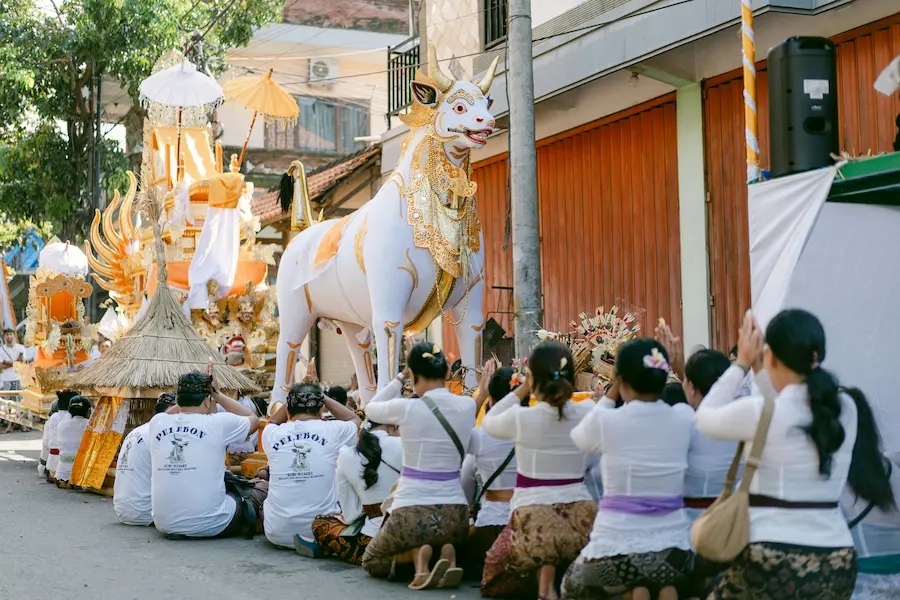
Where you stay in Bali will shape your entire trip—more than your itinerary, more than the activities you plan.
Because in a place that can feel both calm and chaotic, your accommodation becomes your safe, comfortable base.
But here’s what many first-time visitors don’t realize:
👉 It’s not just what you book (villa or resort)
👉 It’s also where you stay with kids in Bali
And both decisions go hand in hand.
🌿 Step 1: Choose the Right Area in Bali (This Changes Everything)
Bali isn’t one single experience. Each area feels completely different—and that’s why choosing the right base matters so much when you’re traveling with kids.
Here are the three areas that work best for most families in Bali, with honest expectations:
Sanur — The Calm, Easy Start
If you’re arriving after a long flight, Sanur is one of the easiest places to begin.
✔ Calm, shallow beaches (great for younger kids)
✔ The 5km Beach Boardwalk (strollers, bikes, easy movement)
✔ Short, stress-free drive from the airport
It’s quieter, slower, and far less overwhelming than other parts of Bali.
👉 Not the most “Instagram-famous” area—but for families, it works beautifully in those first few days.
Ubud — Nature, Culture, and Slower Days
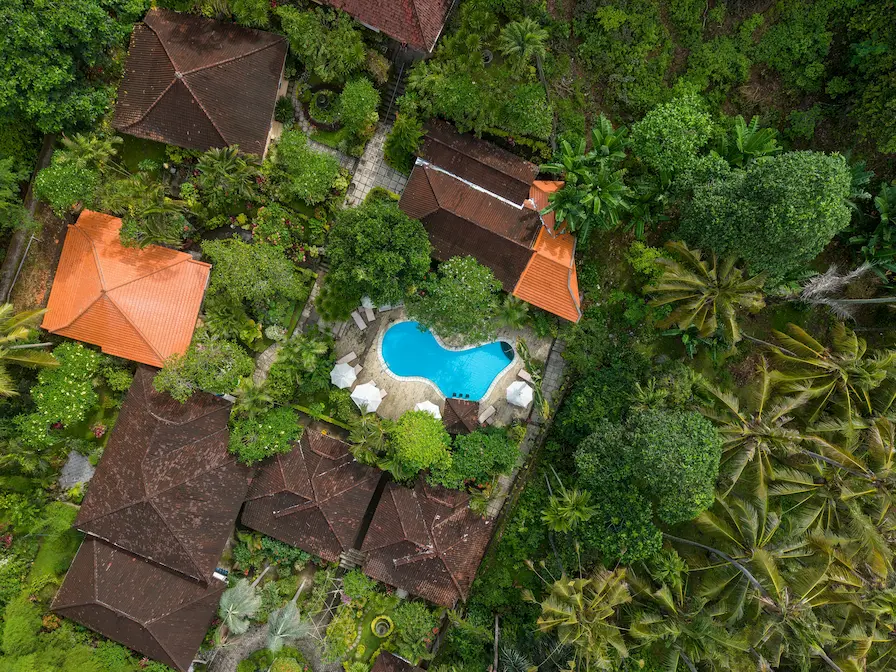
Ubud is where Bali starts to feel deeper and more meaningful.
✔ Rice fields, jungle views, fresh air
✔ Beautiful villas with space and privacy
✔ Cultural experiences, temples, nature
But honestly:
❗ Central Ubud can be crowded and traffic-heavy
❗ Some activities involve stairs, heat, and effort
👉 The key is staying slightly outside the center.
That’s where you’ll find quiet mornings, open space, and a much calmer experience with kids.
Seminyak (or Canggu) — Easy Living + Beach Time
Toward the end of the trip, many families move back to the coast—Canggu is the trendiest spot in Bali, but for first-time parents, Seminyak is often ‘easier’ to navigate with a stroller.
✔ Great restaurants and cafes (helpful with picky eaters)
✔ Easy beach access
✔ Villas and resorts with everything close by
But:
❗ It’s busy
❗ Traffic is part of daily life
👉 Still, once you’re settled, it feels easy and comfortable—especially for relaxed beach days.
Step 2: Choose What Kind of Stay Works for You
Once you’ve chosen your area, the next decision is:
👉 Resort or villa?
And the truth is, both can work beautifully.
Resorts in Bali — The Easy, Reassuring Option
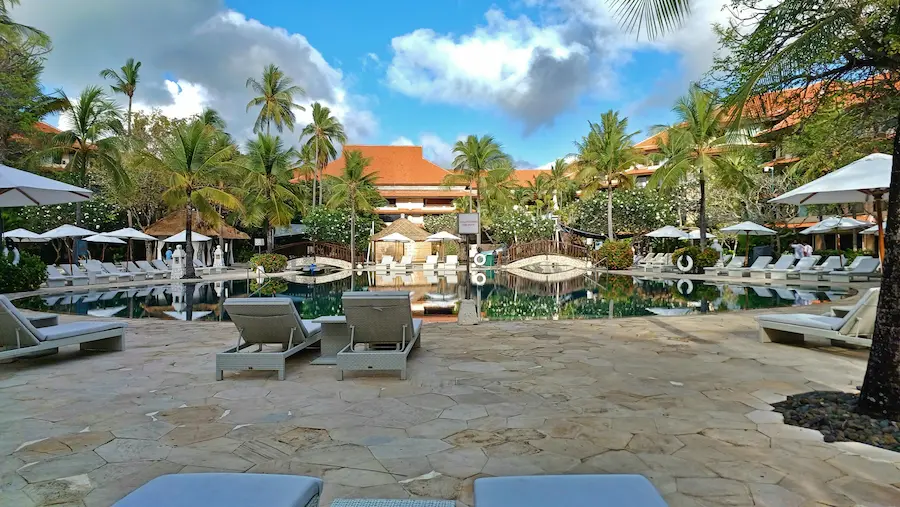
For many parents, resorts feel like the safest and simplest choice—especially at the start of the Bali trip with kids.
Everything is taken care of:
- On-site restaurants (no meal stress)
- Clean, well-managed spaces
- Secure environments with helpful staff
- Pools designed with families in mind
And one thing that often surprises parents:
👉 The childcare quality in Bali is genuinely excellent.
Kids’ clubs here are engaging, well-run, and thoughtfully designed.
And if your child is younger (usually under 4), many resorts also offer affordable private nannies in Bali, and it’s surprisingly affordable (often around $5–$7 USD per hour), which can make a huge difference during long travel days.
Villas in Bali — Space, Privacy, and Real Bali Living
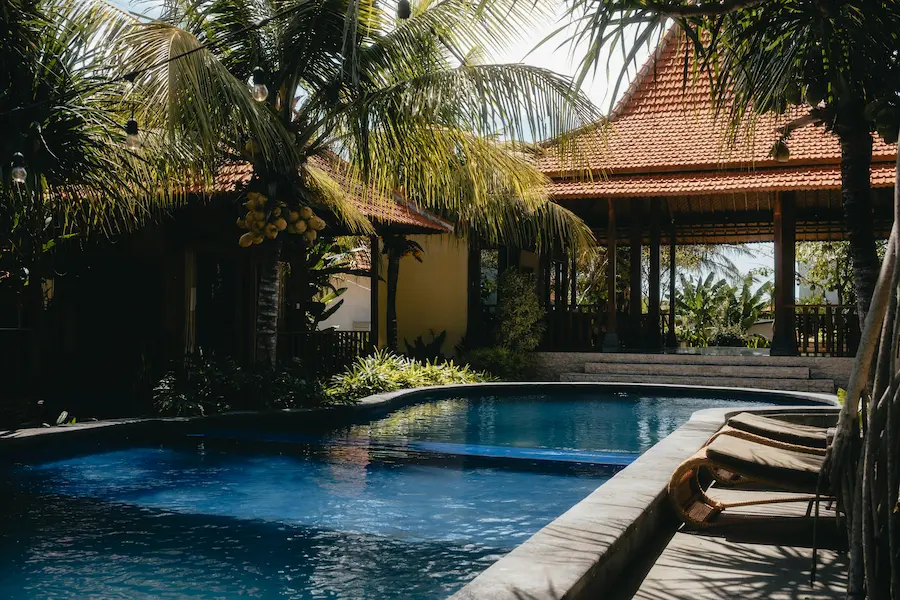
Once you’ve settled into Bali, villas start to make a lot of sense.
This is where the experience slows down.
- Your own private pool
- More space for kids to move freely
- Flexible routines (perfect for naps)
- Quiet, unhurried mornings
It often feels less like a hotel and more like a home.
The Pool Safety Tip Every Parent Should Know
This is the one detail many parents worry about—and rightly so.
Most private villas:
- don’t have pool fences
- don’t have lifeguards
- aren’t childproofed by default
But here’s what many families don’t know:
👉 You can rent a pool fence before you arrive.
Local services can install one at your villa—making the space much safer and far more relaxing for parents with younger kids.
✨ The Smart Way to Plan It
If you’re visiting Bali for more than a week, the easiest approach is to combine both location and stay style:
- Start in a resort (Sanur or Nusa Dua) → recover, adjust, keep things easy
- Then move to a villa (Ubud or Seminyak) → slow down, enjoy space
This simple shift changes the entire feel of your trip.
Because in Bali, choosing the right place to stay isn’t just about comfort—
👉 It’s what makes your entire trip feel calm… or completely overwhelming.
Getting Around Bali with Kids (The One Decision That Changes Everything)
If there’s one practical tip that will completely change your experience in Bali with kids, it’s this:
👉 Hire a private driver in Bali.
Not for luxury. Not for convenience alone.
But it makes Bali feel manageable.
Why Private Taxi Works So Well in Bali for Families.
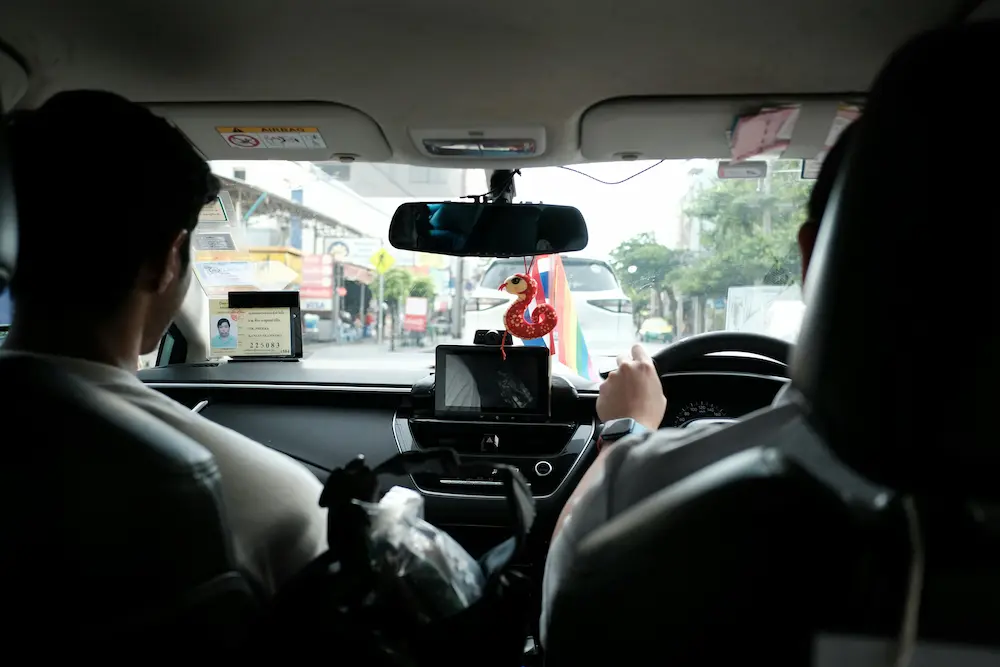
Bali isn’t designed for easy point-to-point travel.
- Distances look short on the map, but traffic works slow
- Sidewalks are limited in many areas
- Heat and humidity make walking long distances tiring
With a private driver, all of that disappears.
✔ You travel door-to-door without stress
✔ You can stop anytime (snacks, bathrooms, meltdowns—real life)
✔ You don’t have to navigate routes or negotiate taxis
✔ You move at your family’s pace—not a schedule
👉 And surprisingly, it’s very affordable—often similar to (or cheaper than) multiple taxi rides in a day.
The“Insider” Tip: Everything Runs on WhatsApp in Bali
This is something most first-time visitors don’t know:
👉 In Bali, drivers don’t operate like traditional taxi services.
They operate on WhatsApp.
Once you find a good driver, you don’t “book rides”—you simply message them.
- “Can you pick us up at 9 AM tomorrow?”
- “We’d like to visit Ubud today—can you plan a route?”
- “Can we stop for lunch on the way?”
And that’s it.
No apps. No surge pricing. No confusion.
How to Find and Vet a Good Driver (Simple + Safe)
You don’t need to overthink this—but a little structure helps:
👉 Start with:
- Your hotel or villa (they often recommend trusted drivers)
- Reviews from recent travelers or family blogs
👉 Then check:
- Do they respond clearly on WhatsApp?
- Is their English easy to understand?
- Are they patient and flexible in replies?
👉 Optional but helpful:
- Ask for a sample day plan
- Confirm pricing upfront (full day vs half day)
Why Parents Especially Love This
Because with kids, travel isn’t just about getting from A to B.
It’s about:
- having flexibility
- avoiding stress
- staying in control of your day
And a good driver quietly supports all of that.
🚕 What About Gojek or Grab in Bali?
Ride apps like Gojek and Grab are widely available—and great for short distances or Bike rides. And you can even order your food or essentials at your doorstep.
But with kids (especially toddlers), these cabs:
❗ Car seats are not guaranteed
❗ Multiple rides add up quickly
❗ Less flexibility for day trips
👉 They work best as a backup—not your main plan.
Bali becomes much easier when you stop thinking in terms of “transport”…
and start thinking in terms of having someone local who helps you move through the day.
That’s what a good driver really is. And once you have that in place?
👉 Everything else—your itinerary, your timing, your energy—starts to fall into place naturally.
What to Actually Do in Bali with Kids
Bali has endless attractions—but for us parents, the question isn’t “What’s famous?”
It’s: “Can I do this without a total meltdown (mine or theirs)?”
Because some spots look incredible on Instagram but feel like a marathon in real life. Here’s the “Mum’s Honest Review” of the big hitters.
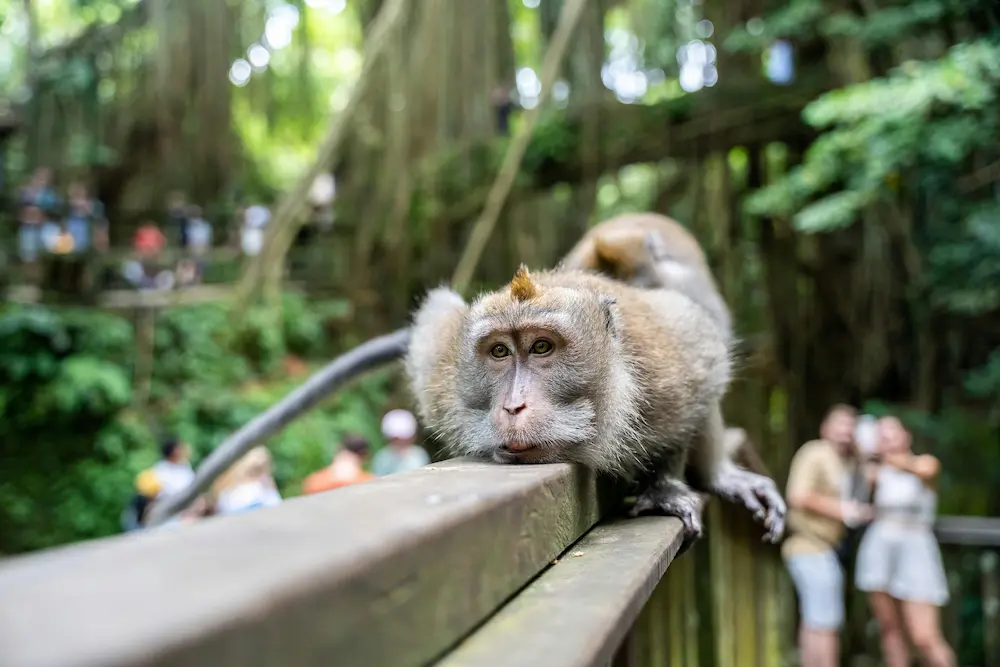
1.🐒 The Ubud Monkey Forest (Ubud)
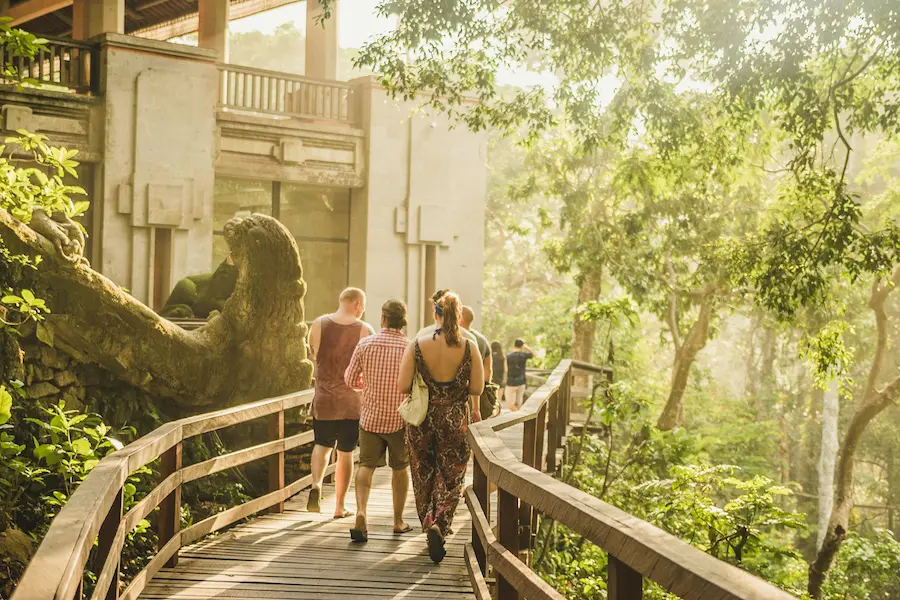
The vibe: Thrilling, a little chaotic, and unforgettable
What your child will do:
- Spot monkeys hiding in trees
- laugh when they jump across paths
- Either get very excited… or suddenly cling to you
The reality:
The monkeys are confident. They will come close. Sometimes very close.
👉 This can be magical—or overwhelming—depending on your child.
Mum tip:
- No visible snacks
- Zip everything (sunglasses, bottles, even pacifiers)
- Stay calm—kids take cues from you
Practical:
- Open: 9 AM – 6 PM
- Tickets: ~80,000 IDR (adult) / 60,000 IDR (child)-($3-5USD)
- Expect to pay a bit more on weekends.
2.🛕 Uluwatu Temple & Kecak Dance (Uluwatu)
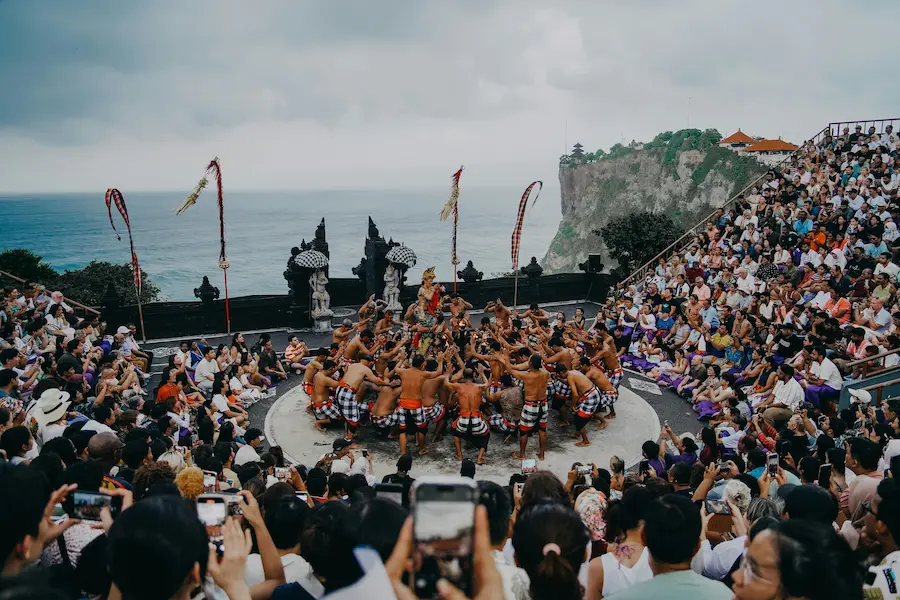
The vibe: Cultural, dramatic, and surprisingly engaging for kids
What your child will do:
- Watch monkeys running along temple walls
- sit wide-eyed during fire dancing and chanting
- get completely absorbed in the performance
The reality:
It’s busy, a bit hot, and you’ll sit for about an hour—but the energy keeps kids hooked.
👉 This was one of our first excursions—and honestly, one of the most memorable.
Mum tip:
- Go in the evening (cooler + sunset views)
- Buy your tickets early (they sell out!)
- Bring a hand-held fan and plenty of water
- Hold belongings tight (monkeys here are cheeky !)
- Keep a firm grip on your child’s hand—those cliff views are stunning but steep.
Timing:
- Kecak Dance usually starts around 6 PM
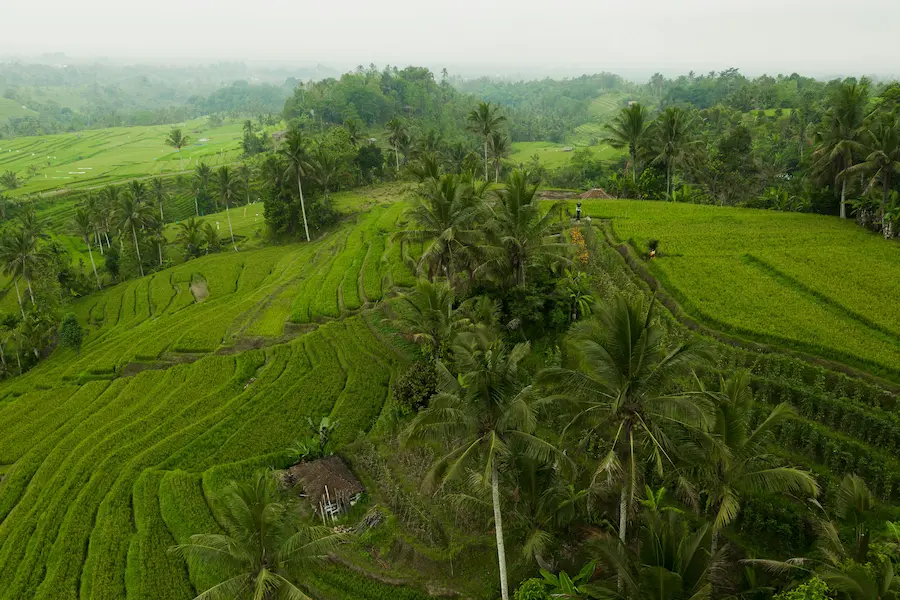
3.🌾 Rice Terraces (Jatiluwih or Tegallalang)
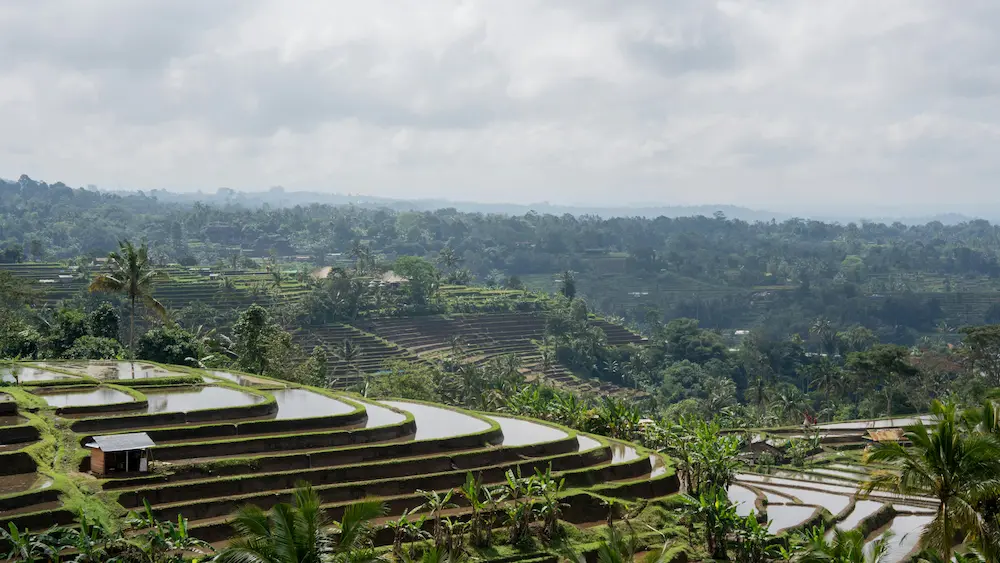
The Vibe: Pure “Green Bali” magic.
The Reality: Jatiluwih is much better for families because it’s flatter and less crowded. Your kids can actually run on the paths while you take in the view.
Mum-to-Mum Tip: Tegallalang is “The Famous One,” but it’s full of steep, muddy stairs. If you have a toddler, stick to Jatiluwih or just view Tegallalang from one of the cafes overlooking the valley.
4. Waterfalls (The “Low-Stair” Strategy)
The Vibe: Refreshing jungle swims.
The Reality: Many famous waterfalls (like Sekumpul) involve a 40-minute hike that will break a parent’s spirit.
The Mum-Approved Choice: Look for Tegenungan (very accessible, though touristy) or Tibumana (a much easier walk).
Mum-to-Mum Tip: Always pack a “wet bag” for soggy clothes and remember that “accessible” in Bali still usually means at least a few dozen stairs.
5.💦 Waterparks (The “Sanity Saver”) for kids in Bali
The Vibe: Guaranteed fun while you sit on a sun lounger.
The Reality: Waterbom Bali (Kuta) is consistently rated #1 in Asia for a reason. It’s clean, safe, and has a massive “Kiddie Station.”
Alternative: If you’re in Canggu, Splash Water Park was also highly rated, but it is permanently closed now.
2026 Price Note: Waterbom is a splurge (approx. IDR 550,000-$31USD) for adults, but for a full day of “no-complaint” entertainment, it’s worth every penny.
The “Parental Gold” Rule:
Your child won’t remember the history of the temple. They’ll remember the scoop of gelato you got them afterward because they were so brave during the Kecak dance.
Mix the “Cultural Stuff” with the “Easy Stuff.” A morning at a temple followed by an afternoon at a pool is the secret to a happy Bali holiday.
Beach Time with Kids (The “Mum’s Guide” to Bali Sands)
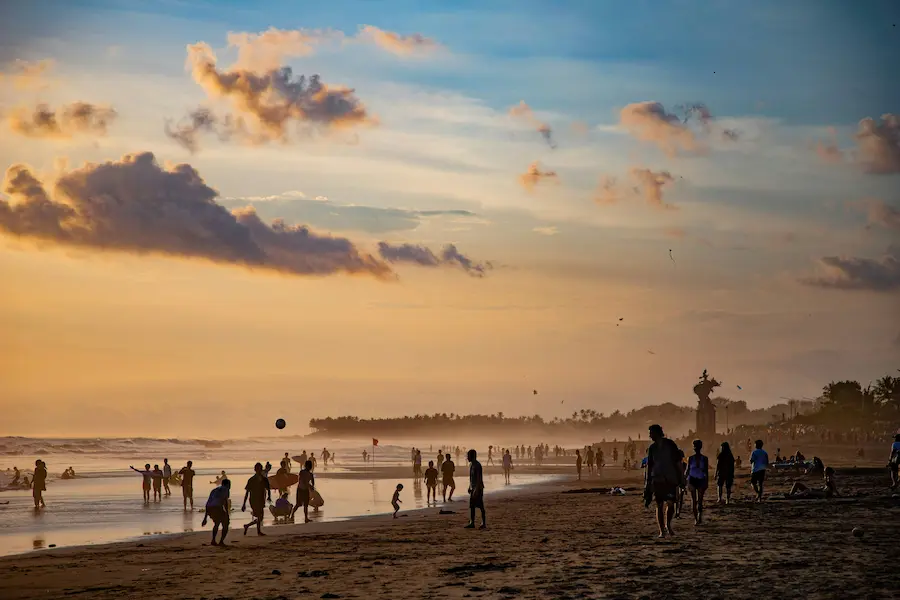
Forget the “perfect Instagram beach” idea in Bali. For a child, a beach isn’t a backdrop; it’s a giant sensory bin. They don’t care about the turquoise hue;
They care about the quality of the sandcastle and whether a wave is going to knock them over.
In Bali, the west coast (Canggu/Seminyak) is for surfers, but the south and east coasts are for us. Here is where you’ll actually want to spend your days:
1.🌊 Sanur — The “Gold Standard” for Parents
If you have a toddler or a baby, this is as close to “easy mode” as Bali gets.
The Magic: Because of an offshore reef, the water is a flat, shallow lagoon. More like a warm, gentle pool than an ocean, where kids can splash without you clenching your teeth every time a ripple comes in.
The “Parents” Win: The 5km paved boardwalk. It is one of the only places in Bali where you can push a stroller for miles, stop for a coffee, and watch the sunrise while the kids hunt for tiny crabs in the tidal pools.
Pro-Tip: Wear water shoes! The reef means there can be bits of coral or the occasional sea urchin if you wander too far out at low tide.
🐚 Nusa Dua (Mengiat Beach) — The “Stress-Free” Zone
This is the cleanest, most manicured stretch of sand on the island.
The Magic: It feels like a “resort bubble” in the best way. The sand is soft, white, and meticulously cleaned every morning.
The “Parents” Win: Peace of Mind. It’s one of the few beaches with active lifeguards and roped-off swimming areas. There are no motorbikes and very few hawkers, so you can actually finish a chapter of your book while they play.
Pro-Tip: You don’t have to stay at a 5-star resort to use it. Mengiat is a public beach with easy, stroller-friendly access and plenty of shaded trees.
3.🍢 Jimbaran Bay—The “Sunset & Seafood” Spot of Bali
This is where you go when you want a “real” dinner, but the kids have zero interest in sitting still at a table.
The Magic: The bay is sheltered, so the waves are very gentle. The sand is wide and stays hard-packed, making it perfect for a game of beach football or chasing the sunset.
The “Parents” Win: The famous seafood dinners. The tables are literally on the sand. You can enjoy your grilled prawns and a cold Bintang while the kids play two meters away from you.
Pro-Tip: Arrive at 4:30 PM. Let them burn off energy for an hour, watch the planes land in the distance (a huge hit for toddlers!), and eat as the sun goes down. You’ll be back at your villa for bedtime by 7:30 PM.
The “Beach Bag” Essentials for Bali
- Baby Powder: The “Old Mum” trick—rub it on sandy legs and the sand falls right off. No more “Sandy car” meltdowns.
- The “Early Bird” Rule: In Bali, the sun is brutal by 11:00 AM. Be on the sand by 8:00 AM, and be back in the AC or the pool by lunch.
- Rainy Season Reality: If you’re visiting between December and February, stick to Nusa Dua or Sanur. These “managed” beaches are cleaned daily, whereas other spots can get a lot of ocean wash-up (plastic/debris) during the monsoon.
🌊 Surfing & Snorkeling in Bali with Kids (What Actually Works + What to Avoid)
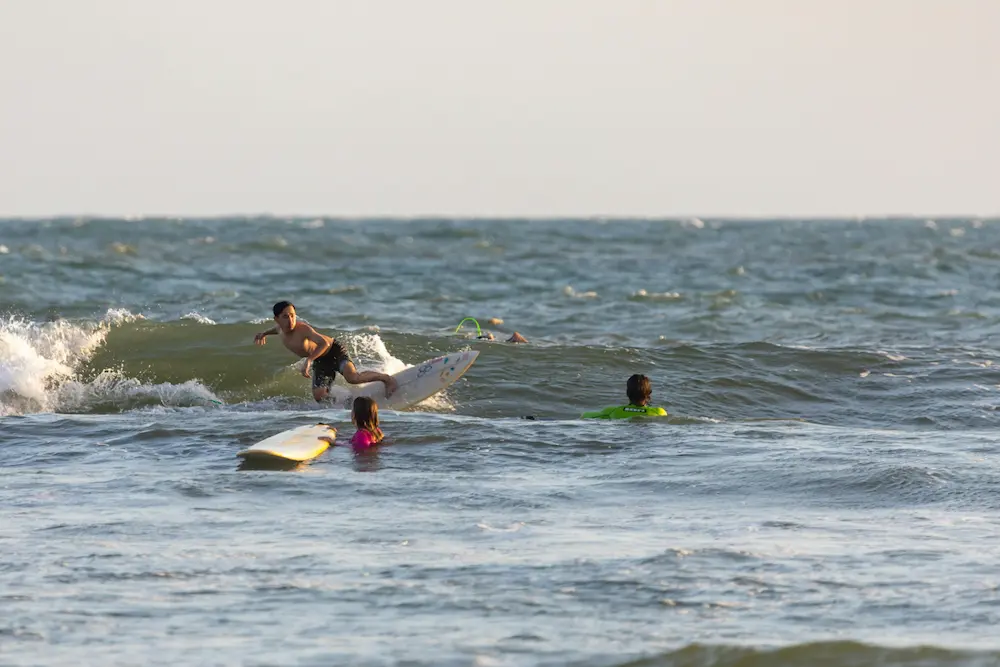
Bali is world-famous for its waves and marine life—but as a parent, the question isn’t
👉 “Can we do this?”
👉 It’s: “Is this safe, easy, and actually enjoyable for my child?”
Because the reality is:
Some of Bali’s most “famous” spots are not designed for beginners or kids.
Here’s how to do it right.
🏄♂️ Surfing in Bali with Kids (The First Wave Experience)
Exciting, confidence-building activity and one of those “core memory” moments for kids in Bali.
The Best Spot: Kuta or Legian Beach.
Why it works: It’s a soft, sandy bottom (no sharp coral), and the waves roll in gently.
The “Parents” Win: In 2026, there are countless “Kids Surf Schools” where instructors stay 1-on-1 with your child. Seeing your 6-year-old stand up for the first time is a core memory.
The Alternative: Batu Bolong (Canggu).
The Vibe: Very “cool” and trendy, but the waves are long and slow—perfect for older kids or teens.
Mum-to-Mum Tip: Don’t just rent a board from a guy on the beach. Book a lesson through an established school like Rip Curl School of Surf. They have child-sized boards and proper rash guards to prevent “surf belly” (chafing). This is where most kids have their first successful surf moment.
🤿 Snorkeling in Bali with Kids (Finding “Nemo” the Easy Way)
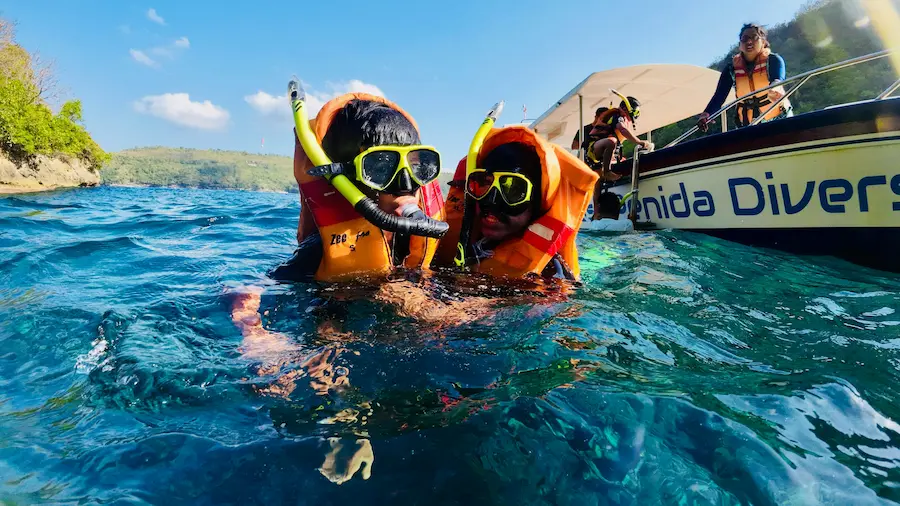
This is where many parents get nervous because the open ocean can be choppy. The key is to find “”lagoon”-style spots.
The Best Spot: Blue Lagoon (Padang Bai).
Why it works: It’s tucked into a sheltered bay with crystal-clear, shallow water. The coral is bright, and the fish are colorful—it’s like swimming in an aquarium.
The “Mum” Win: It’s a very short boat ride from the shore (about 5 minutes), so if a child gets scared or seasick, you can be back on dry land in no time.
The Adventure Choice: Menjangan Island (West Bali).
The Vibe: This is the most pristine snorkeling in Bali. It’s part of a National Park, so the water is incredibly calm and full of turtles.
Mum-to-Mum Tip: Bring your own child-sized snorkel mask if you have one. While rental gear is available, finding a “leak-proof” fit for a small face can be a struggle, and a leaking mask is the quickest way to end a snorkel trip!
The “Safety First” Check for Bali adventure
- Currents: Bali’s tides are strong. Always ask your driver or the boat captain about the “current” before the kids jump in.
- Sun Protection: The sun reflects off the water and burns twice as fast. A full-sleeve rash guard is non-negotiable for snorkeling.
- The “Nanny” Hack: If you want to snorkel but your child is too young, many boat operators can arrange for a nanny to stay on the boat with the baby while you swim for 20 minutes nearby.
Bali with Toddlers (What to Take care of)
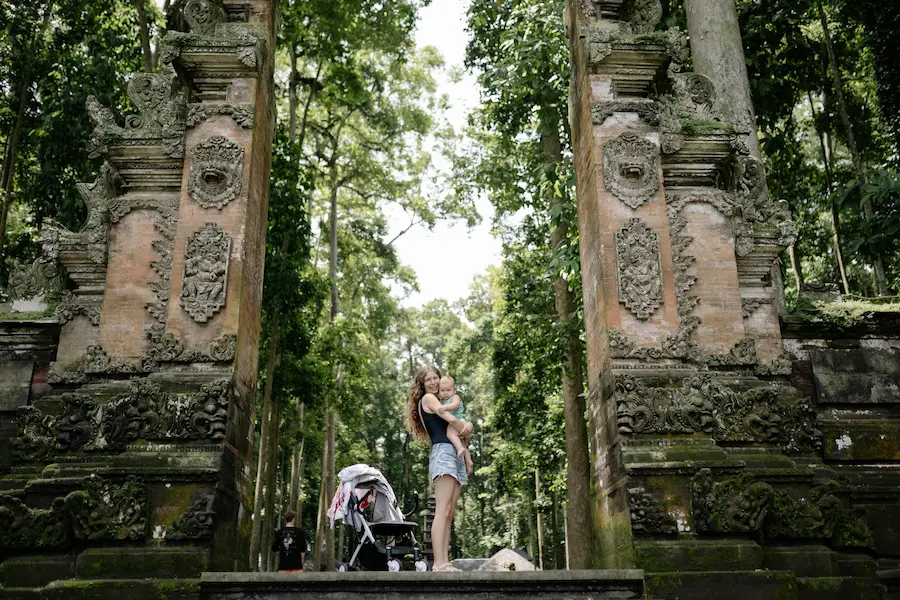
If you’re traveling to Bali with a 2- or 3-year-old, you already know this:
👉 A “vacation” is just parenting… in a different time zone.
And in Bali, everything feels amplified.
The heat, the smells, the new food, the long drives—it’s a lot for a small human.
Which means one thing:
👉 You don’t need a better itinerary.
👉 You need a different mindset.
To keep the peace (and your sanity), you have to adjust your expectations. Here is how to navigate the toddler reality in 2026:
🐢 1. The “One Big Thing” Rule (Slow Pace)
Before kids, you might have planned:
temple + waterfall + sunset dinner in one day.
With a toddler?
👉 That’s a meltdown waiting to happen.
The Reality: Between the traffic and the humidity, toddlers wear out twice as fast.
The Strategy: Plan one main activity for the morning (when they have the most “good mood” energy). Spend the afternoon at the villa or hotel pool.
Mum-to-Mum Tip: If you push them to “see it all,” you’ll spend your expensive sunset dinner dealing with a meltdown. A happy afternoon in the pool is a “successful Bali day with a Toddler.”
🌡️ 2. The Heat is Your Biggest Rival
Bali’s 2026 humidity is no joke. It isn’t just “warm”, it’s heavy, humid, and constant.
And you know it better—a hot toddler is a grumpy toddler.
The Reality: Between 12 PM and 3 PM, even adults slow down. For toddlers? It’s overwhelming. The sun is brutal, and the air feels heavy.
The Strategy: Stay indoors or in the water during these hours. If you are out, use clip-on stroller fans (a must-have) and light cotton clothes with quick AC breaks. Keep a spray bottle of cold water to mist them down.
Mum-to-Mum Tip: Watch for “Heat Grumpiness.” Sometimes they aren’t being “naughty”—they’re just overheating. A 10-minute blast of AC or a cold fruit juice works like a reset button.
🍝 3. Food Flexibility (The “Nasi Goreng” Backup)
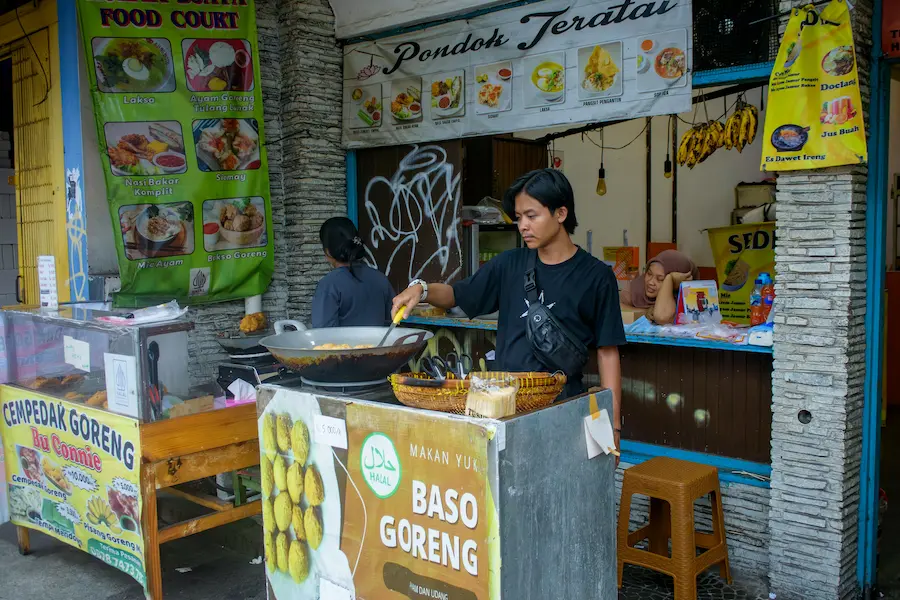
You might want them to try authentic Balinese flavors, but their palate might have other plans. And that’s okay.
The Reality: Sensory overload can make kids stick to “safe” foods.
The Strategy: Most warungs and cafes are incredibly accommodating. If they won’t touch the Satay, order “Nasi Goreng Tanpa Cabe” (Fried rice without chili) or “Mie Goreng” (Fried noodles). It’s mild, delicious, and usually a hit.
The 2026 Perk: In areas like Sanur and Canggu, almost every cafe now has a “Kid’s Corner” or “Healthier Nuggets” on the menu.
Mum-to-Mum Tip: Don’t fight the “Western Food” battle every night. If they just want a plate of fries and some watermelon at the hotel so you can eat yours, let them. Peaceful meals > perfect meals.
🛒 4. The “Stroller vs. Carrier” (This Matters More Than You Think)
The Reality: Bali sidewalks are… an adventure. They are often high, broken, or non-existent.
The Strategy:
- Sanur: Bring the stroller (the boardwalk is a dream).
- Ubud/Seminyak: Use a lightweight mesh carrier (like the Ergobaby Omni Breeze). It keeps them close, keeps your hands free for stairs, and the mesh prevents both of you from turning into a puddle of sweat.
Traveling to Bali with a toddler offers an entirely different pace of life and incredible private villa options—a guide for the lessons we learned on the ground
The “2026 Toddler Essentials” Checklist for Bali:
- Pocari Sweat / Electrolytes: Essential for rehydrating after a morning at the Monkey Forest or long outings.
- Sticker Books: Your best friend during the slow traffic rides in the car.
- Portable High Chairs: While 2026 Bali is more “toddler-ready” than ever, many local warungs still don’t have high chairs. A fabric “tie-on” chair cover in your bag is a lifesaver.
Bali is high on our list for a reason, but it’s just one of our favorite spots in the region. If you’re trying to decide where to head next, check out my Guide to Top 11 Destinations in Asia for Kids, where I’ve ranked Bali alongside our other top picks for families.
Your Stress-Free Bali Arrival Checklist (2026 Essentials You Shouldn’t Miss)
Before you land in Bali with kids, there are a few small things that make a huge difference to how your trip begins.
Do these in advance, and you’ll move from the plane to your hotel (or pool!) smoothly—without long queues or confusion. In 2026, the “paper-and-pen” era is over.
✈️ 1. The 3 Things to Complete Before You Fly
Do these 48–72 hours before your flight. Have the QR codes screenshotted and saved in a dedicated “Bali” folder on your phone.
- The e-VOA (Electronic Visa on Arrival): Don’t wait until the airport. Apply on the official immigration site. It costs IDR 500k (~$32 USD) and lets you skip the first giant queue at the airport.
- The Bali Tourist Levy (IDR 150k): This is the “new” 2026 friction point. It’s a mandatory $10 USD tax per person (including kids). Pay it via the Love Bali website. Tip: If the site crashes (it often does!), you can pay at a counter near luggage claim, but having the QR code ready is the “pro” move.
- The e-Customs Declaration: One form per family. You can do this online 3 days before arrival. You simply scan the QR code at the very last exit.
2. Insurance for Bali (The Non-Negotiable)
Healthcare in Bali is excellent in 2026, but it is private and expensive.
- The Choice: Look for a provider like Heymondo or SafetyWing.
- Mum-to-Mum Tip: Ensure your policy covers “Medical Evacuation” and specifically includes “Scooter accidents” if you plan to ride (though we recommend the private driver!).
3. Data & SIMs (Don’t Roam!)
- The 2026 Standard: Download an eSIM (like Airalo or Telkomsel’s tourist eSIM) before you land.
- Why? You’ll have data the second the plane touches the tarmac, meaning you can WhatsApp your driver immediately while waiting for your bags.
4. Currency & ATMs
- The Strategy: Bring a small amount of “emergency” cash (USD/GBP/EUR) in crisp, new bills. For daily spending, use a travel card like Revolut or Wise.
- Safety Tip: Only use ATMs located inside a bank or a well-lit convenience store (like Indomaret) to avoid card skimming in Bali.
🛄 Airport Arrival: The “Quick Exit” Routine
- Immigration: Scan your e-VOA.
- Luggage: Grab your bags (and keep your tags!).
- Customs: Scan your e-Customs QR code.
- The Pickup: Walk past the “Taxi!” shouting crowd to the Zone B Pickup. This is where your pre-booked WhatsApp driver will be waiting, with a sign bearing your name.
One Final Pro-Tip for 2026:
The airport can be loud and overwhelming. If you are traveling with a baby or a toddler and a long-haul flight has wiped you out, consider booking the Bali Airport VIP Meet & Greet. They meet you at the gate, handle your bags, and fast-track you through everything. For a tired mum, it’s the best $50 you’ll ever spend.
The Perfect 7-Day Bali Itinerary with Kids (The “Slow-Flow” Route)
If you’re feeling overwhelmed by the map, don’t be. For a first trip with kids, we always recommend the “Slow-Flow” Route. It minimizes travel time and maximizes those “calm” moments.
📍 Days 1–3: Sanur (The Soft Landing)
The Vibe: Recovering from jet lag and finding your “Bali legs.”Slow, easy, and exactly what you need after a long flight.
Top Activity: Sunrise walks on the 5km boardwalk and shallow splashes at Mengiat Beach.
Stay: A beachfront resort with a kids’ club makes these first days much smoother.
📍 Days 4–5: Ubud (The Cultural Heart)
The Vibe: Jungle canopy, rice fields, and a bit of magic. This is where Bali starts to feel special.
Top Activity: A morning at the Monkey Forest followed by a slow walk through the Jatiluwih Rice Terraces.
Stay: A private villa with a jungle view slightly outside central Ubud (and a hired pool fence!).
📍 Days 6–7: Seminyak (The Easy Finish)
The Vibe: Beach clubs, sunset dinners, and souvenir shopping. A perfect “wind-down” before heading home.
Top Activity: A farewell seafood dinner on the sand at Jimbaran Bay or a final splash at Waterbom Park.
Stay: A boutique hotel or villa close to the “Eat Street” cafes for easy stroller runs.
Want the Full Hour-by-Hour Itinerary?
I’ve mapped out exact timings, driver tips, food stops, and hidden family-friendly spots.
👉 Click here for my Complete 7-Day Bali Family Itinerary: The Stress-Free Edition
The Culture Shock That Won Our Hearts
We came to Bali for the villas, the beaches, the slower pace.
But what actually surprised us about Bali wasn’t on a postcard—and what your kids will remember long after the trip—is something else entirely.
As a parent from the West, where taking a toddler to a nice restaurant can feel like a high-stakes military operation, Bali was a revelation.
Here is what truly surprised us (and what will likely be the highlight of your trip, too).
❤️ The Balinese Love for Kids (The “Dinner Savior”)
In Europe or the US, we’re used to the “Kids should be seen and not heard” vibe. And eating out with a toddler can feel like a mission. In Bali, kids are considered a blessing.
The Surprise: Don’t be shocked if a waiter at a restaurant asks to take your toddler for a walk to look at the fish pond or play with the staff at the front desk.
The Reality: They aren’t just being polite; they genuinely love kids. For the first time in years, you might actually get to finish a hot meal with both hands. It’s a level of communal parenting that feels like a warm hug.
🔊 Bali is “Loud” (But in a Good Way)
If you’re expecting a silent, zen-like retreat 24/7, you’re in for a surprise.
The Surprise: Bali is alive. You’ll hear the rhythmic “clink-clink” of the Gamelan music, the distant crowing of roosters, and the buzz of scooters.
The Reality: We thought this would ruin nap times. Instead, the “white noise” of Bali actually helped our kids sleep. They adjusted to the hum of the island, and it made us realize that travel doesn’t have to be perfectly quiet to be peaceful.
🥥 The “Small Things” Are the Big Things
We planned big trips to famous parks or Temples, but our kids’ favorite memories were tiny moments.
The Surprise: A 5-year-old doesn’t care about a “UNESCO World Heritage” label.
The Reality: My girl’s were most obsessed with the Canang Sari (the small flower offerings on the ground), spotting geckos on the villa walls at night, and the way the local shopkeeper remembered their names.
Mum-to-Mum Tip: Don’t over-schedule. Leave room for the “gecko hunts”—those are the moments they’ll talk about for years.
It’s Deeply Rewarding (Even the Messy Bits)
Is it perfect? No. You’ll deal with humidity, long car rides, and the occasional “Bali Belly.”
The Surprise: How much it changed our kids.
The Reality: We watched our girl become more patient, more curious, and more aware of a world that looks different from home. Bali isn’t just a holiday; it’s a giant, beautiful classroom.
Roaming crew Tip:
When a Balinese person offers to play with your child while you eat, say yes. It feels “wrong” to our Western sensibilities at first, but it is a beautiful, safe, and culturally normal part of life there. It allows you a moment of rest and gives your child a wonderful interaction with a local.
You’ve Got This…
If you’re sitting there with twenty tabs open, feeling like you need to solve every “what if” before you book the flight—stop.
You don’t need to figure everything out before you go.
Bali is an island that meets you halfway. It is a place where “perfectly planned” often goes out the window, and “perfectly lived” takes over. You might forget a packing essential, or the traffic might change your afternoon plans, and it will still be okay.
Once you land, the warmth of the people, the splash of the pool, and the ease of having a local driver by your side will make the “chaos” feel like an adventure rather than a stressor.
Your kids don’t need a flawless Bali itinerary. They need you, a pool, and the space to explore a world that feels a little bit like magic.
Pack the sunscreen. Book the villa. The rest will fall into place once you’re in Bali with your little ones.
Bali with Kids FAQs (The Quick Answers)
Planning a trip to Bali with kids comes with a lot of questions—and not all answers online feel reassuring.
Here are the real, up-to-date answers parents actually need before visiting Bali.
🕷️ Are there spiders in Bali? Is Bali safe for kids from insects?
Yes, Bali has tropical insects—but this is rarely a real issue for families. You might spot a Giant Golden Orbweaver in the jungle or a garden—they look intimidating because they are large and colorful, but they are harmless to humans and actually eat the mosquitoes you’re trying to avoid!
In your villa, you’re much more likely to see a tiny Gecko (a Chak-chak) on the wall. They are Bali’s natural pest control, and kids find them fascinating.
🗣️ What language is spoken in Bali? Will we be able to communicate easily?
While the local languages are Balinese and Bahasa Indonesia, English is widely and fluently spoken in all tourist areas (Sanur, Ubud, Seminyak). You will have no trouble communicating with drivers, hotel staff, or doctors.
Pro Tip: Learning a simple “Suksma” (Thank you in Balinese) goes a long way with the locals!
🛕 What is a “Pura” in Bali?
You’ll see this word everywhere. Simply put, a Pura is a Balinese Hindu temple. They are open-air places of worship. For kids, think of them as beautiful, walled gardens filled with stories, statues, and daily offerings called Canang Sari. Just remember that everyone (including kids) needs to wear a sarong to enter (usually provided at entrances)!
🍛 What is “Nasi Campur”? (And will my picky eater touch it?)
Nasi Campur literally means “mixed rice.” It’s a scoop of white rice surrounded by small portions of different meats, veggies, and peanuts. Ask for “tidak pedas” (not spicy) for kids.
🛍️ Are Ubud markets kid-friendly?
Yes, but timing is everything. If you go at midday, it’s hot, crowded, and overwhelming.
The Secret: Go early (around 8:00 AM or 9:00 AM). The air is cooler, the vendors are just setting up, and it’s much easier to navigate with a child. It’s a great place for them to pick out a small wooden toy or a colorful sarong as a “Bali treasure.”

FOUNDER • FAMILY TRAVEL WRITER • MUM OF TWO
About the Author
Hi, I’m Shivani, the founder of Roaming Crew.
Based in Singapore and having lived in different parts of Asia—including two years in India—I’ve explored 18+ destinations across the region, with 12+ of those journeys taken alongside my young kids.
From choosing family-friendly destinations and navigating local transport to budgeting, accommodation, and practical travel logistics, Roaming Crew is created with a parent-first mindset.