
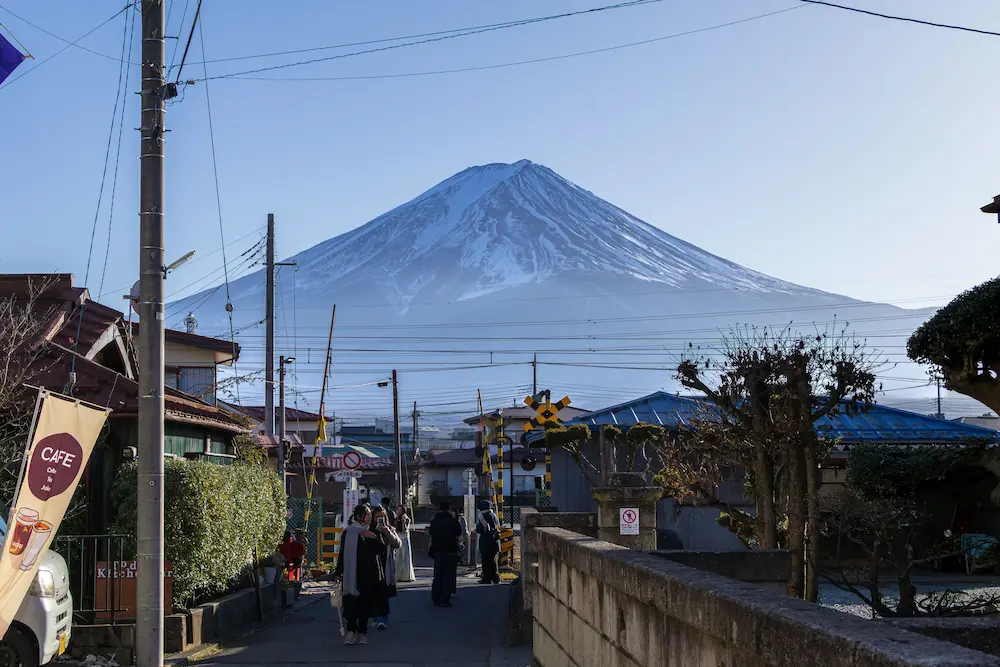
We spent 14 days exploring Japan with two young kids during cherry blossom season, following the country’s famous Golden Route through Tokyo, Kyoto, and Osaka.
Like many first-time families, we started with an ambitious list of places to visit—but quickly realized that a successful Japan itinerary isn’t about fitting in every famous attraction. It’s about choosing the right pace, staying in the right places, and knowing where to slow down.
Japan’s efficient trains make travelling between cities easy, but travelling with children isn’t just about train schedules. It’s the extra walking, navigating large stations with tired little legs or a stroller, and allowing time for the unexpected that often determines whether a day feels enjoyable or exhausting.
Whether you’re planning a 10-day, 2-week, or longer Japan itinerary with kids, this guide will help you choose one that works for your family—not just on paper.
Inside, you’ll find three realistic itineraries, practical planning tips, and recommendations to help you avoid the common planning mistakes many first-time families only discover after they arrive, so you can spend less time figuring things out and more time enjoying Japan together.
Which Japan Itinerary Is Right for Your Family?
The right itinerary depends on how much time you have, your children’s ages, and how quickly your family is comfortable moving between cities.
| If you’re… | Our recommendation |
|---|---|
| On your first trip to Japan (12–16 days) | 14-Day Golden Route (Tokyo → Mt. Fuji/Hakone → Kyoto → Osaka) ⭐ Best overall |
| Only have 10 days | Highlights (Tokyo → Mt. Fuji or Hakone → Kyoto) |
| Traveling with toddlers (7–10 days) | Tokyo + Kyoto (fewer hotel changes with short day trips) |
| Travelling with school-age kids (12–14 days) | Tokyo → Mt. Fuji/Hakone → Kyoto → Osaka (more attractions without feeling rushed) |
| Have 3 weeks or more | Explore beyond the Golden Route, adding destinations like Hiroshima, Miyajima, Kanazawa, Takayama, Hokkaido, or Kyushu at a relaxed pace. |
✨ Our recommendation
If this is your first family trip to Japan, choose the 14-day itinerary unless your vacation time is limited. It offers the best balance of sightseeing, travel days, and downtime, while still leaving room for the slower mornings, playground breaks, and the unexpected moments that are part of traveling with kids.
Before You Choose Your Japan Itinerary
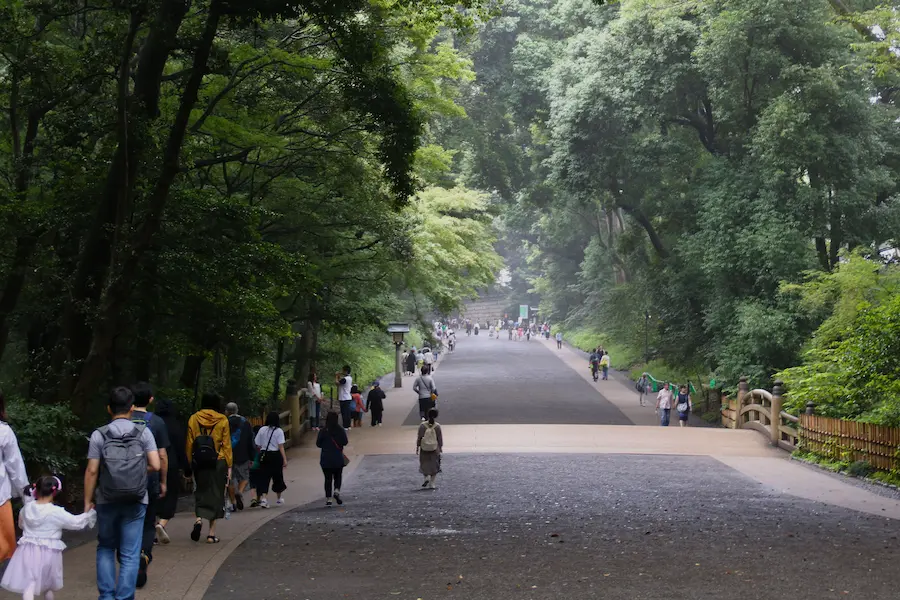
One of the biggest lessons we learned is that the number of days isn’t what makes or breaks a Japan family trip. Choosing fewer bases, allowing extra time for travel days, and accepting that young kids won’t always stick to the plan made a much bigger difference than squeezing in one more destination.
If this is your first long-haul family vacation to Japan, planning a slightly slower itinerary almost always leads to a more enjoyable trip.
If you’re flying 12–14 hours with young children, don’t underestimate the first couple of days. Our Asia Jet Lag With Kids guide covers what we would do differently when adjusting to Asia with kids.
How many days do you really need?
For most first-time families flying from North America or Europe, we recommend spending 12–14 days in Japan. It gives everyone enough time to adjust to the time difference, explore Tokyo, Kyoto, and Osaka at a comfortable pace, and enjoy a few memorable day trips without constantly packing and moving hotels.
If you only have 7–10 days, focus on two main bases rather than trying to see everything. Japan rewards slower travel, and leaving a few places for your next visit is almost always better than rushing through five cities.
A few planning decisions that make a big difference
- Limit hotel changes. We recommend changing hotels no more than 2–3 times on a two-week trip. Fewer suitcases to unpack means more energy for exploring.
- Use Kyoto or Osaka as your base. They’re less than an hour apart by train, so most families only need to stay in one and visit the other as a day trip.
- Only add Hakone if you have enough time. If seeing Mt. Fuji or staying in a traditional ryokan is high on your wish list, it’s well worth an overnight stop. Otherwise, spend the extra time in Tokyo or Kyoto.
- Consider flying into one city and home from another. Arriving in Tokyo and departing from Osaka (or the reverse) saves backtracking and makes the journey much more relaxed.
10-Day Japan Itinerary With Kids
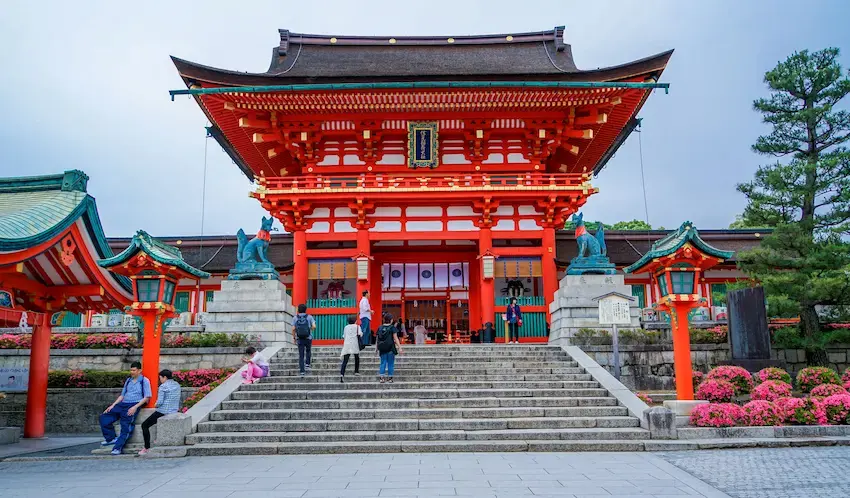
If you have around 10 days in Japan, resist the temptation to see everything on your first trip.
As I mentioned above, choosing fewer bases made traveling with kids far more enjoyable than changing hotels every couple of nights.
This itinerary covers Japan’s biggest highlights while leaving enough time to settle into each destination, adjust to jet lag, and enjoy the journey instead of rushing between attractions.
Our recommended 10-day itinerary
| Stay | Recommended stay | Why we recommend it | Family highlights |
|---|---|---|---|
| Tokyo | 4 nights | Recover from jet lag, settle into Japan, and enjoy the city’s parks, museums, and family attractions without feeling rushed. | Asakusa, Ueno Park, TeamLab, Shibuya |
| Mt. Fuji or Hakone | 1–2 nights | Break up the journey to Kyoto with mountain scenery, a traditional ryokan, and a slower pace. | Fuji views, onsen, ropeway, pirate ship |
| Kyoto | 4 nights | Explore Japan’s cultural side while using Kyoto as a base for an optional Nara day trip. | Arashiyama, Fushimi Inari, Gion, Nara |
Our thoughts: This itinerary is perfect for first-time visitors who want to experience Japan’s highlights without constantly unpacking suitcases. If you’re travelling with toddlers, consider skipping Hakone and spending the extra night in Tokyo or Kyoto instead.
We have a separate Tokyo with Kids guide covering where we’d stay, what we’d prioritize with children, and how we’d pace the city.
14-Day Japan Itinerary (Our Recommended Route)
If you’re visiting Japan for the first time and have two weeks, this is the itinerary we’d recommend. It gives you enough time to experience the Golden Route at a comfortable pace, enjoy memorable day trips, and leave space for the slower mornings and flexible afternoons that often make family vacations the most enjoyable.
Recommended itinerary
| Stay | Recommended stay | Why we recommend it | Family highlights |
|---|---|---|---|
| Tokyo | 5 nights | Settle in after your flight and explore the city without rushing. | TeamLab, Asakusa, Ueno, Shibuya |
| Mt. Fuji or Hakone | 1 night | A scenic overnight stop before heading to Kyoto. | Ryokan, onsen, and Fuji views |
| Kyoto | 4 nights | A relaxed base for Kyoto and nearby day trips. | Gion, Arashiyama, Fushimi Inari |
| Nara | Day trip | An easy and worthwhile day trip from Kyoto. | Deer Park, Todai-ji Temple |
| Osaka | 3 nights | End your trip with great food, lively neighborhoods, and family attractions. | Dotonbori, Osaka Castle, Universal Studios Japan |
Our thoughts: For most first-time families, this itinerary offers the best balance of sightseeing and downtime. It only requires three hotel stays, keeps train journeys manageable, and gives you enough flexibility to slow down if your children need an easier day.
Japan in 3 Weeks (A Slower Family Adventure)
If you have three weeks or more, don’t think of it as a chance to squeeze in as many cities as possible. Think of it as the opportunity to experience Japan at a slower pace. Rather than rushing from place to place, you can spend longer in each destination and explore regions beyond the classic Golden Route.
Suggested itinerary
| Stay | Recommended stay | Why we recommend it |
|---|---|---|
| Tokyo | 5–6 nights | Discover different neighborhoods, museums, and family attractions at a relaxed pace. |
| Mt. Fuji or Hakone | 2 nights | Enjoy Japan’s mountain landscapes without feeling rushed. |
| Kyoto | 4 nights | Slow down and explore Kyoto’s temples, gardens, and surrounding areas. |
| Osaka | 3 nights | Food, entertainment, and family-friendly attractions. |
| Hiroshima & Miyajima | 2–3 nights | Add history, nature, and one of Japan’s most beautiful island experiences. |
| One additional region | 3–5 nights | Choose Kanazawa, Takayama, Hokkaido, or Kyushu based on your family’s interests and the season. |
Our thoughts: This itinerary isn’t about ticking off more destinations—it’s about enjoying Japan more deeply. If your schedule and budget allow, spending longer in fewer places often creates a far more memorable family trip than trying to see the entire country in one visit.
Should You Include These Destinations in Your Japan Itinerary?
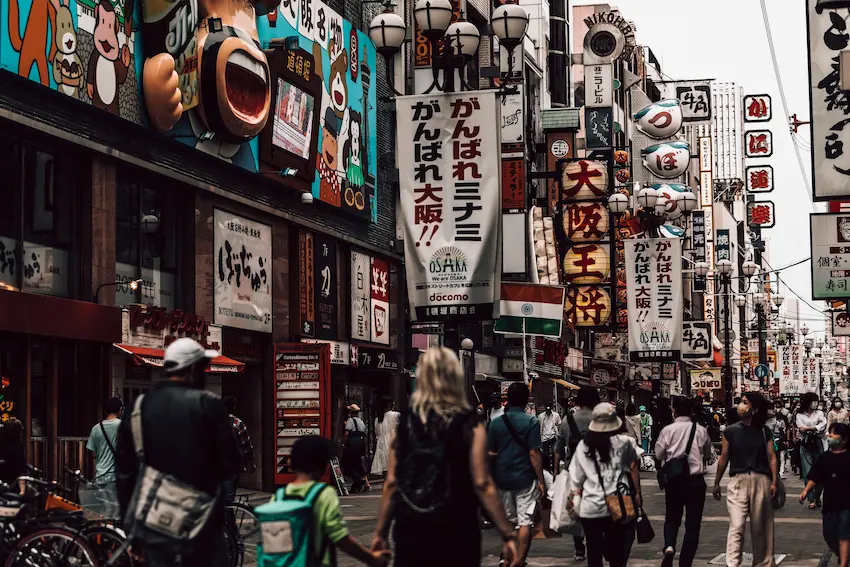
You don’t need to visit every place on your first trip to Japan. We chose Tokyo, Kyoto, and Osaka for our own 14-day family trip, and that gave us plenty to experience without changing hotels every few days.
Once you start adding places like Hakone, Nara, Uji, or Mt. Fuji, the question isn’t whether they’re worth visiting—they are. The concern here is whether they’re worth the extra travel and planning for your family on this particular trip.
If you’re staying several nights in Tokyo, see our guide to the best day trips from Tokyo with kids before adding another hotel to your itinerary.
If you’re travelling a long way to Japan with young kids, I’d rather see you enjoy three or four places properly than spend your vacations checking destinations off a list.
Here’s how I’d decide what to add.
Tokyo
Why go: Tokyo is an easy place to start a first Japan trip, with enough family attractions, parks, neighborhoods, and quieter corners to balance out the excitement of a huge city.
Worth adding if: It’s your first visit to Japan—or your children enjoy interactive attractions, animals, shopping, or simply having lots of different things to explore.
Our take: Don’t rush Tokyo. After a long-haul flight, you’ll appreciate having several days here rather than treating it as somewhere to sleep between day trips.
→ We stayed in MIMARU, Tokyo, during our own Japan trip. If you’re looking for a similar family-friendly base, see our Tokyo with Kids guide for where we stayed and what we liked about the location.
Kyoto
Why go: Kyoto gives you the traditional side of Japan—temples, gardens, old neighborhoods, and a completely different atmosphere from Tokyo.
Worth adding if: You want your children to experience more than modern Japan, and you’re happy to balance sightseeing with slower mornings and fewer attractions each day.
Our take: Kyoto is one of the two places we’d prioritize on a first family trip, alongside Tokyo. Give yourself enough time here rather than trying to see every famous temple.
→ Read our Kyoto with Kids guide.
Osaka
Why go: Osaka brings a more relaxed, energetic feel, with great food and plenty of family entertainment.
Worth adding if: Your children are older, you want Universal Studios Japan, or your family enjoys food, lively evenings, and a less traditional city atmosphere.
Our take: You don’t necessarily need another hotel here. Osaka is close enough to Kyoto that families with limited time can visit as a day trip. With a two-week itinerary, however, staying a few nights can make the final part of your trip much easier.
→ Read our Osaka with Kids guide.
Hakone
Why go: Hakone is less about ticking off attractions and more about experiencing a slower, very different side of Japan—mountains, onsen, ryokan stays, and, when the weather cooperates, Mt. Fuji views.
Worth adding if: Your family would enjoy a traditional ryokan or onsen experience, and you have enough time for an overnight stop.
Our take: I’d add Hakone to a 14-day itinerary, but I wouldn’t force it into a short trip. With only 10 days, the extra hotel change may not be worth it for every family. If your main goal is simply seeing Mt. Fuji, you may prefer a Fuji day trip instead.
→ Read our Hakone with Kids guide.
Nara
Why go: Nara is an easy way to add something memorable without committing to another hotel. The deer, temples, and spacious parkland make it particularly appealing with children.
Worth adding if: You’re staying in Kyoto and want a worthwhile day trip without packing another suitcase.
Our take: Keep Nara as a day trip. For most first-time families, there’s little reason to move hotels just for Nara when you can return to your Kyoto base afterward.
→ Read our Nara Day Trip guide.
Uji
Why go: Uji offers a quieter change of pace from Kyoto, with beautiful temples, river scenery, and its famous tea culture.
Worth adding if: You’re spending several days in Kyoto and want a less hectic day away from the busiest sightseeing areas.
Our take: Uji is an optional add-on, not a first-trip priority. I’d choose it when you have extra time in Kyoto rather than taking time away from Tokyo or Kyoto itself.
→ Read our Uji with Kids guide.
Mt. Fuji
Why go: Seeing Mt. Fuji is high on many first-time visitors’ Japan wish lists, but the mountain isn’t guaranteed to appear just because you’ve travelled to the area.
Worth adding if: Your family really wants the Fuji experience and you’re prepared to build some flexibility around weather and visibility.
Our take: Decide whether you want Mt. Fuji itself or a Hakone experience. You don’t always need to do both. For a shorter itinerary, I’d choose one rather than adding another stop simply to fit Fuji into the plan.
→ Read our Mt. Fuji with Kids guide
The goal isn’t to come home having visited the most places. It’s to come home feeling like you actually experienced Japan as a family.
Where Should Families Change Hotels in Japan?
One thing we learned while planning our own Japan trip was that every new destination comes with more than just a train ride. With kids, changing hotels means packing everything up, checking out, getting to the station, finding your next hotel, unpacking again, and getting everyone settled before you can start enjoying the new place.
For our trip, even though we had more than two weeks in Japan, we deliberately kept Tokyo, Kyoto, and Osaka as our three main bases. From there, we took day trips when they made sense rather than moving the whole family for every place we wanted to see.
We also skipped some of Japan’s most popular activities simply because they didn’t fit comfortably into our trip with young children—and we were completely fine with that.
The approach we’d recommend
Tokyo → Kyoto → Osaka
Think of these as your three anchors rather than trying to collect as many hotel stays as possible.
Tokyo gives you a good starting base after a long-haul flight, with enough to do over several days without needing to leave the city.
Kyoto works well as your cultural base and gives you easy access to places such as Nara and Uji without another hotel change.
Osaka makes a fun final base, particularly for families interested in its food, entertainment, or Universal Studios Japan.
If you want the Hakone or Mt. Fuji experience, one overnight stop between Tokyo and Kyoto can make sense. But it shouldn’t be treated as compulsory. On a shorter trip, we’d rather give those extra nights to Tokyo or Kyoto than add another hotel simply because an itinerary says you should.
When we would not change hotels
If a destination can be comfortably visited as a day trip, ask yourself whether moving the whole family is really worth it.
For example, Nara doesn’t need another hotel when you’re already staying in Kyoto. The same applies to Uji for most families.
And you don’t have to do every famous attraction either. During our own trip, we deliberately chose activities we felt we could genuinely enjoy with our children and skipped others that would have made the days too packed. A family trip isn’t a checklist of everything Japan is famous for.
That mindset is particularly useful when you’re flying halfway around the world for your holiday. After a 12–14-hour flight, a full day of sightseeing, and all the walking that Japan involves, having one fewer hotel change can make a surprisingly big difference.
Our simple rule
If moving hotels gives your family a genuinely different experience, consider it. If you’re moving simply to tick another destination off the list, make it a day trip instead.
That is one of the biggest changes we’d make to a typical Japan itinerary for families: fewer check-ins, fewer rushed mornings, and more time actually enjoying the places you’ve travelled so far to see.
If you’re deciding whether Osaka deserves its own hotel or works better as a day trip from Kyoto, our Tokyo vs. Osaka with Kids comparison can help.
Getting Around Japan With Kids: What We’d Plan Ahead
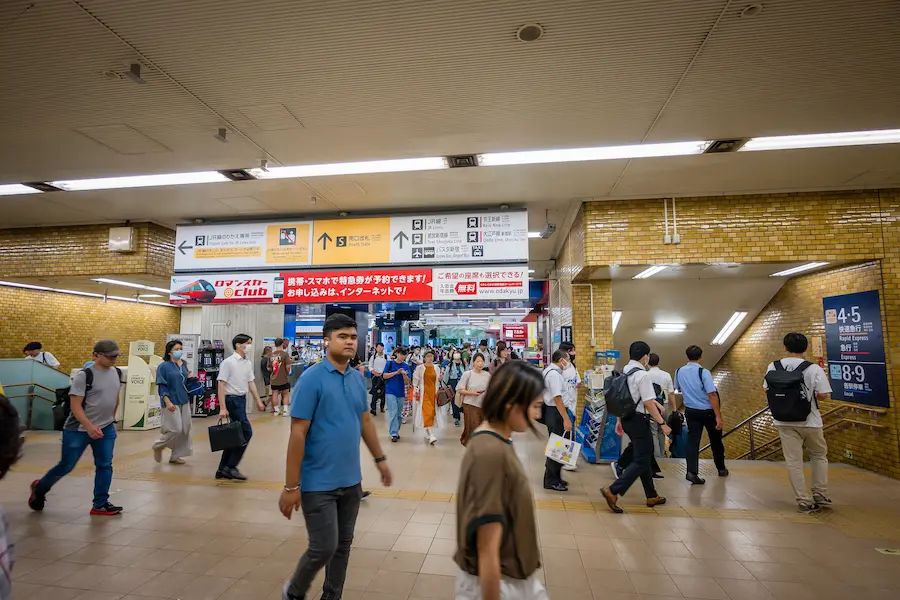
Japan’s trains are one of the reasons we were comfortable travelling through the country with our children. They’re clean, reliable, and make moving between Tokyo, Kyoto, and Osaka remarkably straightforward.
But the train itself is only part of the journey with kids. The time it takes to get to the station, find the right platform, wait for an elevator with a stroller, manage luggage, and walk from the arrival station to your hotel all counts too.
That’s why we wouldn’t plan our family itinerary around train times alone. We would leave a little breathing room around longer travel days, particularly when travelling with young children.
Tokyo → Kyoto
For most families, the Shinkansen is the easiest way to travel between Tokyo and Kyoto. It’s fast, comfortable, and much simpler than trying to fit another flight into your trip.
If you’re travelling with young kids or toddlers and luggage, don’t make your connection so tight that everyone has to rush through the station. Give yourself time to find your platform, use the lift if you need one, settle the kids, and get on board without stress.
Tokyo → Mt. Fuji or Hakone
This is where your itinerary choice matters.
If you’re staying overnight in Hakone, treat it as a destination rather than simply a stop between two cities. You’re going there for the slower experience—ryokan, onsen, scenery, and hopefully Mt. Fuji views—not just to say you’ve been.
If your main goal is seeing Mt. Fuji, you may not need another hotel at all. A day trip can make more sense on a shorter family itinerary.
Kyoto → Osaka
This is one journey where I’d ask whether you even need to move hotels.
Kyoto and Osaka are close enough that you can visit one from the other, so families with limited time can choose a single base and make the other a day trip. If you’re following our 14-day route and want more time for Osaka’s food, entertainment, or Universal Studios Japan, staying there for a few nights can still make sense.
Don’t underestimate your luggage.
One of the most useful things to know before travelling around Japan with kids is luggage forwarding.
Instead of dragging large suitcases through stations and onto every train, you can send bags ahead to your next hotel and travel with only what you need for the journey. This can be particularly helpful when you’re moving between cities with young children.
You don’t necessarily need to forward luggage on every journey, but it’s worth knowing about before you arrive.
IC cards make everyday travel easier.
For local trains, subways, and many buses, having an IC card makes everyday travel much simpler than buying individual tickets for every short journey. Once you’re moving around Tokyo, Kyoto, or Osaka, you’ll appreciate being able to tap and go rather than stopping at a ticket machine with tired children beside you.
For the detailed breakdown of accommodation, food, transportation, activities, and different travel styles, see our Japan Family Trip Cost Guide.
How Much Does a Japan Family Trip Cost?

The cost of a Japan trip can vary quite a bit depending on when you travel, where you stay, how often you change hotels, and how many paid attractions you add. For a family flying a long way to Japan, the itinerary itself can also change the budget—adding another city usually means another hotel stay, more transportation, and more time moving around.
Rather than giving you one generic daily figure, here’s a rough comparison of what you can expect from the 10-, 14-, and 21-day family itineraries in this guide.
Think of these as planning ranges rather than a fixed price: your actual cost will depend heavily on your accommodation choices and travel season.
| Trip length | Estimated family cost |
|---|---|
| 10 days | $9,000–$13,000 |
| 14 days ⭐ | $11,000–$16,000 |
| 21 days | $15,000-$20,000 |
For most families, the 14-day trip isn’t simply 40% more expensive than a 10-day trip. Longer trips can sometimes spread your international airfare across more days, while adding extra hotels, activities, and domestic travel can push the total higher.
That’s why we think about Japan’s cost by trip style and itinerary, rather than using one daily budget for every family.
For the detailed breakdown—including accommodation, food, transportation, activities, and different family travel styles—see our Japan Family Trip Cost Guide.
Common Japan Itinerary Mistakes Families Make
After travelling through Japan with our two young children, some of the biggest lessons weren’t about which attractions we visited. They were about what we learned to leave out, slow down, or plan differently. Japan is incredibly efficient, but travelling with kids adds a layer of unpredictability that no perfectly planned itinerary can account for.
These are the five mistakes we’d be most careful about when planning a first family trip.
1. Trying to see too many cities
When you’re travelling a long way to Japan, it’s tempting to add another destination every time you see one that looks worth visiting. But every new city also means another journey, another check-in, and another time packing everything back up.
For our own trip, we chose Tokyo, Kyoto, and Osaka as our main bases and took day trips from them instead of constantly moving. Even with more than two weeks, we found that this gave us a much better balance.
If adding another city means rushing through the places you’re already enjoying, I’d leave it for your next trip.
2. Changing hotels too often
A hotel change sounds simple on an itinerary. With young children, it rarely is.
You have to pack, check out, get everyone and everything to the station, navigate a large train station, find your next hotel, and settle in again. That’s a lot of time and energy for a family, even when Japan’s transport system works beautifully.
We found that three well-chosen bases—Tokyo, Kyoto, and Osaka—were enough for our trip, with day trips filling in the gaps.
If you’re considering another overnight stop, ask yourself whether the experience is special enough to justify another hotel change.
3. Underestimating how much you’ll walk
Japan’s trains are wonderfully efficient, but the train ride is only one part of getting somewhere.
You may walk through a large station, change platforms, wait for an elevator with a stroller, walk to your hotel, and then spend several more hours exploring once you arrive. With young children, those extra steps can make a day feel very different from how it looked on your itinerary.
We’d plan sightseeing around the whole journey, not just the train timetable. Leave extra time, expect tired little legs, and don’t be afraid to cut an attraction when everyone has had enough.
4. Planning every hour—and trying to see every famous attraction
It’s easy to look at Japan’s endless list of famous places and feel that you should fit as many as possible into each day.
We didn’t.
During our own trip, we deliberately skipped some popular activities because they weren’t the right fit for travelling with young children or would have made the day too packed. And we left room for slower mornings, playground stops, snacks, unexpected changes, and days when the children simply weren’t interested in the plan we’d made.
A free afternoon isn’t wasted time.
It can be the difference between a family day that feels enjoyable and one where everyone is counting down until they can get back to the hotel.
5. Booking your biggest attraction at the wrong point in the trip
One of the easiest mistakes is putting a major attraction straight after your arrival or on a day when your family is already dealing with a long travel journey.
After a 12–14 hour flight, even excited children can be affected by jet lag, unfamiliar surroundings, and a completely different routine.
If Disney, Universal Studios Japan, TeamLab, or another major experience is one of the reasons you’re visiting Japan, think about where it sits in your itinerary, not just whether you can get a ticket.
Give your family some time to arrive and settle in before planning one of your biggest days.
If you’re flying long-haul, we also recommend reading our guide to flying to Asia with kids before your trip.
What to Book Before You Fly to Japan
You don’t need to reserve every moment of your trip before leaving home. In fact, we wouldn’t. But there are a few things worth sorting out early, particularly if you’re travelling during cherry blossom season, school holidays, or another busy period.
Book these first.
Accommodation
Book your main Tokyo, Kyoto, Osaka, and Hakone stays before your trip, especially if you need a family room or specific location.
Your must-do attractions
If Disney, TeamLab, Universal Studios Japan, or another popular experience is one of the reasons you’re visiting Japan, check its reservation requirements early.
Long-distance trains
You don’t need to organize every local train journey in advance. For longer Shinkansen journeys, however, it’s worth understanding when and how you can reserve seats and which services make sense for your route.
Travel insurance
For a long-haul family trip, we’d arrange this before departure rather than leaving it until the last minute.
eSIM or connectivity
Having mobile data for your family in Japan from the moment you land makes navigating stations, checking directions, translating signs, and keeping in touch much easier.
Check our Asia eSIM guide to know which eSIM works in Japan for families.
Airport and arrival plans
You don’t need a complicated transfer for every city, but know how you’ll get from the airport to your first hotel before you land—especially after a long flight with children.
Once your itinerary is settled, our Japan packing list for families covers what we’d actually take for travelling around Japan with children—including what is worth carrying and what we’d leave at home.
What you don’t need to book months ahead
Don’t feel that you need to pre-book every restaurant, local train, sightseeing stop, or free afternoon.
Leave some of Japan unscheduled.
Those flexible hours are often when you’ll discover a small neighborhood, stop for a snack, find a playground, or simply decide that everyone would rather have a quiet afternoon.
And after spending so much time planning a long-haul family trip, it’s nice to arrive in Japan knowing that not every minute has to be planned.
FAQs About Japan With Kids
Is 10 days enough for Japan with kids?
Yes. 10 days can make a lovely first trip, but we’d keep the route focused. Tokyo and Kyoto are enough for many families, with Mt. Fuji or Hakone added only if it’s a priority.
Is two weeks enough for Japan?
For most first-time families, 14 days is our sweet spot. It gives you time for Tokyo, Kyoto, and Osaka while still leaving room for a day trip, slower mornings, and the unexpected pauses that come with travelling with kids.
Should we stay in Kyoto or Osaka?
You don’t necessarily need both. They’re close enough for a day trip, so families with less time can choose one base. With around two weeks, however, staying in Osaka for a few nights can make sense if you want more time for its food, entertainment, or Universal Studios Japan.
Is Hakone worth visiting with kids?
It can be, especially if your family would enjoy a ryokan, onsen, mountain scenery, and the chance to see Mt. Fuji. But it’s not essential. With only 10 days, we’d consider whether the extra hotel change is worth it for your family.
Should we use luggage forwarding in Japan?
If you’re travelling between cities with large suitcases and young children, it’s definitely worth considering. Sending your main luggage ahead means you can travel between cities with only what you need for the journey.
Is the JR Pass worth it for families?
Don’t assume you need a JR Pass simply because you’re travelling around Japan by train. Compare the cost with your actual route first. Your itinerary should come first; the rail pass should fit the itinerary, not dictate it.
What’s the best Japan itinerary for toddlers?
For a shorter trip, we’d keep things simple with Tokyo and Kyoto and avoid frequent hotel changes. With two weeks, you can add Hakone or Osaka if your family is comfortable with the extra movement—but you don’t need to.
A Note From Us Before You Go
If you’re planning your first family trip to Japan, my biggest piece of advice is don’t try to make your itinerary perfect.
We travelled through Japan with our two young children, and even with a carefully planned route, there were days when we walked farther than expected, changed plans because the kids were tired, skipped something we’d originally wanted to see, or simply slowed down.
And honestly, those moments became part of the trip.
You don’t need to see every temple, visit every famous neighborhood, or tick every attraction off your Japan list. Choose the places your family will genuinely enjoy, leave some breathing room between them, and permit yourself to change the plan when your children need you to.
Japan will still be there next time.
I hope this guide helps you spend less time wondering whether you’ve planned Japan “the right way” and more time looking forward to experiencing it together.
And when you’re ready to take the next step, we’ll be here with our detailed family guides to Tokyo, Kyoto, Osaka, Hakone, Nara, Uji, and Mt. Fuji.

FOUNDER • FAMILY TRAVEL WRITER • MUM OF TWO
About the Author
Hi, I’m Shivani, the founder of Roaming Crew.
Based in Singapore and having lived in different parts of Asia—including two years in India—I’ve explored 18+ destinations across the region, with 12+ of those journeys taken alongside my young kids.
From choosing family-friendly destinations and navigating local transport to budgeting, accommodation, and practical travel logistics, Roaming Crew is created with a parent-first mindset.