

Planning a family trip to Asia comes with a lot of exciting decisions—where to stay, what to pack, and which destinations your kids will love.
But there was one thing I didn’t realize would matter so much until I started planning our own trips:
Staying connected.
As a parent, I’ve learned that anything that makes arrival day easier is usually worth it.
It sounds like a small detail, but after a 10–14 hour flight with kids, it’s one of the first things you’ll need.
Imagine landing in Tokyo after an overnight flight. Your youngest has fallen asleep on your shoulder, your eldest is asking when you’ll get to the hotel, and all you want is for Google Maps to tell you where to go next.
You still need to:
- Open Google Maps.
- Message your hotel.
- Book a taxi.
- Let grandparents back home know you’ve arrived safely.
- Check your train tickets and booking confirmations.
And if you’re visiting China for the first time, you’ll probably also be wondering whether Google, WhatsApp, and your usual apps will even work.
It’s no surprise that one of the questions I see repeatedly from parents planning their first Asia trip is:
“What’s the easiest way to stay connected without dealing with SIM cards at every airport?”
Thankfully, eSIMs have made family travel much simpler.
Instead of searching for a SIM kiosk after a long flight, you can set everything up before leaving home and have mobile data ready the moment your plane lands.
In this guide, I’ll walk you through the Best eSIM for Asia—including which ones are best for Japan, China, and multi-country trips—so you can choose the option that works best for your family’s travel style, budget, and itinerary.
Because every family travels differently, there isn’t one “perfect” eSIM for Asia. The best option depends on where you’re going, how many devices you’re bringing, and whether you’re visiting one country or several.
If you’re still deciding where to start, don’t miss our Asia With Kids: A Beginner’s Guide, which walks parents through choosing the right destination for their family.
This post contains affiliate links. If you book through them, we may earn a small commission at no extra cost to you. Read our Affiliate Disclosure.
Quick Recommendations
| If you’re… | I’d compare first. |
|---|---|
| Visiting Japan | Ubigi, or Nomad |
| Traveling to China | LituGo or Trip.com |
| Visiting Vietnam | Nomad or Ubigi |
| Visiting Bali | Nomad or Ubigi |
| Visiting multiple countries | Ubigi,i or Nomad |
| Need unlimited data | Holafly or Nomad |
| Watching the budget | Nomad |
Short on time? The table above gives our quick recommendations, but keep reading to find out why one eSIM may work better for your family than another.
Before We Begin

Before we dive in, here’s one thing I’d tell any parent planning their first trip to Asia:
Don’t overthink this.
You don’t need the “perfect” eSIM. You simply need one that works reliably for your itinerary.
The best option for a family spending a week in Japan will look very different from one traveling through China, Vietnam, and Bali over three weeks.
That’s why I’ve organized this guide by destination and travel style, so you can quickly find the option that makes the most sense for your family.
Still budgeting for your trip? Here’s our guide to How Much a Family Trip to Asia Costs in 2026.
Compare the Best eSIMs for Asia for Families
| Provider | Best For | From |
|---|---|---|
| Klook | Japan | ~$4 |
| LituGo | China | Varies |
| Trip.com | China | Varies |
| Airalo | Asia Trips | ~$5 |
| Holafly | Unlimited Data | ~$6 |
| Nomad | Budget Travel | ~$4 |
| Ubigi | Easy Setup | ~$4 |
How Much Data Does a Family Actually Need in Asia?
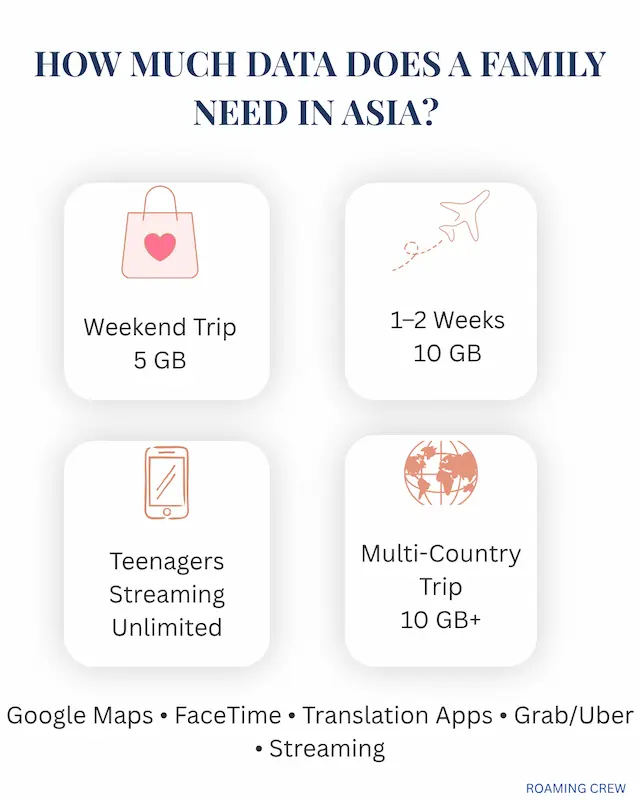
One thing that surprised me while planning our trips was how quickly families use data.
Between parents and kids, you’ll probably use your phone for:
- Google Maps
- WhatsApp and FaceTime
- Translation apps
- Attraction tickets
- Restaurant searches
- Ride-hailing apps
- Uploading photos
- Streaming cartoons during train rides
For most families:
- 5 GB: Short city breaks.
- 10 GB: 1–2 week trips.
- Unlimited: Multi-country trips or traveling with teenagers.
Speaking of long journeys, our Flying to Asia With Kids Survival Guide has all our favorite tips for surviving long-haul flights with little ones.
Best eSIM for China (First-Time Family Visitors)
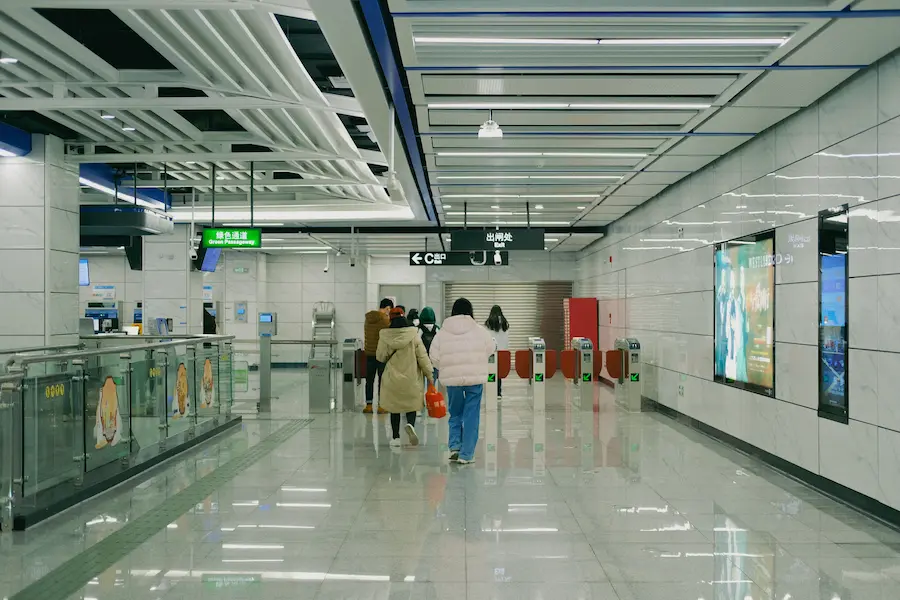
China is the one destination that deserves priority, because staying connected works a little differently here.
If you’re visiting China for the first time, you’ll probably have questions like:
- Will Google Maps work?
- Can I use WhatsApp?
- Do I need a VPN?
- How do I pay for things?
- Will Gmail still work?
For most families, I’d recommend starting with LituGo or Trip.com. Both are designed with international travelers in mind and can be set up before departure, which means one less thing to think about after a long-haul flight.
One thing worth noting is that some travel eSIMs route traffic outside mainland China. This may allow access to services like Google, WhatsApp, and Gmail without requiring an additional VPN. Because providers occasionally change how their services work, it’s always worth checking the latest details before your trip.
You’ll also be relying heavily on your phone in China—for train tickets, translation apps, Alipay, and navigating unfamiliar cities.
If China is on your bucket list, these guides will help:
- China With Kids: A Beginner’s Guide
- China Itinerary With Kids
- Alipay & WeChat Pay Guide
- Top Travel Tips for China
- China Trip Costs for Families
Best eSIM for Japan

Japan is one of the easiest countries in Asia for first-time family travelers, but you’ll probably use your phone more than you expect.
During our planning, we found ourselves constantly checking:
- Google Maps.
- Train schedules.
- Attraction tickets.
- Restaurant reservations.
- Translation apps.
For Japan eSIM, I’d compare Ubigi and Nomad first.
Ubigi remains a convenient option for families seeking a straightforward data eSIM, particularly if Japan is part of a broader Asia itinerary.
Nomad is another option I’d now put on the shortlist. It offers Japan-specific plans as well as regional Asia-Pacific plans, so you can choose between paying only for Japan or keeping the same eSIM if your trip continues elsewhere in Asia.
Even Airlo also offers services, but as per connectivity and cost-effectiveness, it is not as convenient as Nomad or Ubigi.
As for parents, that choice matters more than finding the absolute cheapest price.
If you’re spending 10 days only in Japan, compare the country plans. If Japan is the first stop on a Tokyo → Vietnam → Bali trip, compare the regional plans instead.
Klook is still worth checking if you’re already using it for attraction tickets or transfers, but eSIM availability and offers can change. I wouldn’t choose it solely for convenience without first comparing the current data allowance and validity with Ubigi or Nomad.
If you’re planning to explore beyond Tokyo, having mobile data quickly becomes essential—especially when navigating train stations with tired kids and luggage.
Planning a Japan trip? Start here:
- Tokyo With Kids
- Kyoto With Kids
- Osaka With Kids
- Japan Family Trip Cost
- Japan Packing List for Families
Best eSIM for Vietnam
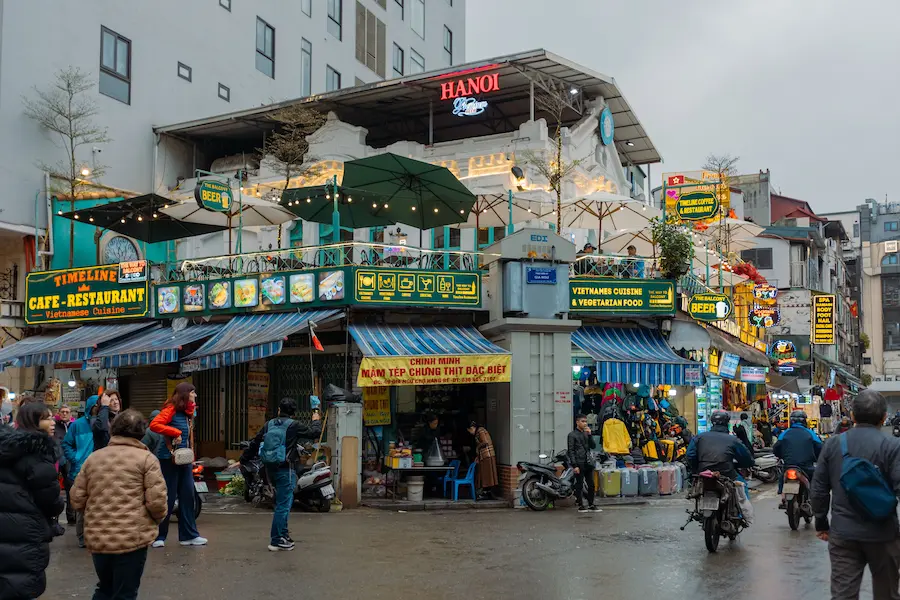
Vietnam is one of the most affordable family destinations in Asia, and staying connected is generally straightforward.
Most families will use their phones for GrabRides and Google Maps, translating menus, booking trains, and finding family-friendly restaurants.
For Vietnam, I’d compare Nomad and Ubigi first.
Both make sense for families who would rather have data ready before landing than sort out a local SIM after arrival. Nomad offers Vietnam-specific plans as well as regional plans, while Ubigi can make more sense when Vietnam is one stop on a wider Asia trip.
If you’re only visiting Vietnam, compare the country-specific plans and choose based on the amount of data your family actually needs. If you’re continuing to Cambodia, Thailand, Singapore, or another destination, check the regional coverage before buying—you may be able to avoid changing eSIMs halfway through your trip.
I wouldn’t choose purely by the lowest headline price. With kids, I’d also compare validity, top-up options, and whether hotspot/tethering is included in the exact plan you’re buying.
Vietnam is also one of those destinations where you’ll likely spend long days out exploring, so it’s a good idea to choose a plan with enough data for maps, photos, and video calls home.
Continue planning your Vietnam adventure:
Best eSIM for Bali
Bali may be one of the easiest places to visit in Asia, but you’ll still rely on your phone constantly.
From arranging airport transfers to navigating rice terraces and finding family-friendly cafés, having mobile data from the moment you land makes the first day much smoother.
For Bali, Nomad and Ubigi would be the two options I’d check first.
Nomad is particularly worth comparing for Bali because its Indonesian plans connect through local networks, including Telkomsel and Smartfren, depending on the plan you choose. Ubigi is another simple option, especially if you already have the app or want to keep your eSIM setup straightforward.
I wouldn’t worry too much about finding the absolute cheapest plan here. Check the data allowance, validity, hotspot support, and the network included in the plan, then choose whichever suits the way your family will actually travel.
And one small mum tip: download your hotel location and the first day’s directions before you fly anyway. Mobile data is incredibly useful in Bali, but having those details saved offline is reassuring when you’re arriving somewhere new with kids.
Bali may be one of the easiest places to visit in Asia, but you’ll still rely on your phone constantly.
From arranging airport transfers to navigating rice terraces and finding family-friendly cafes, having mobile data from the moment you land makes the first day much smoother.
For Bali, I’d recommend checking both Ubigi and Klook, depending on current plans and pricing.
Helpful Bali Guides:
Best eSIM for Multi-Country Asia Trips
If your family is planning to visit more than one country, choosing the right eSIM becomes even more important.
It’s not uncommon for first-time visitors to spend two or three weeks exploring Asia with an itinerary that looks something like this:
- Tokyo → Kyoto → Hanoi
- Singapore → Bali → Bangkok
- Beijing → Shanghai → Hong Kong
- Vietnam → Cambodia → Thailand
While you can purchase separate eSIMs for each destination, switching plans every few days quickly becomes one more thing to manage during your trip.
Country eSIM or Asia Regional eSIM?
Once your itinerary is fixed, this decision is actually pretty simple.
Staying in one country?
Start with a country-specific eSIM. If you’re spending two weeks only in Japan, for example, there’s usually no reason to pay for coverage across the rest of Asia.
Visiting two or more countries?
That’s when I’d start comparing regional Asia plans. You may pay a little more, but not having to buy and set up another eSIM every time you move on can be worth it—especially on a travel day with kids.
My rule with family travel is pretty simple: if saving a few dollars gives me another job to do while juggling passports, luggage, and tired children, I’ll usually choose convenience.
So for a trip like Japan → Vietnam → Bali, I’d compare the regional plans from Ubigi and Nomad before buying three separate country eSIMs.
For multi-country family travel, I’d recommend looking at regional plans from Ubigi or Airalo.
Ubigi’s Asia plans are particularly convenient because they cover a wide range of destinations across East and Southeast Asia, allowing you to stay connected as you move between countries.
This means one less thing to think about while traveling—and as every parent knows, reducing decision fatigue is always a good thing.
If your family is planning a longer Asia adventure, a regional eSIM can make airport arrivals, border crossings, and train journeys significantly easier.
Some popular destinations covered by Asia plans include:
- Japan
- China
- Vietnam
- Thailand
- Singapore
- Indonesia
- India
- Cambodia
- South Korea
- Malaysia
For families traveling across multiple countries, I would personally prioritize convenience over saving a few dollars. Having one eSIM that works throughout your trip can be worth every penny when you’re juggling luggage, passports, and excited little travelers.
If you’re still deciding where to go, our guide to the Top Family Vacations in Asia compares some of the best destinations for first-time visitors.
Mistakes Parents Make When Buying an eSIM
After researching eSIMs for our own trips, these are the mistakes I see parents make most often:
1. Waiting Until They Land
Airport Wi-Fi isn’t always reliable, and the last thing you’ll want to do after a long flight is troubleshoot internet issues.
2. Buying Too Little Data
Google Maps, translation apps, video calls, and social media quickly add up. If you’re traveling with teenagers, you’ll almost certainly need more data than you expect.
3. Forgetting to Check eSIM Compatibility
Not all phones support eSIMs. Before purchasing, take a few minutes to confirm your device is compatible.
4. Assuming China Works Like the Rest of Asia
China is unique when it comes to connectivity. If it’s your first visit, make sure you understand how your chosen provider handles services like Google and WhatsApp.
5. Activating Too Early
Many plans start counting down as soon as they’re activated. Double-check when your plan becomes active to avoid wasting valuable days.
6. Relying Entirely on Airport Wi-Fi
Airport Wi-Fi can be slow, crowded, or difficult to access. Having mobile data ready before landing is one of the easiest ways to reduce stress on arrival day.
7. Not Downloading Maps Before Departure
Even with an eSIM, I always recommend downloading offline maps for your destination—just in case.
Before you leave, don’t forget to check our complete Asia Packing List for Families.
FAQs About the Best eSIMs for Asia
One thing I’ve realized while planning family trips is that the questions parents ask are often the same, regardless of whether they’re traveling from Texas, London, or Amsterdam.
Here are some of the questions I see most often.
Is an eSIM better than a physical SIM in Asia?
For most families, yes.
eSIMs are easier to set up, don’t require swapping physical SIM cards, and can usually be installed before leaving home. They also make multi-country trips much more convenient.
Can I use one eSIM across multiple countries?
Yes, many providers offer regional Asia plans.
If you’re visiting several destinations on one trip, providers like Ubigi and Airalo offer plans that work across multiple countries, which can save both time and hassle.
Will WhatsApp work in Asia?
In most Asian countries, yes.
However, China works differently. Access to apps like WhatsApp, Google, and Gmail can depend on how your eSIM routes traffic, so always check your provider’s latest information before traveling.
How much data does a family need?
As a general rule:
- 5 GB: Weekend or short city trips.
- 10 GB: One to two weeks.
- Unlimited: Longer trips or families with teenagers.
If you’ll be using Google Maps, video calls, and streaming, it’s usually better to choose a little more data than you think you’ll need.
Are eSIMs safe?
Yes. eSIMs are considered safe and are widely used by travelers around the world.
In fact, many parents prefer them because they can be installed before departure, reducing the need to use public Wi-Fi or search for SIM cards at the airport.
If safety is one of your biggest concerns, our guide to Is Asia Safe for Family Travel? covers everything parents should know before booking their trip.
Which eSIM is best for China?
For families visiting China, I generally recommend starting with destination-specific providers like LituGo or Trip.com.
They are designed with international travelers in mind and can be easier to navigate for first-time visitors.
Do all phones support eSIM?
No.
Most newer iPhones, Google Pixel devices, and many Samsung phones support eSIM technology, but older devices may not.
It’s always worth checking compatibility before purchasing a plan.
Should I buy my eSIM before leaving home?
Absolutely.
Setting up your eSIM before departure means you’ll have internet access the moment you land. It’s one less thing to think about when you’re arriving in a new country with kids, luggage, and jet lag.
Final Thoughts
Family travel is funny that way. The things you spend weeks worrying about—flights, hotels, and itineraries—usually work out just fine. It’s the small things, like having internet when you land, that end up making the biggest difference.
Staying connected is one of them.
Trust me—after a long flight, when you’re trying to find your hotel, message grandparents back home, and reassure tired little travelers that you’re almost there, having your phone working immediately feels like a small superpower.
Whether you choose Ubigi for a multi-country Asia adventure, LituGo for China, or Klook for your Japan trip, the “best” eSIM is simply the one that makes your family’s journey a little easier.
My biggest piece of advice?
Set it up before you leave home.
Future you—standing in an arrivals hall somewhere in Asia with tired kids, too many bags, and an impatient six-year-old asking when dinner is—will be very glad you did.
If this is your first time planning a trip to Asia, I’d recommend starting with our First-Time Asia With Kids Guide, where I walk through everything I wish I’d known before planning our own adventures.

FOUNDER • FAMILY TRAVEL WRITER • MUM OF TWO
About the Author
Hi, I’m Shivani, the founder of Roaming Crew.
Based in Singapore and having lived in different parts of Asia—including two years in India—I’ve explored 18+ destinations across the region, with 12+ of those journeys taken alongside my young kids.
From choosing family-friendly destinations and navigating local transport to budgeting, accommodation, and practical travel logistics, Roaming Crew is created with a parent-first mindset.