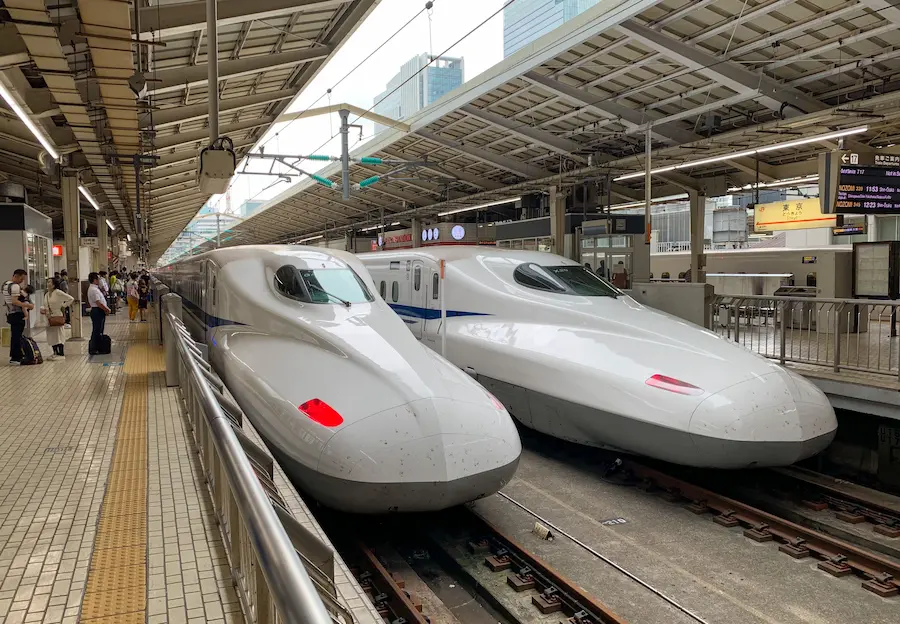
If you’re planning your first family trip to Japan, there’s a good chance you’ll ride the Shinkansen at least once.
Whether you’re traveling from Tokyo to Kyoto, heading to Osaka, or planning a day trip to see Mount Fuji, Japan’s famous bullet trains are often the fastest and easiest way to get around. But if you’re traveling with a baby, toddler, or young children, you probably have a few questions before booking your tickets.
Can you bring a stroller on the Shinkansen? Do young children need their own ticket? Will your family be able to sit together? What happens with luggage? And is it actually easier than flying between cities with kids?
The good news is that the Japan Shinkansen with kids is one of the best ways to travel. The trains are clean, safe, comfortable, incredibly reliable, and surprisingly easy to navigate—even for first-time visitors. Many parents find train travel far less stressful than dealing with airport security, baggage drop-offs, and flight delays.
That said, there are a few things we wish we had known before our first ride. Small details such as choosing the right seats, understanding child ticket rules, storing strollers, and arriving at the station with enough time can make the difference between a smooth journey and an unnecessarily stressful one.
In this guide, we’ll walk you through everything families need to know about riding the Japan Shinkansen with kids, including ticket rules, seating tips, luggage advice, stroller-friendly features, food onboard, and practical lessons that help first-time visitors feel confident from the moment they step onto the platform.
Whether you’re traveling with a curious toddler, school-age kids, or a baby in a stroller, this guide will help you enjoy one of the most memorable parts of family travel in Japan.
Quick Answer: Is the Shinkansen Family Friendly?
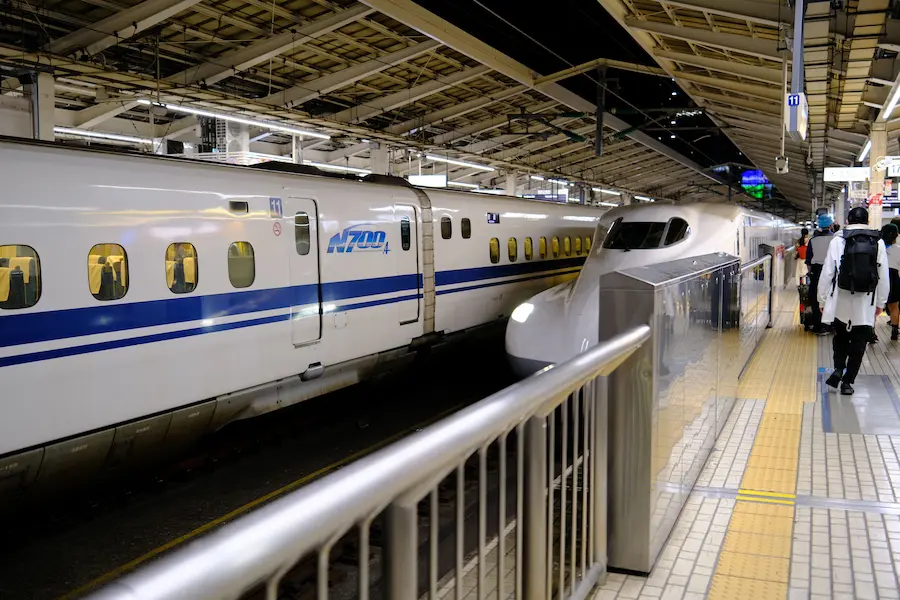
Yes. For most families, the Shinkansen is one of the easiest and least stressful ways to travel around Japan.
Japan’s bullet trains are clean, safe, punctual, and designed to make long-distance travel comfortable. Parents can bring strollers, store luggage onboard, use clean restrooms with baby-changing facilities, and enjoy a smooth ride that feels far less hectic than flying between cities.
Children under a certain age can travel for free, reserved seating makes it easy for families to sit together, and onboard rules are straightforward once you know what to expect. Whether you’re traveling with a baby, toddler, or older children, the Shinkansen is generally a comfortable experience—even for first-time visitors to Japan.
If you’re planning routes such as Tokyo to Kyoto, Tokyo to Osaka, or Kyoto to Hiroshima, the Shinkansen is often the fastest, easiest, and most family-friendly option available.
At a Glance: Shinkansen Rules for Families
Before we dive into the details, here’s a quick overview of the questions most parents ask before their first Shinkansen journey.
- ✅ Can I bring a stroller?
Yes. Most families bring a stroller on the Shinkansen. - ✅ Do kids need tickets?
Depends on their age. Some young children can ride for free. - ✅ Can families sit together?
Yes, especially when you reserve seats. - ✅ Is food allowed onboard?
Yes. Snacks and station bento boxes are part of the experience. - ✅ Are there restrooms?
Yes. Most trains have clean restrooms and baby-changing facilities. - ✅ Can I bring luggage?
Yes. Larger suitcases may require special luggage reservations.
Now let’s look at exactly how child tickets, seating, strollers, luggage, and family-friendly facilities work on Japan’s famous bullet trains.
Is the Shinkansen Really the Easiest Way to Travel Around Japan With Kids?
In our experience, yes.
After traveling extensively around Asia with young children, we found Japan’s Shinkansen to be one of the easiest and least stressful ways to get from one city to another. For many first-time visitors, it can actually feel easier than flying.
One of the biggest advantages is punctuality. Shinkansen trains are famously reliable, so you don’t need to worry about long delays disrupting nap schedules, hotel check-ins, or carefully planned sightseeing days. When traveling with kids, that predictability is incredibly valuable.
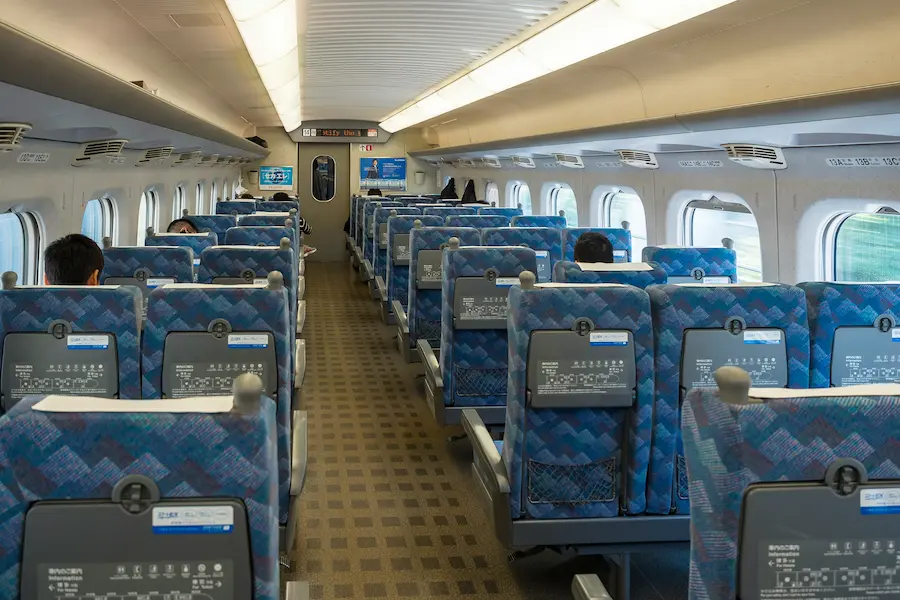
The trains are also exceptionally clean. Stations, platforms, restrooms, and seating areas are well maintained, which makes a noticeable difference when you’re traveling with toddlers who want to touch everything around them.
Comfort is another reason many families prefer the Shinkansen. Seats are spacious, there is room for children to look out the window, snacks are allowed onboard, and there are restrooms available throughout the journey. Unlike a flight, you don’t have to arrive hours early, pass through airport security, or wait around at baggage claim after landing.
For routes such as Tokyo to Kyoto, Tokyo to Osaka, or Kyoto to Hiroshima, the Shinkansen often saves families both time and stress. Instead of navigating airports on either side of the journey, you simply arrive at the station, board the train, and relax.
If you’re visiting Japan with kids for the first time, the Shinkansen is not just a mode of transportation—it’s often one of the highlights of the trip itself.
Do Children Need Shinkansen Tickets? Japan’s Child Fare Rules Explained
One of the most common questions parents ask is whether kids need their own Shinkansen ticket.
The answer depends on your child’s age.
| Child’s Age | Ticket Required? |
|---|---|
| Under 6 years | Usually free if sharing a parent’s seat |
| 6–11 years | Child fare (about half the adult fare) |
| 12+ years | Full adult fare |
Important: Each paying adult can generally bring up to two kids under 6 years old free of charge. Additional young children may require a child ticket. If a child under 6 needs their own reserved seat, you’ll also need to purchase a child ticket for them. Check the official JR child fare rules before booking.
Babies and Toddlers (Under 6 Years Old)
Kids under 6 years old can usually travel for free if they sit on a parent’s lap or share a seat with an accompanying adult.
This is why you’ll often see families traveling with babies and younger toddlers without purchasing an additional ticket.
However, if you have more than two kids or like your child to have their own reserved seat, you will need to purchase a child’s ticket for them.
Children (6–11 Years Old)
Children aged 6 to 11 generally pay a child fare, which is typically around half the adult ticket price.
They are entitled to their own seat and can sit with the rest of the family when seats are reserved together.
Teens (12 Years and Older)
Children aged 12 and above are considered adults for Shinkansen ticket purposes and pay the full adult fare.
Quick Tip
While the official rules are straightforward, the bigger question for many parents isn’t whether a toddler can travel for free—it’s whether they should.
That’s especially true on longer routes such as Tokyo to Kyoto or Tokyo to Osaka, where families may spend two to three hours onboard.
Let’s look at what we would personally do as parents.
Should Toddlers Have Their Own Shinkansen Seat? What We Would Do as Parents
Technically, many toddlers can ride the Shinkansen without their own seats.
But as parents, we think the decision should depend less on ticket rules and more on your child’s age, personality, and the length of your journey.
For shorter rides, sharing a seat with a toddler may be perfectly manageable. But for longer journeys such as Tokyo to Kyoto, Tokyo to Osaka, or Tokyo to Hiroshima, we would strongly consider paying for an additional seat once a child is old enough to sit independently.
Having an extra seat gives your toddler space to move around, enjoy snacks, look out the window, play with books or toys, and even nap comfortably without spending the entire journey on your lap.
When we traveled on the Shinkansen with our 2.5-year-old and our five-year-old, we decided to buy one child seat even though our toddler was eligible to travel without one. Having three seats for the four of us gave the kids extra room to move around, snack, and look out the window. It turned what could have been a long journey into a much more relaxed experience for the whole family.
Of course, every family is different. Some toddlers are happy to cuddle up with a parent for the entire journey, while others want their own space after just a few minutes.
If you’re trying to decide whether to purchase an extra seat, ask yourself one simple question:
Would my child happily sit on my lap for two to three hours?
If the answer is no, the extra seat is usually money well spent.
For many families, especially on their first trip to Japan, the additional comfort is worth far more than the savings.
How Can I Make Sure My Family Sits Together on the Shinkansen?
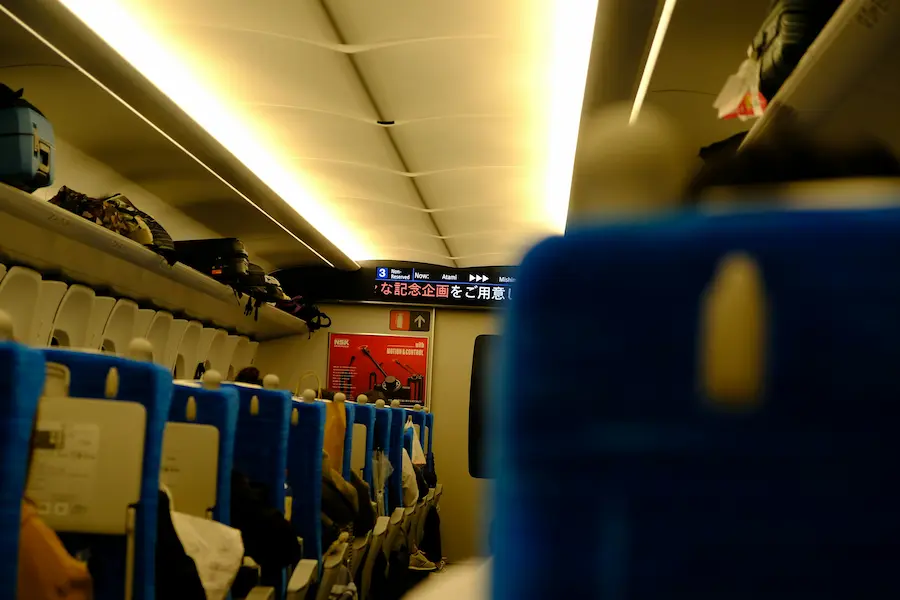
If you’re traveling with young children, one of the biggest concerns is whether everyone can sit together. Thankfully, this is usually easy to arrange on the Shinkansen if you reserve your seats in advance.
While some trains have non-reserved carriages, we would always choose reserved seats when traveling as a family. It removes the stress of searching for empty seats, splitting up, or standing with tired children during busy travel periods.
If your travel dates are fixed, we recommend booking your tickets a few days to a week before departure through an official booking platform or app. Not only does this give you a better chance of securing seats together, but you’ll also have more choice when selecting window seats, luggage-friendly rows, or seats with Mount Fuji views on routes between Tokyo and Kyoto.
Families traveling during Golden Week, Obon, Christmas, or New Year’s should make reservations as soon as booking opens.
One thing we particularly liked was using mobile tickets. Instead of queuing at ticket counters with kids and luggage, you can simply scan your QR code at the ticket gates and head straight to the platform.
Which Seats Work Best for Families?
For seating, we found the three-seat side of the carriage worked best for our family. On one side, the children could sit by the window while a parent took the aisle seat, giving everyone enough room for snacks, books, and looking out at the scenery. If you’re traveling with a stroller or larger suitcases, seats near the back of the carriage are often the most convenient because they’re closest to luggage storage areas.
Our advice is simple: if you’re traveling with toddlers or younger kids, don’t leave seating arrangements to chance. A reserved seat costs very little compared to the overall cost of a family trip to Japan, and sitting together can make the journey much more relaxed for everyone.
Can You Bring a Stroller on the Shinkansen?
Yes. We traveled on the Shinkansen with a stroller and found it much easier than we expected.
If you’re visiting Japan with a baby or toddler, we highly recommend bringing a lightweight travel stroller. You’ll be using it not only on the train but also while navigating large stations such as Tokyo Station, Kyoto Station, and Shin-Osaka Station.
Before boarding, it’s usually best to fold your stroller and store it near your seats or with your luggage. Compact travel strollers are much easier to carry, store, and maneuver through busy stations than larger full-size models.
One thing that surprised us was how family-friendly Japan’s train stations are. Most major stations have elevators, escalators, accessible restrooms, and step-free routes. If you’re using Google Maps, selecting the wheelchair-accessible route can help you find elevators and avoid stairs when traveling with a stroller.
That said, some stations are enormous, and the elevator route isn’t always the fastest option. We occasionally found it easier to carry our lightweight stroller up a short flight of stairs rather than take a long detour through the station.
Our Tip
If you’re planning to travel between multiple cities in Japan, a compact travel stroller is worth bringing. It makes station transfers, train changes, and busy sightseeing days much easier while still giving your child a comfortable place to rest when little legs get tired.
Where Do Families Store Luggage and Strollers on the Shinkansen?
If you’re visiting Japan with kids, chances are you’ll be traveling with larger suitcases than most local travelers. While bringing luggage on the Shinkansen is perfectly normal, many families are surprised to learn that Japan offers an even easier option: luggage forwarding services.
Shinkansen Luggage Rules at a Glance
| Item | Rules |
|---|---|
| Maximum luggage pieces | Up to 2 pieces per passenger |
| Maximum weight | 30 kg (66 lbs) per item |
| Standard luggage size | Up to 160 cm (63 inches) total dimensions. * |
| Oversized luggage | Between 160 cm and 250 cm total dimensions |
| Folded stroller | Allowed onboard |
Total dimensions = Length + Width + Height.
What Happens With Standard Suitcases?
Most carry-on suitcases and medium-sized luggage are easy to travel with on the Shinkansen.
Smaller carry-on bags (around 22 inches) can usually be placed on the overhead luggage racks above your seat, making them easy to access during the journey.
Larger suitcases that are still within the standard 160 cm size limit are typically stored in luggage areas within the carriage or kept near your seat, depending on the train and available space.
Important Tip for Families
When you hear the announcement that your station is approaching, start gathering your belongings straight away.
Unlike many trains in Europe or North America, Shinkansen stops can be surprisingly brief. By the time the train arrives, you’ll want your luggage, stroller, children, and day bags ready to go.
We’ve found it much easier to be standing near the door a few minutes before arrival rather than trying to organize everything once the train has stopped.
What Counts as Oversized Luggage?
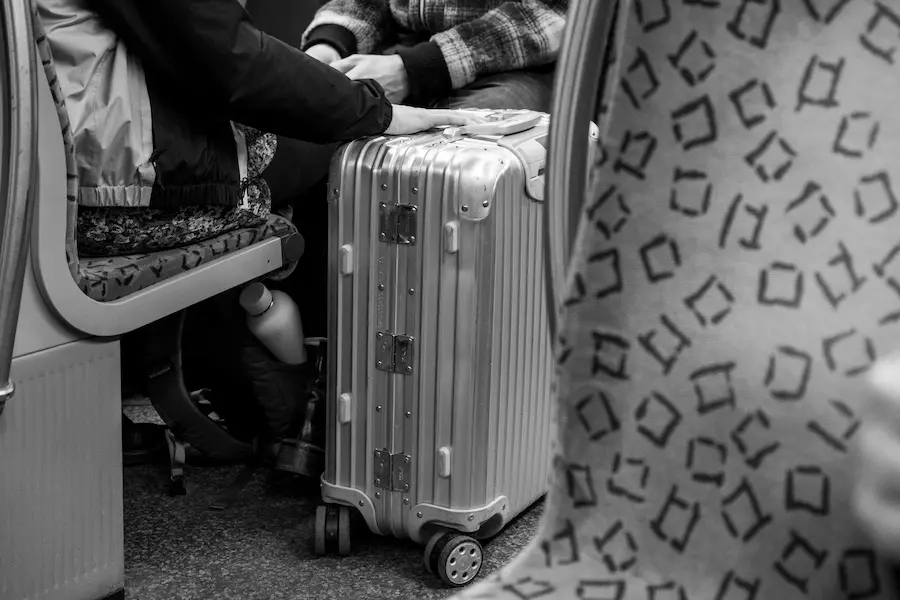
Suitcases larger than 160 cm (63 inches) but under 250 cm total dimensions are considered oversized luggage on certain Shinkansen routes, including the popular Tokaido-Sanyo-Kyushu-Shinkansen line connecting Tokyo, Kyoto, Osaka, Hiroshima, and Fukuoka.
If you’re bringing oversized luggage, you’ll generally have two options:
Option 1: Reserve an Oversized Baggage Seat
These are usually seats in the last row of the carriage with access to the luggage space behind them.
This area is reserved exclusively for passengers who have booked those seats and is often the most convenient option for families.
Option 2: Reserve an Oversized Baggage Area
Some trains also offer dedicated oversized luggage storage areas located between carriages.
These spaces can be secured using your IC card and are useful if last-row seats are unavailable.
A Better Option for Families: Luggage Forwarding
If you’re carrying multiple large suitcases, consider using a luggage forwarding service instead.
Companies such as Yamato Transport, JAL ABC, and Sagawa Express can deliver suitcases directly to your next hotel, often by the next day. Many services can also forward strollers, ski equipment, golf bags, and other bulky items.
For a reasonable fee, hotels and luggage counters can send your suitcase directly to your next hotel, often arriving the same day or the following day. This means you only need to carry a small overnight bag on the train instead of dragging heavy suitcases through busy stations and onto crowded platforms.
For families traveling between Tokyo, Kyoto, and Osaka, this is often the easiest solution.
Our Tip
If you’re traveling with young children, we’d much rather carry one small overnight bag on the train and send our largest suitcase ahead.
It makes station transfers easier, reduces stress when boarding, and allows you to focus on your kids instead of managing heavy luggage.
Can You Bring Food and Snacks on the Shinkansen?
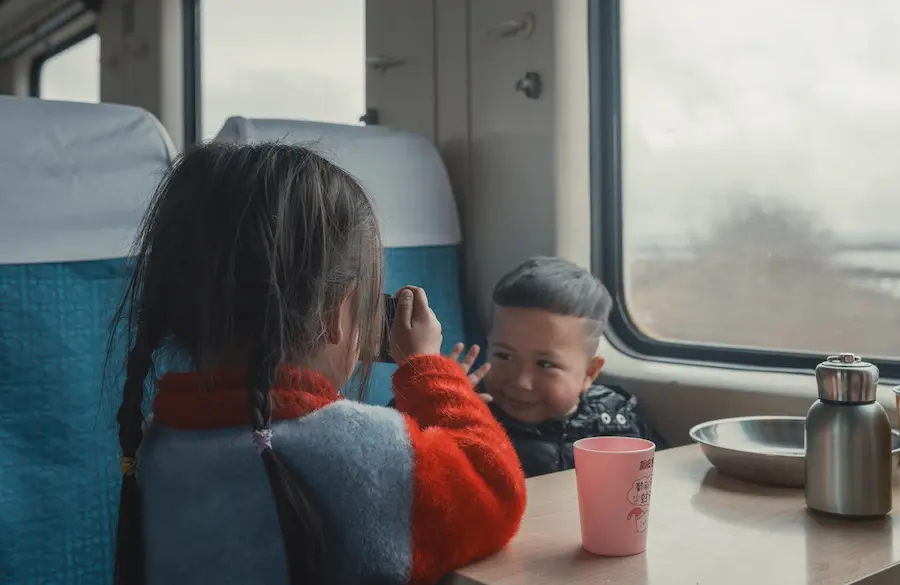
Yes—and for many families, snack time ends up being one of the most enjoyable parts of the journey.
Unlike airplanes, eating and drinking on the Shinkansen is completely normal. You’ll see many passengers enjoying meals, coffee, snacks, and drinks during their trip.
If you’re traveling with young children, we highly recommend bringing a few familiar snacks from a convenience store before boarding. While Japan has fantastic food, travel days are often smoother when you already have something your child loves.
What Is an Ekiben?
An ekiben is a boxed meal sold at train stations specifically for train travel.
For many visitors, buying an ekiben before boarding is part of the Shinkansen experience. You’ll find everything from sandwiches and fried chicken to regional specialties that showcase local flavors.
Traveling With a Picky Eater?
Don’t worry if your child isn’t adventurous with food.
Most major stations sell familiar options such as sandwiches, pastries, fruit, yogurt, rice crackers, chips, and juice. We usually carried a few trusted snacks alongside anything new we wanted the kids to try.
Our Tip
Arrive at the station 20–30 minutes early and let your children choose one special snack for the journey. It gives them something to look forward to and can make the train ride feel like part of the adventure rather than simply transportation.
Are There Bathrooms and Baby Changing Facilities on the Shinkansen?
Yes. This is one area where Japan makes family travel surprisingly easy.
Most Shinkansen trains have clean, modern restrooms onboard, and many also include baby-changing facilities. On longer journeys, we found it reassuring to know we didn’t need to worry about finding a restroom during the trip.
If you’re traveling with a baby, major stations such as Tokyo, Kyoto, and Shin-Osaka also have nursing rooms, family restrooms, and baby-care facilities within the station itself.
What About Diaper Changes?
Most parents won’t have any trouble finding changing facilities either onboard the train or at major stations.
On one of our journeys to Osaka, we even changed our baby’s diaper shortly before arriving. We found it much easier to use the changing table on the train than to to wait until reaching the station, collecting our luggage, navigating a new city, and finding our hotel.
For families with babies, taking advantage of the onboard facilities before arrival can make the transition much smoother.
A Quick Safety Note for Parents
Because the Shinkansen is a high-speed train, younger children can sometimes lose their balance when walking through the carriage or using the restroom.
While the ride is incredibly smooth, we always accompany our children to the restroom rather than sending them alone.
Our Tip
Before boarding, encourage everyone to use the restroom—even if they say they don’t need to. Then, about 15–20 minutes before arrival, consider one final bathroom or diaper stop.
You’ll arrive at your destination ready to focus on finding your hotel and starting your next adventure rather than immediately searching for baby-changing facilities.
Is the Shinkansen Comfortable for Toddlers and Young Children?
In our experience, absolutely.
One of the things that surprised us most was how smooth and quiet the ride feels. Unlike many trains around the world, the Shinkansen doesn’t feel bumpy or jerky. There’s very little swaying, which makes it much easier for children to relax, snack, color, or even nap.
The atmosphere is generally calm rather than silent. Families, business travelers, and tourists all share the same space, so children don’t need to sit perfectly still. Normal family conversations are completely fine.
Many kids also love watching the scenery change outside the window. On longer journeys, our children spent far more time looking out at mountains, towns, rice fields, and passing trains than we expected.
Will My Child Be Able to Nap?
Many children do.
The smooth ride, comfortable seats, and steady background noise often make it easier for toddlers to fall asleep than on a plane.
Is It Easier Than Flying?
For most routes, we think so.
There’s no airport security, no long check-in process, no baggage claim, and much more freedom to move around. For families traveling between Tokyo, Kyoto, and Osaka, the Shinkansen often feels far less stressful than flying.
What If My Child Gets Motion Sickness?
Most families won’t have any issues on the Shinkansen. In fact, many parents find the ride smoother and more comfortable than traveling by car on winding mountain roads.
That said, if you already know that you or your child is prone to motion sickness, it’s worth preparing in advance.
I personally struggle with motion sickness, and while my children were absolutely fine on the Shinkansen, I started feeling uncomfortable once the train reached full speed. Looking out the window less and keeping my head down helped, but I was glad I had come prepared.
If motion sickness is a concern in your family, consider bringing any medication your doctor normally recommends or using motion-sickness bands or patches that have worked for your child in the past.
The good news is that most children are so busy watching the scenery, eating snacks, or looking for Mount Fuji that they hardly notice how fast they’re traveling.
Which Shinkansen Seats Are Best for Families?
For most families, reserved seats are worth every penny.
They guarantee that everyone can sit together and remove the stress of searching for seats after boarding.
Best Seat Choices for Families
| Situation | Best Seat Choice |
|---|---|
| Family of 3 | Three-seat side of the carriage |
| Family of 4 | Two rows facing each other (when available) |
| Traveling with large luggage | Last row seats |
| Hoping to see Mount Fuji | Window seats on the correct side |
| Traveling with toddlers | Window + middle seats for children |
We often preferred placing the children by the window while a parent sat in the aisle. It gave them something interesting to look at while making it easier for parents to help with snacks, toys, and bathroom trips.
What About Luggage?
If you’re carrying oversized luggage, try to reserve seats in the last row of the carriage. These seats have access to the storage area behind them and are often the most convenient option for families.
Our Family Tip
If you’re booking several days in advance, choose your seats at the same time. The best family-friendly seating options are often the first to disappear during busy travel seasons.
How Do I Get the Best Mount Fuji View From the Shinkansen?
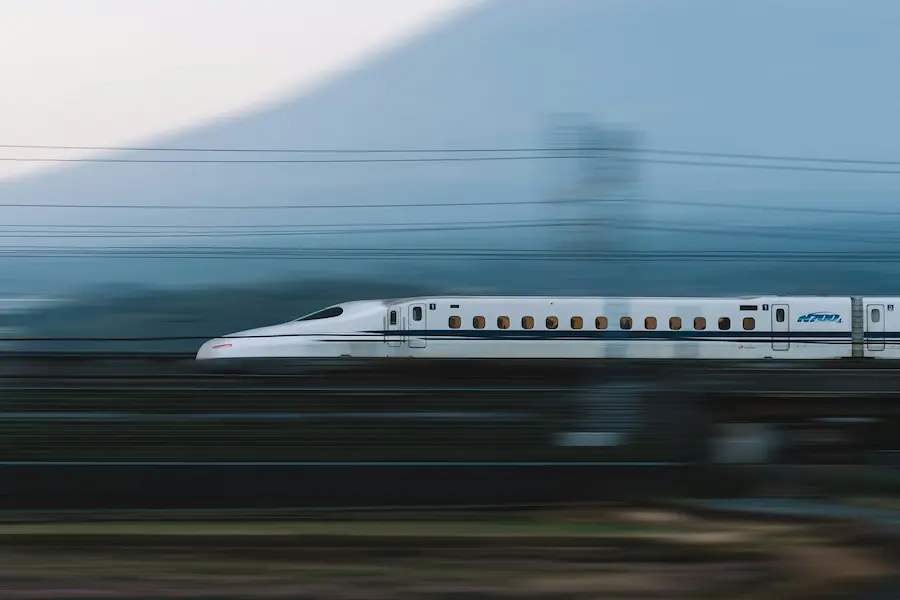
If seeing Mount Fuji is on your Japan bucket list, it’s worth choosing your seats carefully when booking.
For the popular Tokyo to Kyoto or Tokyo to Osaka route on the Tokaido Shinkansen, reserve a window seat in column E if you’re traveling in an ordinary car or a window seat in column D if you’re traveling in a green car. These seats offer the best chance of seeing Mount Fuji on a clear day.
If you’re traveling in the opposite direction, from Kyoto or Osaka back to Tokyo, choose the same D- or E-side window seats. The train changes direction, but the seat layout remains the same, so the Mount Fuji side does not switch.
| Route | Best Seats for Mount Fuji |
|---|
| Tokyo → Kyoto / Osaka | E-side window seat (Ordinary Car) or D-side window seat (Green Car) |
| Kyoto / Osaka → Tokyo | E-side window seat (Ordinary Car) or D-side window seat (Green Car) |
| Didn’t get a window seat? | Use the vestibule windows between carriages |
| Best viewing time | Around 40–50 minutes after Tokyo (near Atami) |
| Returning to Tokyo | Start looking around the Shizuoka area |
When Should We Start Looking?
If you’re traveling from Tokyo, start paying attention to the window around Atami Station, roughly 40–50 minutes after departure.
If you’re traveling toward Tokyo from Kyoto or Osaka, Mount Fuji usually begins appearing around the Shizuoka area.
Didn’t Get a Mount Fuji Window Seat?
Don’t worry.
If the view side wasn’t available when you booked, you can usually walk to the vestibule area between carriages and look out from the windows there when Mount Fuji comes into view.
One Thing Parents Should Know
Mount Fuji is sometimes called Japan’s “shy mountain” because it frequently hides behind clouds.
Even if you’ve reserved the perfect seat, weather conditions ultimately decide whether you’ll get that postcard-perfect view.
Our Family Tip
We like turning it into a family challenge by asking the kids to be the first to spot Mount Fuji. It gives them something exciting to watch for during the journey and makes the train ride even more memorable.
If seeing Mount Fuji up close is high on your family’s Japan wish list, check out our detailed guide to a Mt. Fuji day trip with kids, where we share the exact route, stations, and family-friendly tour we used ourselves.
What Mistakes Do First-Time Families Make When Riding the Shinkansen?
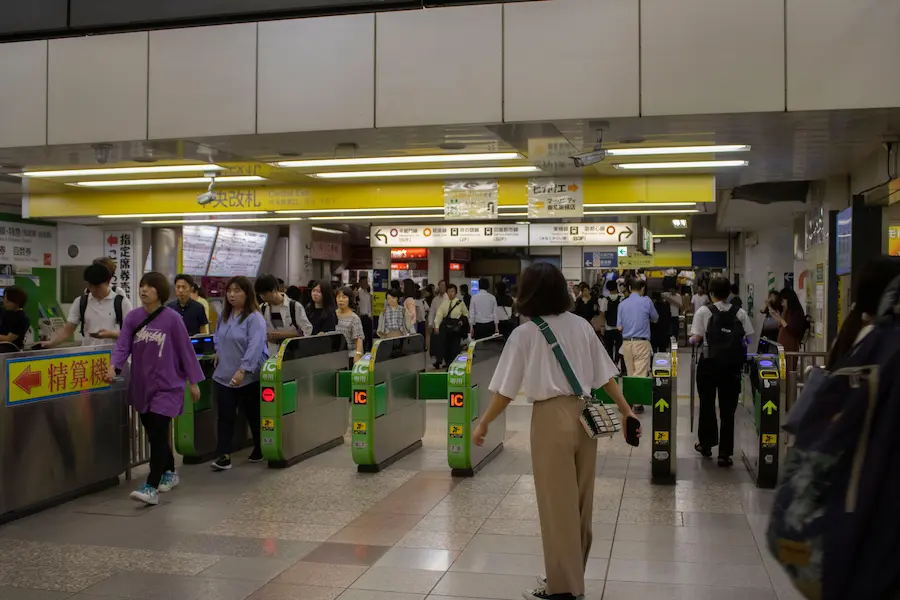
The Shinkansen is one of the easiest train systems we’ve used as a family, but there are a few mistakes that can make the journey more stressful than it needs to be.
1. Arriving at the Station Too Late
Unlike airports, you don’t need to arrive hours before departure. However, don’t underestimate how large stations such as Tokyo Station, Kyoto Station, and Shin-Osaka Station can be.
With kids, luggage, and snack stops, we found arriving about 30 minutes before departure gave us plenty of time without feeling rushed.
2. Not Reserving Seats
While some trains have non-reserved cars, we would always reserve seats when traveling with children.
Having guaranteed seats together removes a huge amount of stress and gives you more flexibility when traveling with strollers, snacks, and tired kids.
3. Bringing Too Much Luggage
This is probably the biggest mistake we see families make.
Dragging multiple large suitcases through busy stations is exhausting, especially when you’re also managing children. If you’re traveling between several cities, consider using a luggage forwarding service instead.
4. Waiting Until the Last Minute to Get Off the Train
This one caught us by surprise on our first few journeys.
Shinkansen trains are incredibly efficient, and station stops can be surprisingly short. If you’re traveling with children, don’t wait until the train has fully stopped before gathering your belongings.
When you hear the announcement for your station, start organizing your bags, folding your stroller if needed, and getting everyone ready. We usually like to be standing near the doors a few minutes before arrival, especially when traveling with luggage and young children.
By the time the train stops, other passengers will already be preparing to board, and you’ll want to be ready to step off smoothly rather than rushing at the last moment.
4. Expecting Airport-Style Boarding
The Shinkansen operates differently from a flight.
There are no long security lines, boarding gates, or lengthy boarding announcements. Once your platform is announced, you’ll simply line up at your carriage number and board when the train arrives.
Our Family Tip
The smoother your station experience, the easier your train journey will feel. Reserve your seats, pack lighter than you think you need, listen carefully for station announcements, and start preparing to get off before the train reaches your stop.
Should Families Take the Shinkansen or Fly Between Tokyo, Kyoto, and Osaka?
For most families visiting Japan, we would choose the Shinkansen.
At first glance, flights can sometimes appear cheaper. However, once you factor in airport transfers, check-in time, baggage collection, and traveling with children, the Shinkansen is often the easier and more convenient option.
Shinkansen vs Flying With Kids
| Factor | Shinkansen | Flying |
|---|---|---|
| City-center to city-center travel | ✓ | ✗ |
| Security screening | Minimal | Required |
| Recommended arrival time | 20–30 mins before departure | Around 2 hours before departure |
| Luggage collection | Not needed | Required |
| Freedom to move around | Better | Limited |
| Mount Fuji views | Possible | Limited |
| Family comfort | Excellent | Varies |
| Airport transfers | Not needed | Usually required |
What About the Cost?
For a typical Tokyo–Osaka journey, adult Shinkansen fares are often in the same general price range as domestic flights once luggage and airport transport are taken into account.
The bigger difference is convenience.
With the Shinkansen, you’re traveling directly from central Tokyo to central Osaka or Kyoto. You simply arrive at the station, board the train, and step off in the heart of your destination city.
With a flight, you’ll usually need to:
- Travel from your hotel to the airport
- Arrive around 2 hours before departure
- Go through security
- Wait at the gate
- Collect luggage after landing
- Travel from the airport to the city center
For families, those extra steps can easily add several hours to the overall travel day.
Why We Preferred the Shinkansen
We found train travel much more relaxing.
The kids could look out the window, enjoy snacks, walk to the restroom when needed, and settle into the journey without the stop-start stress that often comes with flying.
Perhaps most importantly, the trip starts and ends in the middle of the city rather than at an airport far outside it.
When Flying May Make Sense
Flights can still be worth considering for very long journeys, such as Tokyo to Okinawa or Tokyo to Hokkaido, where train travel would take significantly longer.
For the classic Tokyo–Kyoto–Osaka family itinerary, however, we’d choose the Shinkansen every time.
Is the Shinkansen Worth It for Families Visiting Japan?
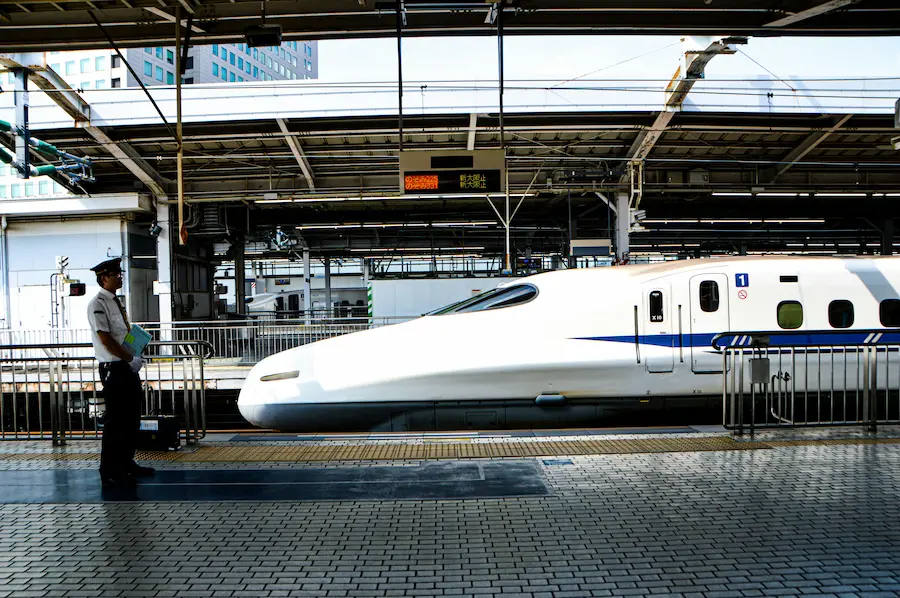
Absolutely.
If you’ve never traveled on Japan’s bullet trains before, it’s normal to feel a little overwhelmed. Between ticket rules, luggage requirements, seat reservations, and navigating unfamiliar stations, the process can seem more complicated than it really is.
The reality is that the Shinkansen is one of the easiest ways for families to travel around Japan.
It’s clean, safe, reliable, stroller-friendly, and designed to move people efficiently between cities. Once you’ve completed your first journey, you’ll quickly understand why so many families choose trains over domestic flights.
Looking back, what stood out most to us wasn’t the speed of the train—it was how stress-free the experience felt. The children could relax, enjoy snacks, watch the scenery roll by, and even spot Mount Fuji along the way. As parents, we appreciated how predictable and comfortable the entire journey was.
Whether you’re traveling from Tokyo to Kyoto, Kyoto to Osaka, or exploring several cities across Japan, the Shinkansen makes family travel surprisingly straightforward.
So if you’re wondering whether your family can realistically use Japan’s bullet trains without stress, our answer is simple:
Yes, you absolutely can.
FAQ About Riding the Shinkansen With Kids
1. Is the Shinkansen difficult for first-time visitors to Japan?
Not at all. While Japan’s train system can look intimidating at first, the Shinkansen is surprisingly straightforward to use. Stations are well-signposted in English, trains are punctual, and most families find the process much easier than expected after their first journey.
2. What should I do if I miss my Shinkansen?
Don’t panic. Depending on your ticket type, you may be able to board a later train or adjust your reservation. Staff at ticket counters are generally very helpful, and major stations have English-speaking assistance available.
3. Can children move around during the journey?
Yes. While children should remain considerate of other passengers, it’s perfectly normal for parents to take younger children to the restroom, stand near the carriage doors for a change of scenery, or stretch their legs during longer journeys.
4. What should I pack in my day bag for a Shinkansen journey with kids?
We recommend keeping snacks, water, wipes, tissues, chargers, medications, a spare set of clothes for younger children, and one or two small activities easily accessible. Anything you’ll need during the journey should stay in your day bag rather than your larger suitcase.
5. Are Shinkansen stations easy to navigate with kids?
Most major stations are family-friendly and have elevators, escalators, accessible restrooms, convenience stores, and plenty of signage in English. The biggest challenge is usually the size of the stations rather than finding your way around them.
6. What surprised you most about traveling on the Shinkansen with kids?
For us, it was how relaxed the experience felt. We expected a high-speed train journey to be complicated, but the biggest surprise was how easy it was to settle into our seats, enjoy the scenery, and simply let the journey become part of the adventure.
Planning Your Family Trip to Japan?
Now that you know how the Shinkansen works, it’s time to start planning the rest of your Japan adventure.
Whether you’re deciding between Tokyo and Osaka, figuring out how much to budget, packing for your family, or planning day trips with kids, we’ve put together detailed guides based on our own experiences traveling around Japan with children.
You may find these guides helpful next:
First-Time Japan Planning
- Planning Japan With Kids – Our complete step-by-step planning guide for first-time families.
- Japan Family Trip Cost Guide – Realistic budgeting advice for accommodation, transport, food, and attractions.
- Japan Packing List for Families – What we actually packed (and what we wish we had left at home).
Major Cities
- Tokyo With Kids – Family-friendly attractions, neighborhoods, and practical tips.
- Kyoto With Kids – Temples, gardens, cultural experiences, and kid-friendly activities.
- Osaka With Kids – Where to stay, what to do, and how to plan your visit.
Easy Day Trips by Train
- Mt. Fuji Day Trip With Kids – The exact route and family-friendly tour we used ourselves.
- Hakone With Kids – Hot springs, pirate ships, ropeways, and mountain views.
- Nara With Kids – Meeting the famous deer and exploring one of Japan’s most family-friendly day trips.
- A Day Trip to Uji With Kids – Matcha, riverside walks, and one of our favorite slow-paced family outings in Japan.
Japan can feel overwhelming when you’re planning from thousands of miles away, but once you’re there, you’ll quickly discover why it’s one of our favorite countries for family travel.
If you still have questions about traveling on the Shinkansen with kids, planning your route, or visiting Japan as a family, leave a comment below.
We’re always happy to help our readers plan a smoother and more enjoyable trip in Asia.

FOUNDER • FAMILY TRAVEL WRITER • MUM OF TWO
About the Author
Hi, I’m Shivani, the founder of Roaming Crew.
Based in Singapore and having lived in different parts of Asia—including two years in India—I’ve explored 18+ destinations across the region, with 12+ of those journeys taken alongside my young kids.
From choosing family-friendly destinations and navigating local transport to budgeting, accommodation, and practical travel logistics, Roaming Crew is created with a parent-first mindset.