Traveling through Tokyo with very young kids means every choice matters. You don’t have endless energy, unlimited time, or the flexibility to “try and see how it goes.” When naps, moods, and tiny attention spans shape your day, even one wrong decision can feel exhausting.
During our four days in Tokyo with a five-year-old and a nine-month-old, we knew one thing clearly: we wanted one indoor experience that felt special, didn’t overwhelm the kids, and didn’t leave us drained as parents.
That’s exactly why we chose teamLab Borderless.
We visited on a relaxed morning after completing our day trips from Tokyo—without rushing, without forcing a tight schedule, and without worrying about whether our kids would “last.”
And honestly, it worked better than we expected.
Our five-year-old, full of energy and curiosity, was completely absorbed—moving from room to room with wide eyes and endless questions. Our younger one, whom I carried most of the time, couldn’t express much in words yet—but his expressions said everything.
The glowing lights, flowing projections, and especially the sketch fish exhibit clearly caught his attention, and watching him react was a joy in itself.
This isn’t a hype-filled Instagram roundup or a technical art review. Instead, this guide shares what to expect when visiting teamLab Borderless with kids, especially toddlers and babies; how to plan it smoothly when time in Tokyo is limited; small tips to avoid unnecessary stress; and—most importantly—whether it’s truly worth your time and money when traveling Japan with young kids.
If you’re planning Tokyo with little ones and want to make calm, confident choices, you’re in the right place.
Before we dive in, it’s worth knowing that teamLab Borderless uses timed-entry tickets, and popular slots can sell out well in advance, especially during school holidays and cherry blossom season.
If you’re planning to visit, it’s a good idea to check ticket availability and reserve your preferred entry time before finalizing the rest of your Tokyo itinerary.
But, before filling your days with activities, we will help you to understand the overall rhythm of traveling in Japan as a family. Our guide on planning a relaxed Japan trip with kids explains how to avoid overplanning. Now, let’s start with
Why Borderless Felt Easy for Families
(And Why We Skipped Planets)
We want to be clear about one thing first—our choice wasn’t about which teamLab experience is “better” overall. It was about what worked best for our family at this stage, with a five-year-old and a nine-month-old.
Based on our research and conversations with other parents, TeamLab Planets appears to be a more sensory-led experience. It follows a fixed route, includes immersive installations designed to be felt with the body, and features a well-known water area that visitors walk through barefoot.
For some families—and especially for older kids or adults—that can be incredible. But for us, it wasn’t the right fit.
With very young kids, we needed freedom of movement. Borderless allows you to enter and exit rooms easily, linger where your child is comfortable, and leave immediately if something feels too dark or overwhelming. That free-flow flexibility simply isn’t possible when you’re following a set path, as is the case with Planets.
The water section was another deciding factor. I was carrying our nine-month-old most of the time, and our five-year-old wasn’t comfortable with the idea of getting wet in a dark room. Walking through shared water spaces with small children—especially when many visitors pass through every minute—just didn’t feel like a stress-free choice for us.
There are no foot showers afterward, either, so if you do choose Planets with kids, carrying sanitizing wipes is something many parents recommend.
In contrast, Borderless focuses more on projections, interactive light, and visual storytelling—elements that instantly engage young children without asking them to participate physically in ways they might resist.
Our kids could simply observe, point, move, and enjoy at their own pace.
It’s also worth knowing that Planets is a temporary exhibition, scheduled to close in 2027. If you’re visiting Japan in 2026 and feel confident it suits your family, it could still be worth adding before it closes.
That said, if Kyoto is part of your itinerary, teamLab Biovortex Kyoto offers many of the immersive elements people love about Planets—plus newer additions and more variety—making it a strong alternative.
For this trip, though, Borderless gave us exactly what we needed: flexibility, calm exits, and visual engagement without pressure. And with young kids, that mattered more than ticking every box.
If you’re planning multiple days in the city, our full Tokyo with Kids guide breaks down what’s realistic with young kids.
Before adding multiple paid attractions, it’s helpful to see how they impact your overall spending. Here’s our complete cost guide for a family trip to Japan, with real numbers from our 2-week visit.
What to Know Before You Go (Especially with Toddlers & Babies)

Before entering teamLab Borderless, there are a few important things parents should be aware of. Preparing for these small details in advance can make the experience far more relaxed—for both you and your kids.
1. Strollers Are Not Allowed Inside
You won’t be able to take a stroller into the exhibition. There is a designated stroller parking area near the entrance where you can safely leave it before going in.
If you’re visiting with a baby or a toddler, a baby carrier is essential. We carried our nine-month-old in a carrier the entire time, which made moving through rooms effortless. Meanwhile, our five-year-old was free to explore independently at her own pace.
If your child likes to rest, cuddle, or nap occasionally, a carrier works far better than trying to manage without one.
2. Toilets & Diaper Changing Are Available (But No Dedicated Nursing Room)
There are toilets and diaper-changing facilities available, which is reassuring when visiting with young kids. However, we didn’t notice a separate nursing or feeding room inside the exhibition.
If your baby needs to drink milk, breastfeed, or have a quiet snack moment, don’t worry—the staff is very helpful. You can approach them, and they’ll guide you to a quieter corner or assist you in stepping out and re-entering if needed.
3. Dress Thoughtfully—Mirrors Are Everywhere
This is one of the most important things to know before visiting any teamLab experience.
Many rooms have mirrored floors and reflective surfaces, which means reflections are unavoidable. Dressing appropriately will help you feel comfortable throughout the visit.
- Choose plain, pattern-free clothing where possible
- Avoid bold prints or busy patterns, especially for kids
- Simple, neutral outfits allow the projected lights and artwork to stand out more clearly
We noticed that when kids wear simpler clothing, the projections really shine—and the visual magic feels stronger for them too.
4. Shoes, Movement & Comfort Matter
Since kids will be moving, stopping, sitting, and wandering freely:
- Comfortable shoes are a must
- Easy-to-move-in clothing works best
- Be prepared to follow your child’s rhythm rather than rushing through rooms
The more relaxed you are going in, the more your kids will enjoy it.
Think of teamLab Borderless less like a “museum visit” and more like a slow, immersive walk where your child leads the way. Preparing for these basics before entering helps you focus on the experience itself—not the logistics.
Our Experience Inside teamLab Borderless with Kids

True to its name, teamLab Borderless is designed as a free-flowing journey. There are no boundaries between rooms—digital art spills from one space into another, inviting you to wander at your own pace. Light, mirrors, and nature-inspired projections surround you, creating an immersive environment where nothing feels fixed or predictable.
We visited the museum in Azabudai Hills on the first full day of our trip to Japan, and the location itself added to the experience. The Mori Building complex and its surrounding streets are filled with cafes and restaurants, making it easy to plan a relaxed meal before or after your visit.
Tokyo Tower is also nearby, which worked perfectly for a relaxing family evening.
We booked a morning slot, and that made a noticeable difference. If you’re visiting with young kids, we highly recommend choosing one of the earliest entry slots available. The experience felt much calmer in the morning, and we were able to explore at our own pace before the larger crowds arrived.
Borderless does get crowded later in the day, especially midday and evenings, so early slots are ideal if you’re visiting with kids. There are free lockers before the ticket gates, though we didn’t need to use them.
Inside, the art responds to you. Digital flowers bloom where you touch the walls, animals shift and move as you walk past, and mirrored floors create the illusion of endless space. Each room keeps evolving, and even retracing your steps feels different every time.
We spent about an hour moving slowly through the spaces, though families could easily stretch this to 1.5–2 hours. There are plenty of beautiful photo opportunities, but after some time, the combination of bright projections, dark rooms, sound, and enclosed spaces became a bit too stimulating for us.
My husband, who has sensitive eyesight, and even our girl, began feeling visual fatigue after about an hour.
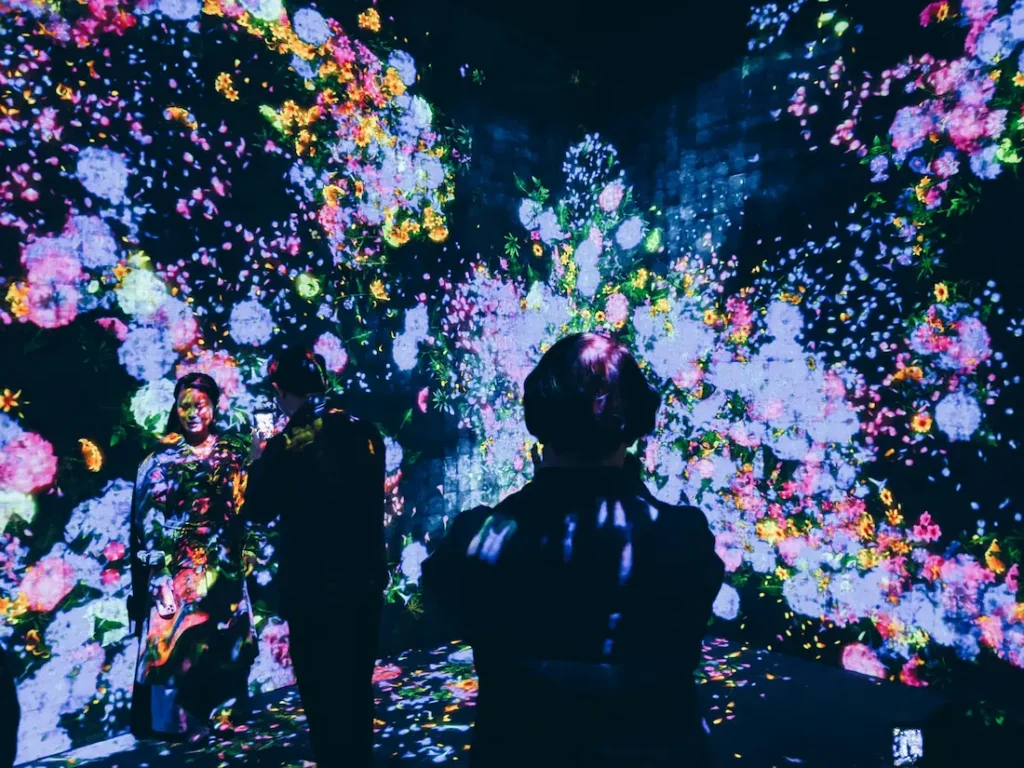
Darkness sensitivity was also something we noticed with our younger child. While he was happy observing the lights from the carrier initially, we could sense when it was time to slow down and eventually step out.
That said, one area completely won our daughter over—the slide area in an art room in the upper section. Even though it’s a darker space, it’s large, open, and playful. She happily joined other kids sliding again and again, while our younger one had enough space to move around calmly for a short while. That room alone made the visit memorable for her.
One important thing to know is that there’s no defined path or clearly marked room names. Spaces flow into each other, and you create your own route based on comfort and curiosity. We’ve described the rooms based on what we experienced visually at the time, knowing that your visit may look entirely different—and that’s part of the beauty of Borderless.
In the end, we left feeling content, not rushed. We stayed as long as it worked for our family and stepped out the moment it felt like enough—and that flexibility is exactly what made the experience work with young kids.
The Different Rooms We Explored at teamLab Borderless (With Kids)
Our visit to teamLab Borderless felt less like walking through a museum and more like wandering through a dream where rooms quietly melt into one another. There’s no set order, and spaces spill naturally into the next, which is both freeing and slightly disorienting in the best way.
The Flower Rooms
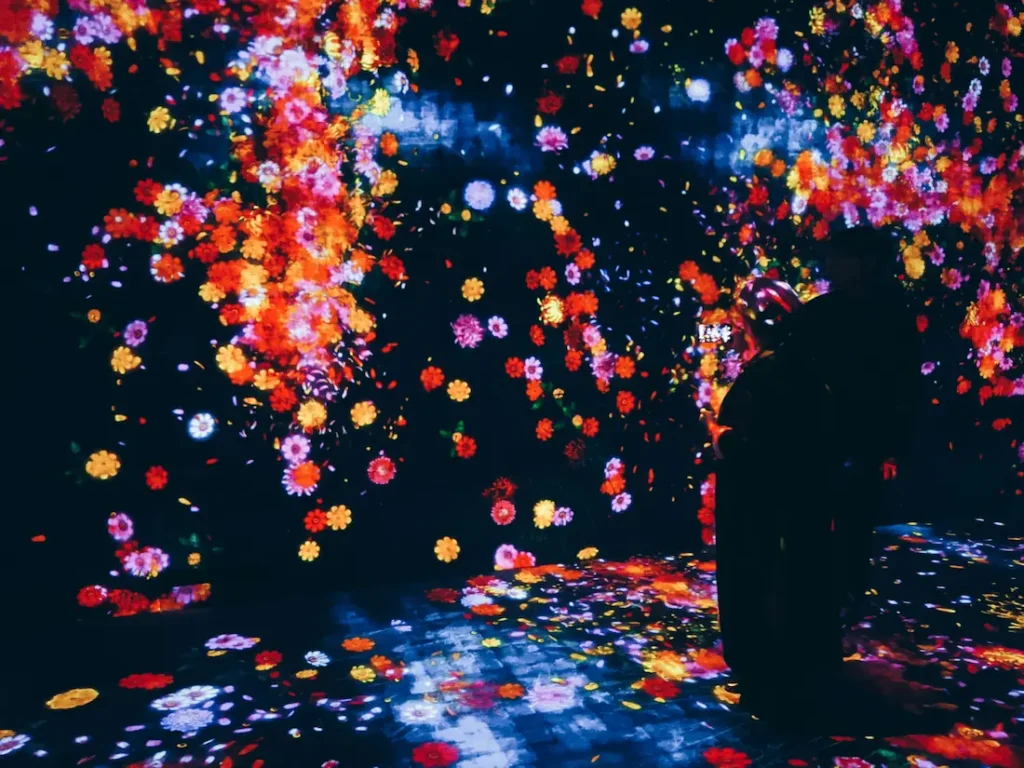
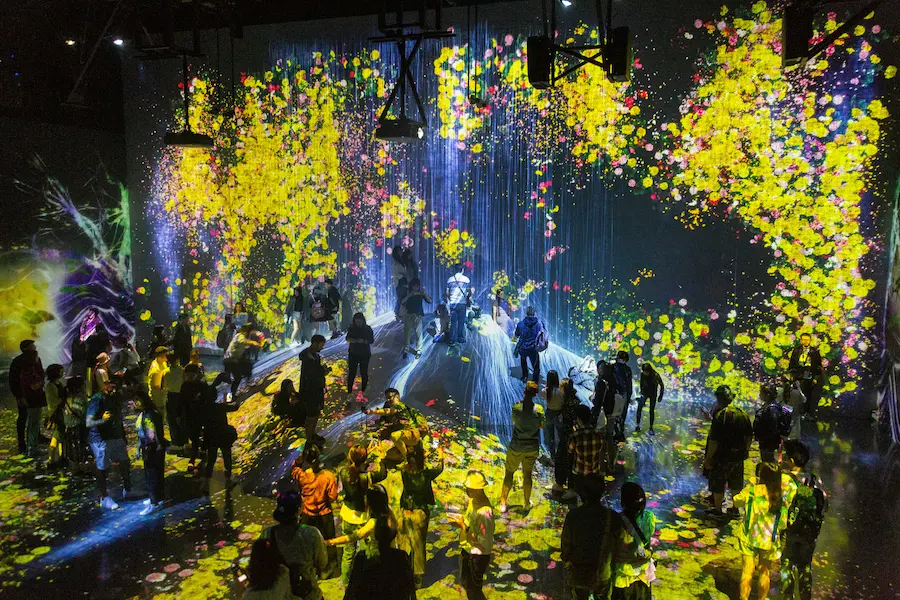
One of the first spaces we walked into was a flower room, where blooms spread gently across the walls. Watching flowers grow, fade, and reappear was unexpectedly calming. Every so often, butterflies fluttered across the projections, and both kids paused instinctively to watch.
It was soft, slow, and a lovely way to ease into the experience.
Later, we entered another flower meadow, this time dominated by sunflowers. This room felt brighter and more energetic, and it held our daughter’s attention longer. These floral spaces felt especially friendly for younger kids — visually engaging without being loud or intense.
The Central Oasis (Main Hall)
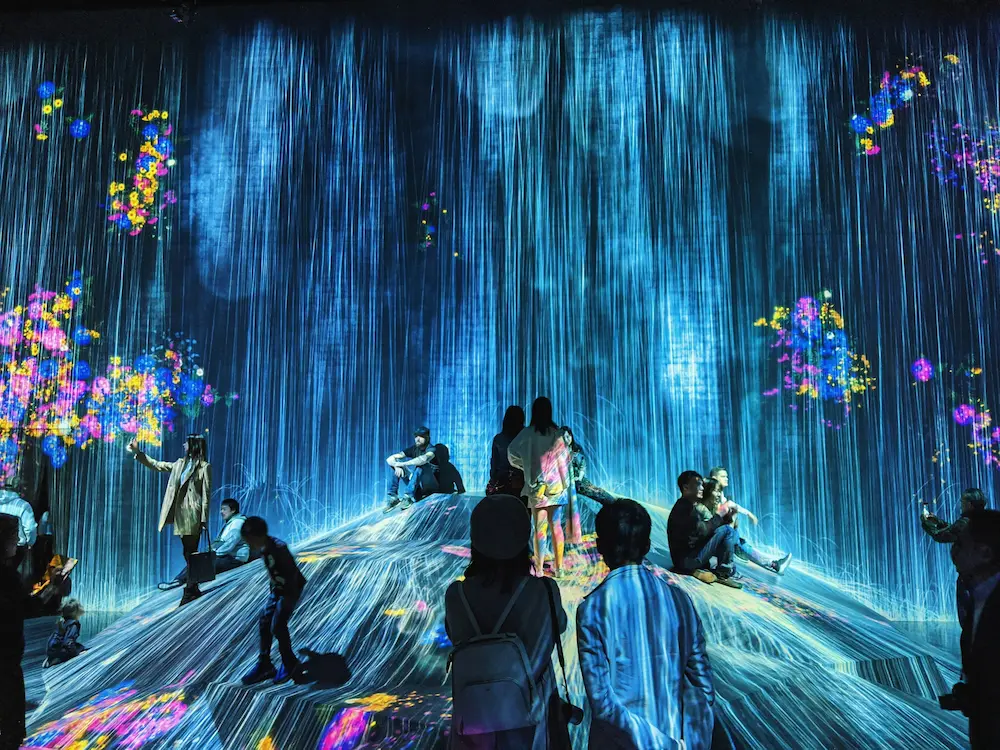
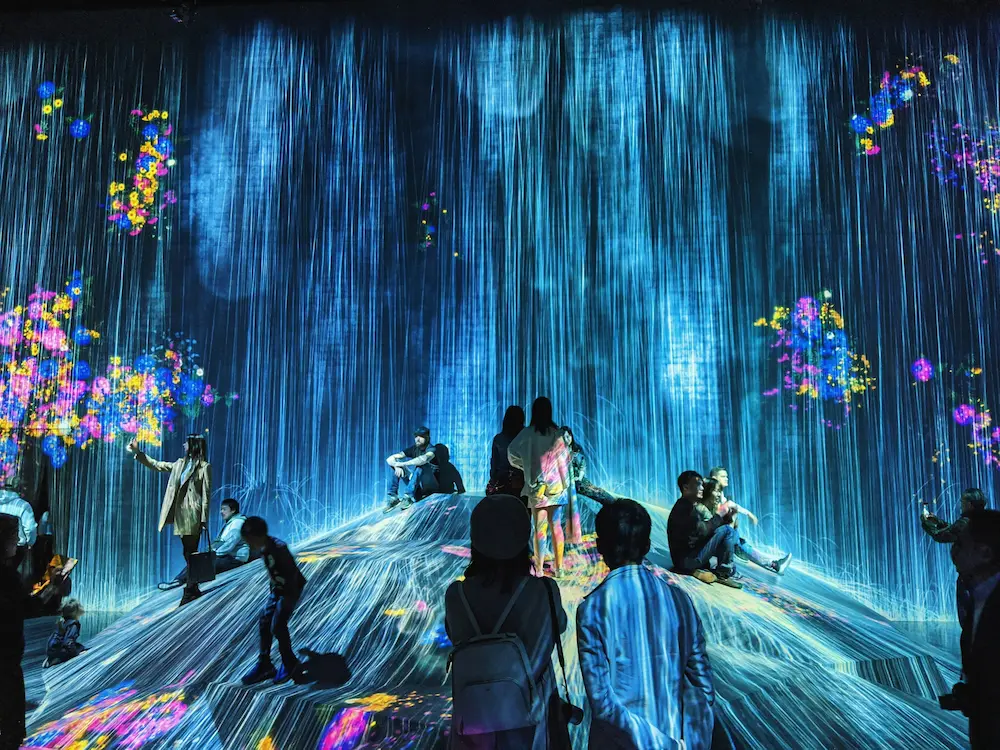
The Central Oasis is the largest and most grounding space at Borderless. This room acts like a main hub, with many other rooms opening into it.
What you see here changes constantly, but the moment that stayed with me was the waterfall cascading down the main wall.
What made this room special for us was the space. Unlike smaller rooms where projections feel closer, this hall gives you distance — enough breathing room to step back, observe, and let kids move freely without feeling boxed in.
When the stimulation in other rooms started to build up, we often found ourselves drifting back here.
Japanese Art Room
We walked into a smaller room where traditional Japanese art was projected in a black-and-white palette. I loved this space for its simplicity and cultural connection. It felt quieter, slower, and more reflective. Even the corridors leading out carried subtle projections, and we found ourselves walking alongside local Japanese visitors, sharing the same quiet moments.
Infinite Crystal Universe
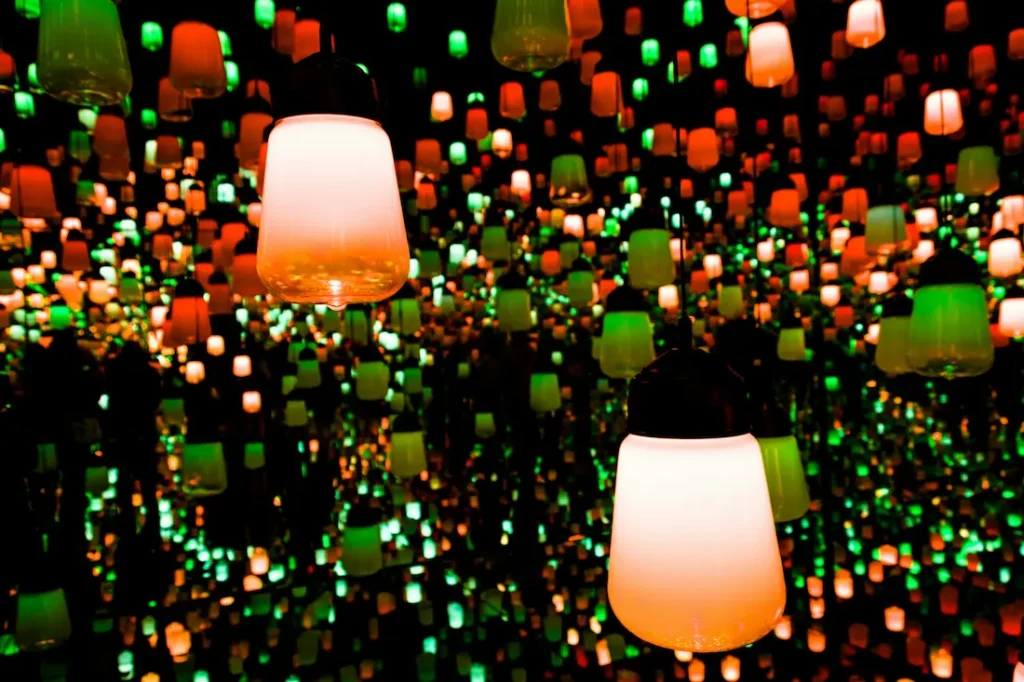
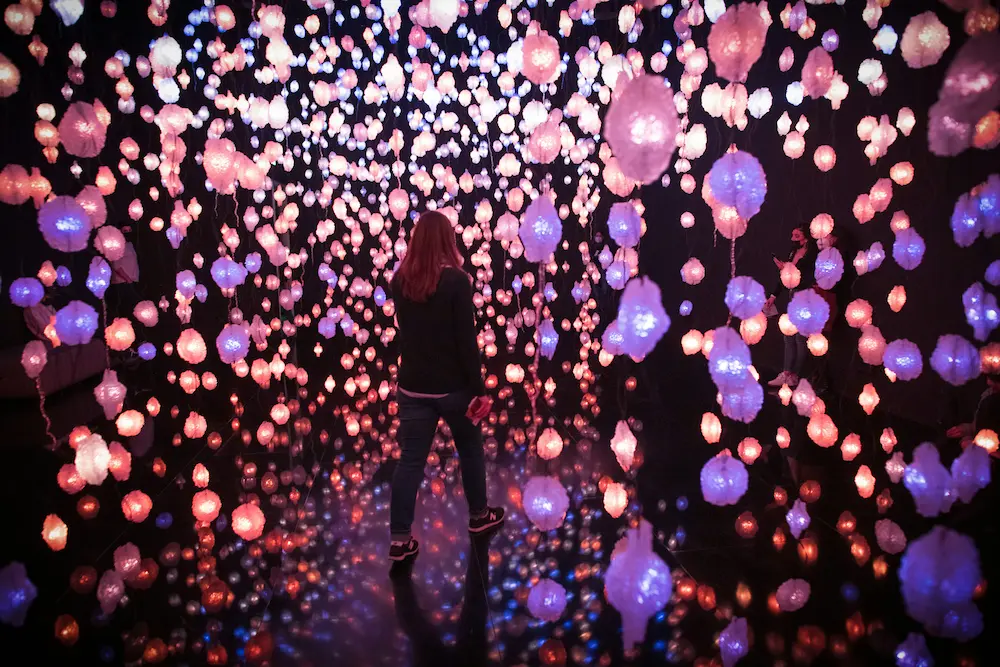
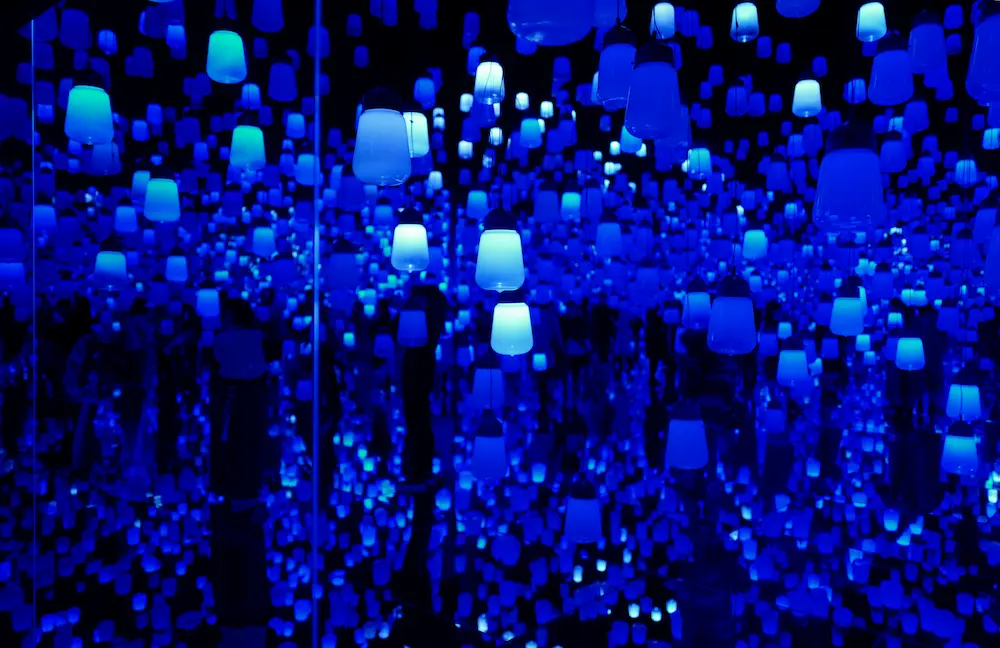
This is one of the most talked-about rooms — and understandably so. Thousands of LED lights hang from the ceiling, reflecting endlessly in mirrors to create a galaxy-like effect. It’s beautiful, immersive, and visually striking. We stayed briefly here; while stunning, this was one of the spaces where visual intensity builds quickly, especially with kids.
The Sliding & Elevated Terrain Room
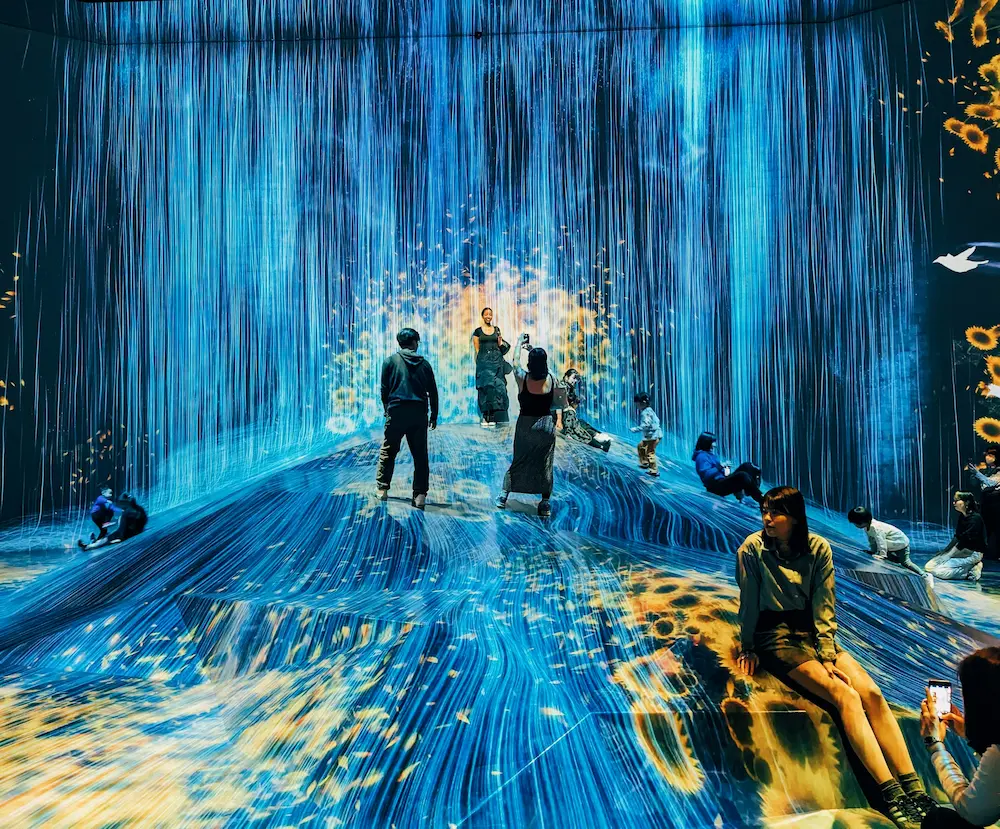
One unexpected favorite for our daughter was the room with varying elevations, designed to feel like walking across a natural landscape. Kids — and many parents — were sliding, climbing, and laughing together.
Even though it’s a darker space, it’s large and playful rather than intense.
This room worked well for us because:
- our five-year-old could play freely
- it was open enough for our younger child to move calmly for a bit
- the energy here felt joyful, not overwhelming
The Smoky (Mist) Room
We also passed through a room filled with mist and cool air, layered with projections. It felt immersive and slightly chilly. While interesting, we didn’t linger here long — the added sensory layer was a bit much by this point.
Sketch Ocean (A Must with Kids)
If you’re visiting with kids, Sketch Ocean is worth saving for the end. You draw sea creatures on paper, the staff scans them, and suddenly your creation swims across the walls with animals drawn by other visitors.
This was the room our younger child reacted to the most. He loves animals, and spotting fish and turtles moving across the walls made him squeal with joy every time one appeared. Watching your child recognize and follow these moving shapes is incredibly special.
Rooms We Missed (And Why That’s Okay)

We didn’t make it to Bubble Universe, where glowing spheres hang from the ceiling and change color, or another room with expansive moving wall projections. By that point, the visual stimulation had reached its limit for our family — and we were completely okay with that.
En Tea House (We Skipped This Too)

The En Tea House is the only refreshment spot inside Borderless and is often praised for its experiential tea service. Tea is served in a dark room, and as it’s poured, a flower blooms inside the bowl while petals radiate across the table.
We skipped it simply because the queue was long and, after so much stimulation, our family wasn’t ready to wait. If this is on your list, visiting right at opening time would be the best way to enjoy it peacefully.
Outside the museum, the Mori Building area has plenty of cafés. We stopped by Minimal, a bean-to-bar chocolate café, and it was the perfect, calm ending to our visit.
You won’t see everything at Borderless — and you don’t need to. Rooms overlap, experiences change, and every visit looks different. With kids, the best approach is to follow curiosity, notice limits, and leave when it still feels good.
That flexibility is exactly what made Borderless work so well for our family.
Borderless or Planets — Can Families Do Both?

Short answer, is with limited time and young kids, no — and that’s completely okay.
We had four days in Tokyo with the kids, and two of those days were already dedicated to day trips to Mount Fuji and Nikkō. That realistically left us time for just one major indoor experience in the city.
Trying to squeeze in both teamLab museums would have meant rushing, overstimulation, and tired kids — none of which we wanted.
So we chose teamLab Borderless over teamLab Planets — and for our family, that decision worked perfectly.
Why “Less Is More” in Tokyo with Kids

Tokyo itself is intense in the best way — bright, busy, exciting, and full of sensory input. When you’re traveling with kids, doing fewer things well is far more enjoyable than trying to experience everything.
One teamLab visit is more than enough to feel the magic without tipping into exhaustion.
When Borderless Made More Sense for Us
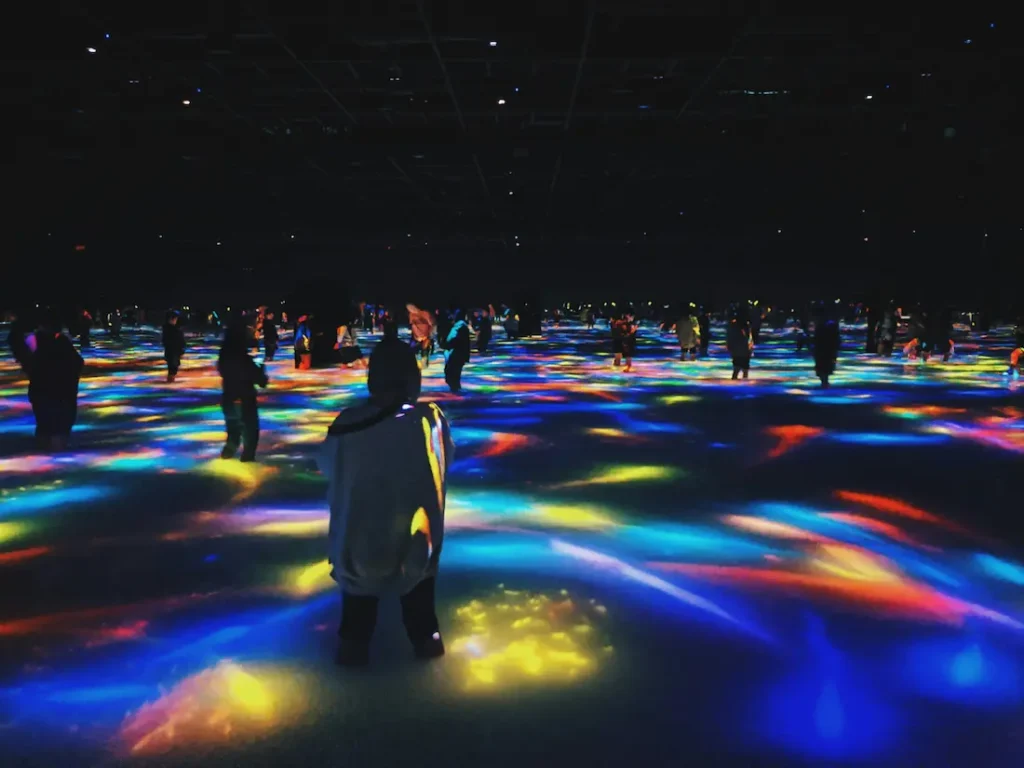
Borderless is primarily about looking, observing, and interacting visually. The experience relies on projections, light, and movement — which worked well for us, especially with a baby in a carrier and a preschooler who preferred watching and exploring freely.
Planets, on the other hand, is a fully body-centric, sensory experience. It involves:
- walking through water
- feeling textures under your feet
- engaging physically with the art
- removing shoes
- following a more contained experience
For families with older kids, or those who enjoy tactile, sensory-heavy experiences, Planets can be wonderful. But with a baby and a child who wasn’t comfortable getting wet in dark rooms, it didn’t feel like the right choice for this trip.
About Location & Crowds at Planets
Planets is located in Toyosu, which is a bit out of the way from central Tokyo. When we tried adjusting our booking, we ended up with an evening slot, and the difference compared to Borderless was noticeable — long queues and heavier crowds just to get inside.
If you do plan to visit Planets, an earlier time slot in the day would be far more comfortable, especially with kids. You could also pair it with nearby attractions like Odaiba or Toyosu Market to make the journey worthwhile.
Is TeamLab Planet’s Worth Doing Instead?
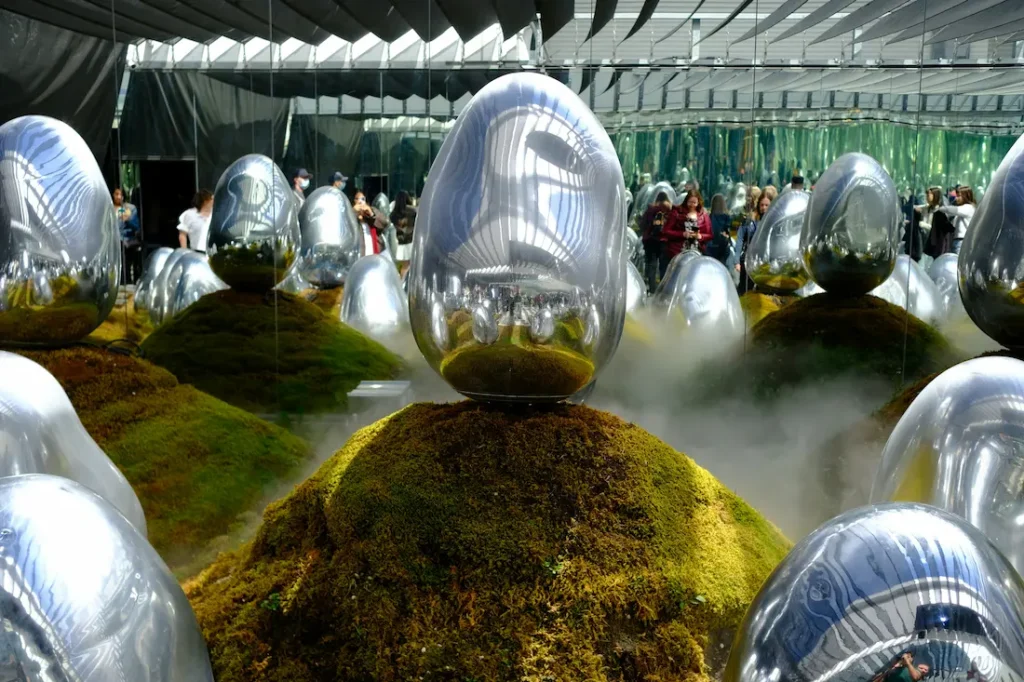
It can be — depending on your family.
TeamLab Planets offers:
- digital koi fish that change direction as you move
- immersive water-based installations
- Bubble Universe with soft, glowing spheres
- Infinite Crystal Universe (the one shared theme with Borderless)
But it also requires more physical participation, preparation for water, and tolerance for sensory input. For us, that felt better suited to a future trip.
Looking Ahead: Kyoto Changes the Equation
It’s also worth knowing that Planets is temporary and currently scheduled to close in 2027. If you’re visiting Japan before then and your kids are older, it could absolutely be worth adding.
That said, if Kyoto is on your itinerary, teamLab Biovortex Kyoto is quickly becoming the most exciting option. It’s newer, larger, and blends elements of both Borderless and Planets — along with additional experiences — making it a strong choice for families who want variety without repetition.
You are not missing out by choosing just one teamLab experience.
We chose Borderless because it matched our kids’ ages, energy levels, and comfort — and that’s exactly how parents should decide. One well-chosen experience will always feel better than two rushed ones.
Is teamLab Borderless Worth It for Families?
Yes—if you’re traveling through Tokyo with young kids and want one indoor experience that feels special without being overwhelming, teamLab Borderless is absolutely worth it. It works best for families who prefer flexibility, gentle pacing, and letting kids explore without pressure.
If your kids are very sensitive to darkness or visual stimulation, or if your Tokyo itinerary is already packed edge to edge, it’s okay to skip it. Japan offers plenty of magic even without ticking every attraction off a list.
But for families like ours—balancing a baby, a curious preschooler, and limited time—Borderless felt like a rare experience we could truly enjoy together.
That’s the one thing parents should remember:
Choose the experience that fits your family’s rhythm, not the one everyone says you “must” do.
If you’re planning your time in the city, our Tokyo with Kids guide breaks down how to balance sightseeing, rest, and easy day trips without burnout.
Have you visited teamLab Borderless—or are you deciding whether to add it to your Tokyo itinerary? Tell us your kids’ ages and travel style in the comments—we’d love to hear from you.

FOUNDER • FAMILY TRAVEL WRITER • MUM OF TWO
About the Author
Hi, I’m Shivani, the founder of Roaming Crew.
Based in Singapore and having lived in different parts of Asia—including two years in India—I’ve explored 18+ destinations across the region, with 12+ of those journeys taken alongside my young kids.
From choosing family-friendly destinations and navigating local transport to budgeting, accommodation, and practical travel logistics, Roaming Crew is created with a parent-first mindset.