
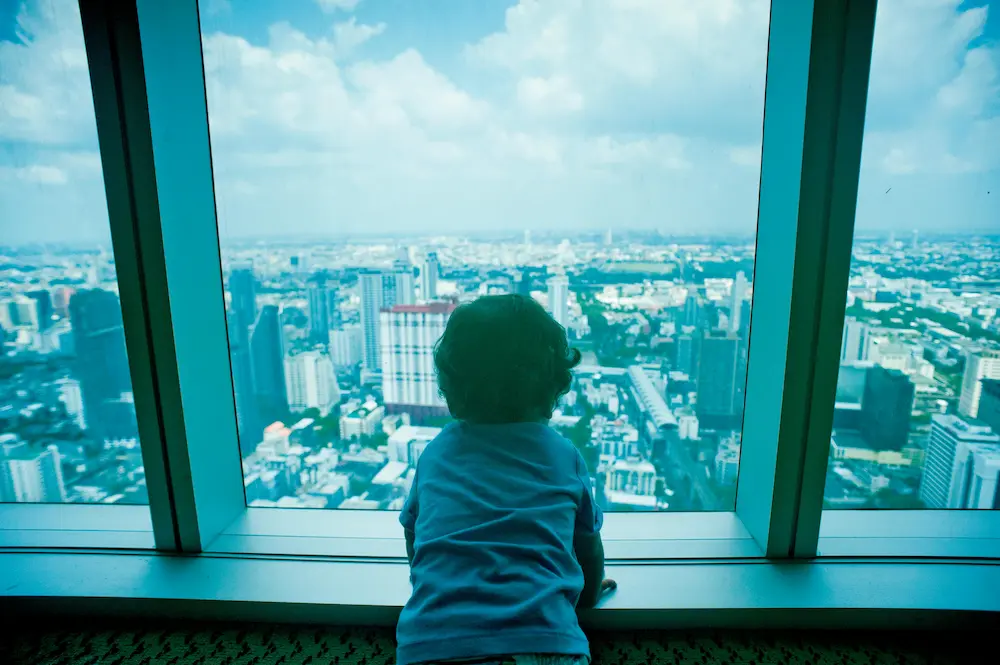
We Thought We Had It Handled… Until 1 AM Hit
We really thought we had figured it out.
After a long-haul flight into Hanoi, both kids had eaten, played, and—miraculously—fallen asleep at what felt like a normal time. We sat there in the quiet hotel room, completely exhausted but quietly thinking… okay, we’ve actually done this.
And then… 1 AM hit.
One child woke up. Then the other.
Lights on. Bags open. Suddenly asking for snacks as if it were morning.
Before we knew it, both of them were fully awake—playing, chatting, completely ready to start the day—while we were still trying to understand what time zone we were even in.
And it wasn’t just Vietnam.
We’ve had early wake-ups in Tokyo that felt like the middle of the night.
We’ve paced hotel rooms in Beijing, hoping someone would go back to sleep.
Even landing in Delhi—where the time difference didn’t seem that big—still threw everything off.
So if you’re sitting there in a dark room with a wide-awake toddler, wondering what happened to your routine… you’re not doing anything wrong.
Asia Jet lag with kids feels harder because it’s unpredictable. But here’s the secret: It follows a pattern. Once you see the pattern, you can stop fighting the clock and start enjoying the journey.
Why Jet Lag Hits Kids Harder (And Why It Feels Worse in Asia)
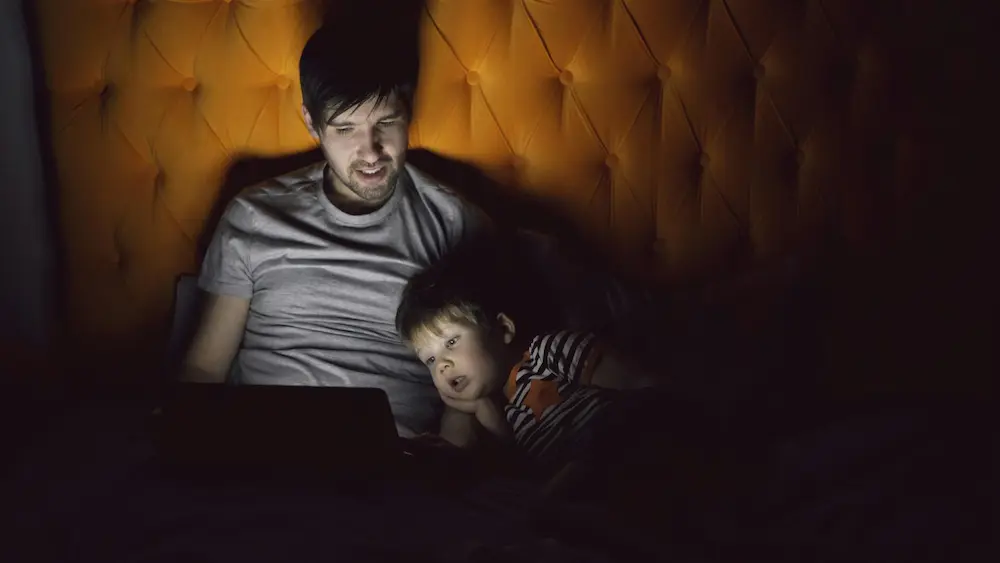
One of the hardest parts about jet lag with kids is this: it doesn’t always behave the way you expect. As adults, we might feel foggy or tired. But with kids—especially toddlers—it shows up as “Tired but Wired.”
And when you’re traveling to Asia, it can feel even more intense.
That’s simply because the time difference is bigger—often 8, 10, or even 12 hours or more, depending on where you’re flying from. For a child, that’s not just a small shift… It’s almost like flipping their entire day and night.
On top of that, everything around them has changed.
- New Sounds: Busy streets, different languages, or even the hum of a new AC unit.
- New Foods: Smells and tastes that don’t match “home.”
- New Routine: No familiar bed, no “usual” bath time.
Even exciting things—new places, new people, busy travel days—can be a lot for little bodies to process. So what you often see isn’t just “tiredness,” but a mix of overtired energy, early wake-ups, and those unpredictable mood swings that catch you off guard.
This is the part most parents don’t expect: It doesn’t always fix itself overnight.
While some kids adjust in 48 hours, others can take a full week to settle. If your child is struggling, you haven’t done anything wrong—their little body is just working through a massive biological shift.
Once you understand that this is biological, not behavioral, it becomes a lot easier to stay calm, lower expectations a little, and work with the adjustment instead of constantly trying to fight it.
If you’re still prepping for the journey itself, make sure to check out our Long-Haul Flight Survival Guide, where we cover how to handle those first 14 hours before the jet lag even begins.
The Truth: It’s Not Your Trip—It’s Just 3 Tough Days
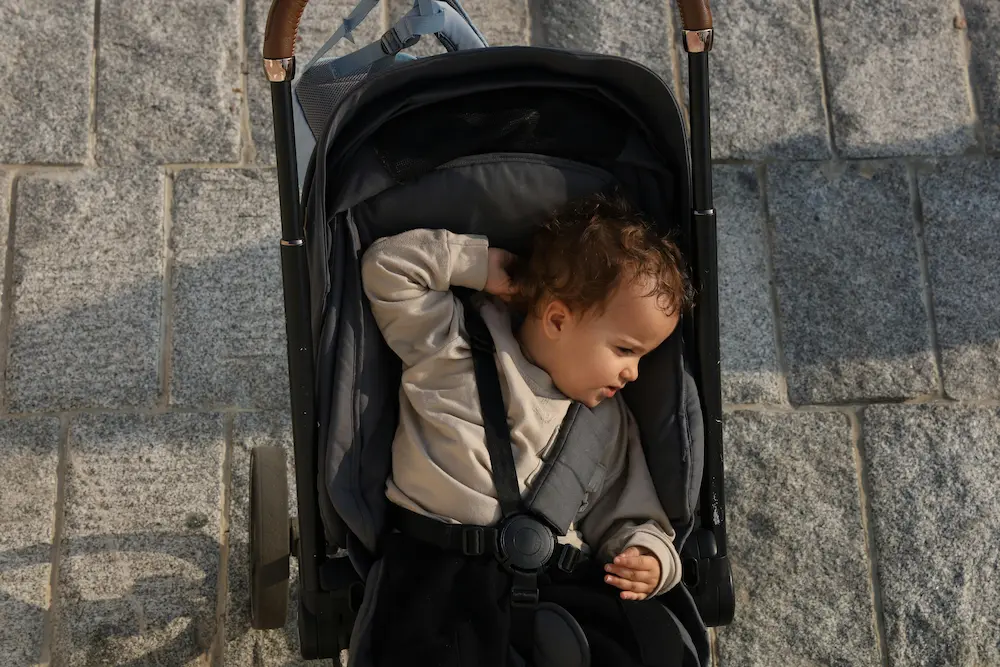
When you’re staring at a wide-awake toddler at 3 AM, it’s easy to question everything. You might feel like the whole trip is off track before it’s even begun.
But in most cases, it isn’t your trip—it’s just a few out-of-sync days at the start.
With kids, jet lag often follows a pattern. The first couple of days can feel messy, sleep can be unpredictable, and routines might not make much sense. Then, slowly, things begin to settle.
For many families, it’s those first 2–3 days that feel the hardest.
And once you know that, it becomes easier to take the pressure off, keep plans simple, and let everyone adjust at their own pace.
Your Real-Life 3-Day Jet Lag Plan (For Busy Families)
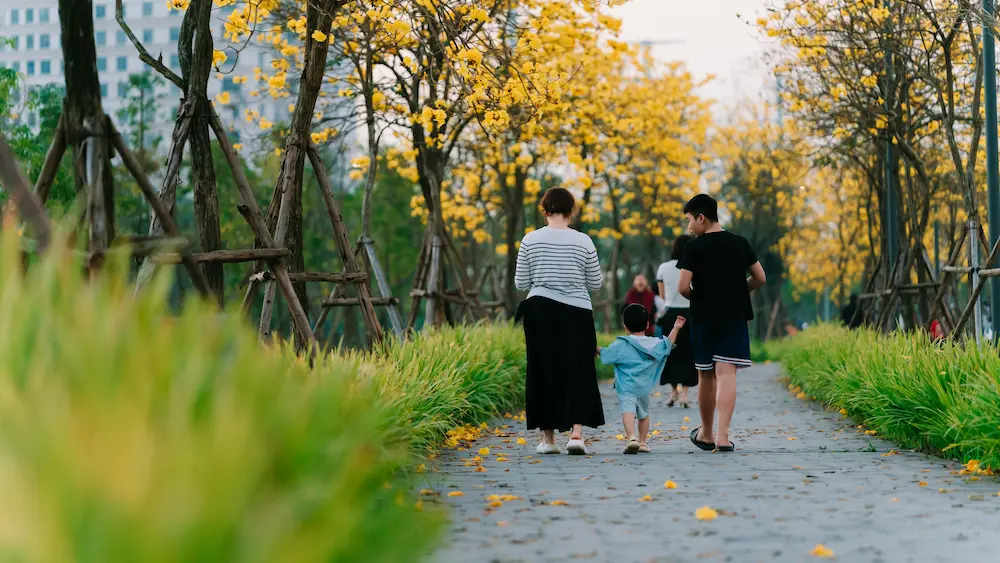
Once you know those first few days are part of the adjustment, the next question is usually, “What do we actually do now?
Not in a perfect, timed schedule—but in real life, with tired kids, limited energy, and a trip you still want to enjoy.
What’s helped us across different trips is thinking less about “fixing” jet lag and more about gently guiding those first few days. You don’t need a strict plan—you just need a rough sense of what each day might feel like, so nothing catches you off guard.
If you want to get even more technical with your prep, apps like Timeshifter use neuroscience to help you pre-adjust, though we find the 3-day ‘soft landing’ works best for kids.
Here’s what those first three days often look like.
Day 1: The Survival Phase
The day you land is less about routines and more about getting through it gently.
Everyone is tired in a slightly strange way—not fully exhausted, not fully rested. Kids might seem surprisingly okay at first, running on that travel-day energy, but it doesn’t last forever.
What helps most here is keeping things simple.
A short walk outside. A bit of fresh air. Something easy to eat. Nothing that requires too much structure or excitement. The goal isn’t to “fix” jet lag on Day 1—it’s to help their bodies land, both physically and mentally.
We’ve found that trying to stay awake until an early but reasonable bedtime in the new time zone makes a big difference. Not perfect, just close enough.
If naps happen, they happen. If things feel a bit off, that’s expected.
Day 1 strategy: The goal today isn’t to “fix” anything—it’s just to land softly.
Day 2 — The “We’re Fine” Trap
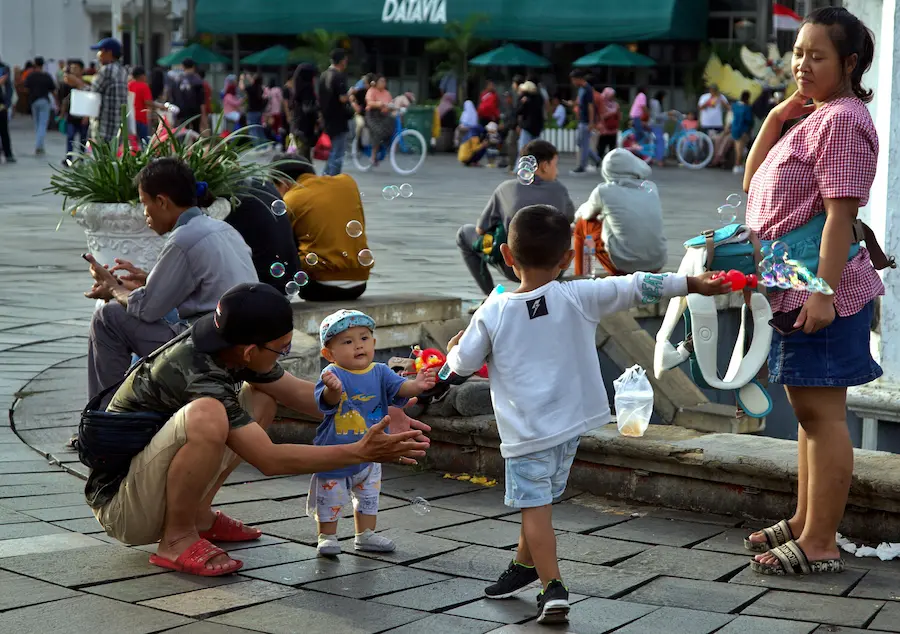
This is the day that can catch you off guard.
After that first night, everyone might wake up feeling… surprisingly normal. Kids have energy again. They’re curious, excited, ready to explore. And it’s very tempting to think, okay, we’re through it.
This is usually when parents start planning more long outings, busy sightseeing, and ticking things off the itinerary.
We’ve done this ourselves more than once and even booked a full-day tour that crashes hard.
But what’s actually happening is that their body clock hasn’t fully adjusted yet. It’s more like a temporary boost before the real tiredness catches up.
By late afternoon or evening, you might notice it shift—short tempers, sudden meltdowns, or that wired-but-exhausted energy that’s hard to settle.
Nothing has gone wrong here. This is just part of the adjustment.
Keeping Day 2 flexible, with room to slow down if needed, makes a big difference. It’s not about doing less—it’s about not overloading a day that looks easier than it really is.
Day 2 strategy: Do one “big” thing in the morning, but keep the afternoon 100% free.
Day 3 — The Crash (And Why It’s Actually a Good Sign)

If there’s one day that feels the hardest, it’s usually this one.
Sleep can still be a bit off. Naps might happen at odd times. Kids can feel more emotional, more tired, and less predictable. It’s the day when everything can feel slightly out of sync—again.
And this is often the moment where parents start wondering if something has gone wrong.
But in most cases, this is actually the turning point.
By Day 3, their body is starting to catch up with the new time zone. That overtiredness you’re seeing is often part of the reset. It doesn’t feel great in the moment, but it’s usually a sign that things are beginning to shift.
We’ve noticed this across different trips—whether it was Tokyo, Beijing, or even shorter time differences—Day 3 tends to be the day it all feels a bit messy before it gets easier.
And then, quite quickly after that, things start to settle.
Sleep stretches improve. Mornings feel more normal. The routine is starting to come back without forcing it.
The Dayt 3 strategy: low expectations. Order room service, find a local playground, and don’t push the itinerary.
Once you’ve cleared the ‘Day 3 Wall,’ you’ll be ready to dive into the real adventure. We used this exact reset strategy before starting our 14-Day China Family Itinerary.
By the time you’re through these three days, you’re usually not dealing with jet lag in the same way anymore—you’re just… traveling again.
The 4 AM Club — Why Asia Is Actually Perfect for Jet-Lagged Families
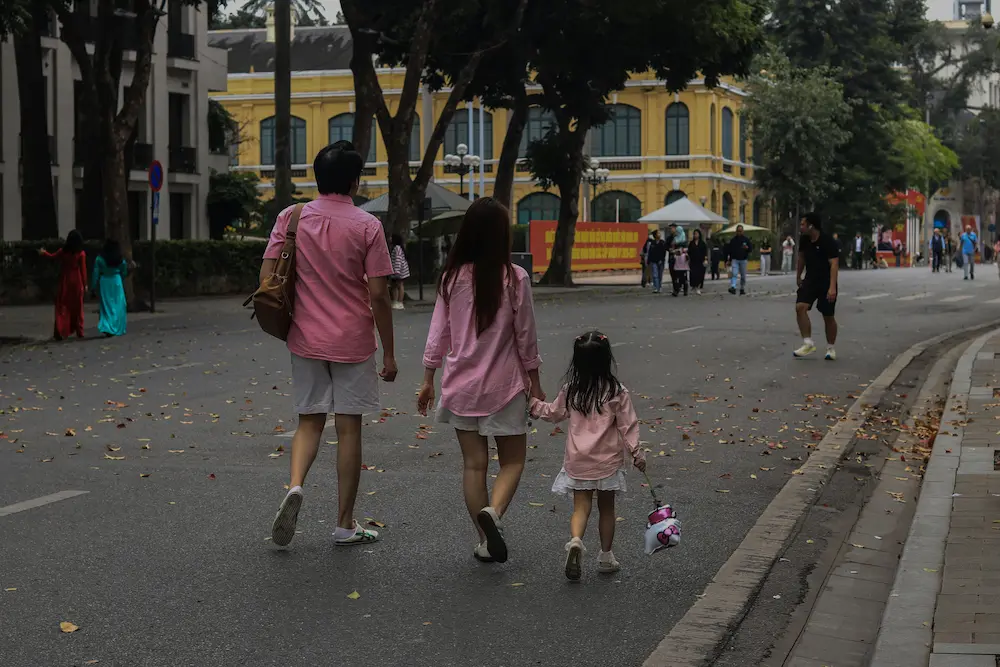
Those early wake-ups can feel like the hardest part of jet lag.
The room is dark. Your child is wide awake. And you’re already worrying about how the day will go on with so little sleep. This isn’t just a travel hack; science shows that natural light is the primary cue for resetting our internal circadian rhythms.”
But here’s something we’ve learned after traveling across Asia with kids—those early hours don’t have to be something you fight.
They can actually become one of the easiest parts of your day.
Not everything will be open at 4 or 5 AM. Temples, museums, big attractions—they start later.
But in Asia, you don’t need a ticket to experience something meaningful.
The city itself becomes the experience.
A quiet walk by a lake.
A nearby park.
Even just stepping outside your hotel.
In Hanoi, mornings around Hoan Kiem Lake are already alive—locals moving, stretching, chatting, starting their day.
In Tokyo, places like Yoyogi Park or the paths around Meiji Jingu feel calm and almost empty before the crowds arrive.
And sometimes, it’s even simpler than that.
A quick stop at a convenience store—easy to find in places like Japan or Korea—can be enough for a small reset. Something to eat, a change of scene, a moment to regroup.
What makes this work so well with kids is the lack of pressure.
No queues.
No strict plans.
No need to keep them quiet or still.
You’re not trying to “do” anything—you’re just easing into the day.
We’ve found that when we stop trying to force sleep and instead go with that early rhythm, everything feels calmer.
So if you find yourself awake at 4 AM, it doesn’t have to feel like the trip is slipping away.
Sometimes, it’s just a quieter, gentler way to experience a place—and those moments often end up being the ones you remember most.
7 Things That Actually Help Kids Adjust Faster

If you’re wondering how to help kids adjust to a new time zone after a long-haul flight, the good news is—you don’t need anything complicated.
Small, simple shifts make the biggest difference. These are the things we come back to on every trip.
1. Prioritize Morning Daylight
Getting outside in the morning—even for a short walk—helps your child’s body understand when it’s time to be awake. It’s one of the quickest ways to start resetting their internal clock.
2. Shift Meals to Local Time as soon as you can
Try to eat dinner when the locals do. Even if they only pick at their food, sitting down for a meal in the new time zone helps the body “anchor” to the new schedule.
3. Keep everyone hydrated.
Disrupted sleep and new climates (especially the humidity in SE Asia) can be draining. Keep a water bottle handy at all times. Regular water (and simple foods) can make a noticeable difference in how they cope.
4. Let Them Burn Off “Wired” Energy
Find a local playground or a hotel pool. Physical movement helps release that restless jet-lag energy and makes the eventual bedtime much easier.
5. Stick to a familiar bedtime rhythm.
It doesn’t have to be perfect, but keeping small parts of your usual routine—like a story, pyjamas, or quiet time—gives your kid a sense of normal in a new place.
6. Keep naps short and flexible.
Extra rest is okay in the first few days, but try to avoid the “3-hour marathon nap.” Aim for short, 45-minute recharges so they are still tired enough to sleep through the night..
7. Bring a few familiar comforts from home.
Whether it’s a favorite teddy, a specific blanket, or Pyjamas, or a Yoto player, having a familiar comfort makes a strange bed feel like home.
None of these needs to be followed perfectly.
Even doing three of these consistently will make your first week in Asia significantly smoother.
What Most Parents Get Wrong About Asia Jet Lag with kids

Asia Jet lag with kids isn’t usually difficult because parents aren’t trying—it’s difficult because we expect it to work like everything else. We plan, we prepare, and we try to keep routines in place. When things don’t go as expected, it can feel like the trip is failing.
In reality, these three common expectations are what make those first days harder than they need to be:
1. The “Day 2” Overload: After a long flight, it’s tempting to start exploring properly—especially when kids seem surprisingly fine on Day 2. But packing the day with busy sights often leads to “overtired” evenings and even harder nights.
2. The “Catch-Up” Nap: While extra rest is helpful, letting naps stretch into 3-hour marathons can delay the natural adjustment and push bedtime back to midnight. Think of naps as a bridge, not a full night’s sleep.
3. The Expectation of “Normal”: We often expect routines to settle within 48 hours and for our kids to behave exactly as they do at home. But crossing 10+ time zones to get to Asia is a massive biological shift.
When you let go of the idea that everything needs to feel “on track” immediately, a huge weight lifts off your shoulders.
Those early days don’t need to be perfect. They just need to be flexible enough for everyone to find their feet.
Packing familiar comfort items like blankets, favourite toys and sleep essentials can also help kids adjust to a new time zone. Here’s exactly what we pack for family trips around Asia.
“Will People Judge Us?” — The Reality of Traveling in Asia
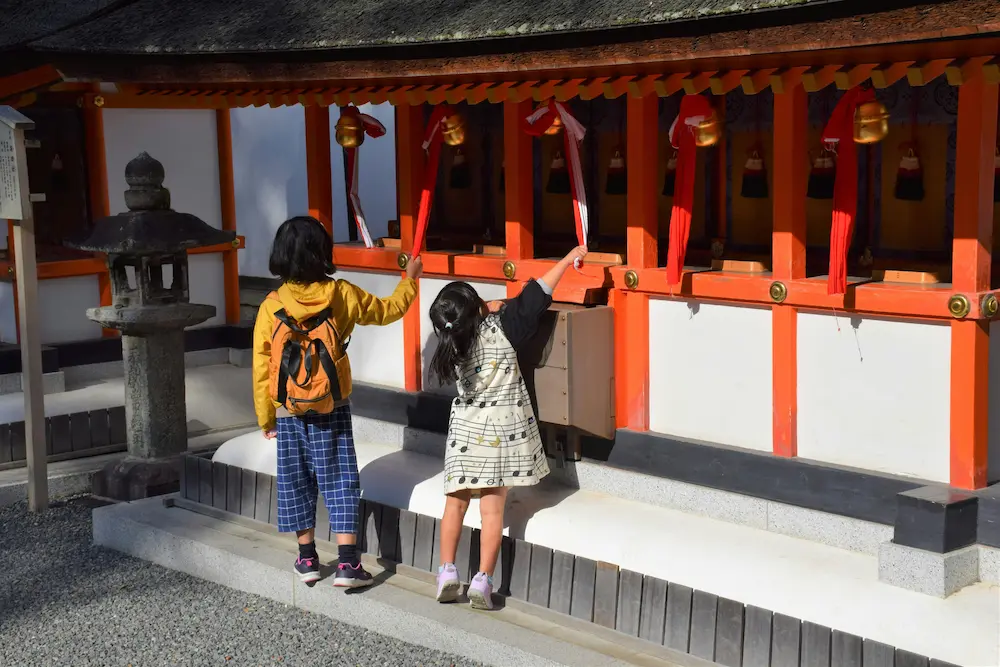
This is one of those worries many parents carry—but rarely say out loud.
What if my child has a meltdown in public?
What if we’re disturbing people?
What if we’re that family everyone notices?
When you’re coming from the US or UK, where even a small scene can feel uncomfortable, it’s a completely valid concern—especially when you’re already dealing with jet lag.
But this is where traveling in Asia can feel surprisingly different.
In many places, children are simply part of everyday life. You’ll see families out early in the morning, late in the evening, in parks, on streets, in cafés—it’s all very normal.
We’ve had moments in places like Hanoi and even back in India, where if our toddler is cranky or loud, we won’t get cold looks; we’ll get smiles. It’s common for a shopkeeper or a waiter to step in and try to distract your child with a wave or a joke. You aren’t a burden; you’re a guest.
It doesn’t mean every moment will feel effortless. You’ll still have to be mindful in quieter spaces like temples or long train rides.
But overall, the feeling is less about being judged—and more about being understood.
Even in more structured places like Japan, where things feel orderly and calm, there’s still a quiet acceptance that children won’t always behave perfectly. And that takes a lot of pressure off as a parent.
You don’t need to apologize for your children. Whether you’re in a bustling market in Ho Chi Minh City or a high-speed train in Osaka with kids, you’ll find a culture that prioritizes family.
“Asia is incredibly welcoming to families. If you’re still feeling nervous about the cultural shift, our guide on Is Asia Safe for Kids? breaks down everything from local etiquette to hospital standards.”
Take a deep breath and settle in—you are more welcome here than you know.
Will Jet Lag Ruin Your Asia Trip?

Short answer—no.
It might feel overwhelming in the moment. Those early wake-ups, the odd naps, the tired emotions… they can make the first couple of days feel heavier than you expected.
But it passes.
What feels messy at the beginning usually settles quicker than you think. And once it does, those early struggles fade into the background of everything else you experience.
You won’t remember the 3 AM wake-ups as much as you’ll remember the misty mornings at Hoan Kiem Lake, the quiet temples in Kyoto, and the little moments your kids enjoyed, and how it all came together in the end as a memorable family vacation in Asia with kids.
Asia Jet lag with kids isn’t a sign that something has gone wrong.
It’s just part of traveling across time zones—with kids, with real routines, and with all the unpredictability that comes with it.
And the good part?
You don’t need to handle it perfectly to have a great trip.
Before You Land — Read This First
If you’re still in the planning stage or preparing for your flight, this will make everything easier.
👉 Read: Flying to Asia with Kids — Long-Haul Survival Guide
Planning your arrival budget?
Our Asia Family Trip Cost Guide covers airport transfers, accommodation, food, and the first-day expenses many families forget to budget for.
That’s where we share what actually helps during the flight itself—so by the time you land, you’re already one step ahead.

FOUNDER • FAMILY TRAVEL WRITER • MUM OF TWO
About the Author
Hi, I’m Shivani, the founder of Roaming Crew.
Based in Singapore and having lived in different parts of Asia—including two years in India—I’ve explored 18+ destinations across the region, with 12+ of those journeys taken alongside my young kids.
From choosing family-friendly destinations and navigating local transport to budgeting, accommodation, and practical travel logistics, Roaming Crew is created with a parent-first mindset.