Japan has quietly become one of the most loved family destinations in Asia — and in 2026, that popularity is only growing.
It isn’t cheap. But it also isn’t a peak-summer Italy trip.
What makes Japan different is the balance. Ancient temples and quiet shrines sit beside futuristic skylines. Bullet trains glide past rice fields. Cities feel modern and efficient, yet culture is preserved beautifully.
And for families — this is what surprised me most — everything feels thoughtfully designed.
Not just playgrounds.
Sidewalks.
Subways.
Restrooms.
Restaurants.
Even in the middle of tourist crowds, you don’t feel chaotic or lost. You feel guided.
And that matters when you’re traveling across Asia with a 5-year-old and a toddler.
But when we first started planning our Japan trip, excitement quickly met reality:
The Japan family trip cost!
Everywhere I looked, I saw big numbers. Influencers sharing highlight reels. Forums with vague estimates. Blog posts that never clearly stated the total.
And as parents, that uncertainty is stressful.
So here it is.
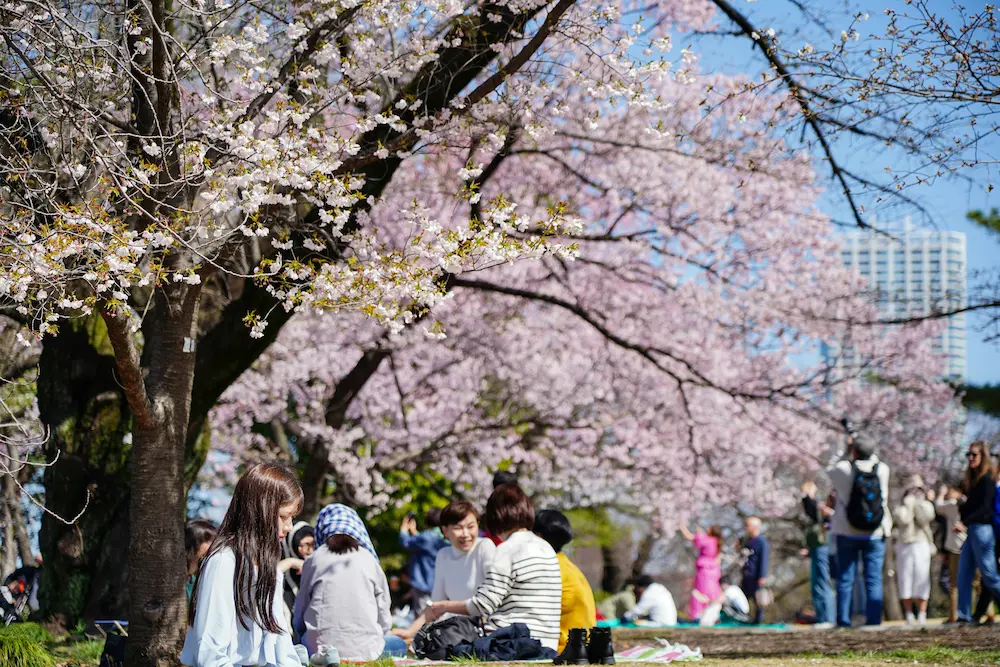
What we actually spent on a 2-week cherry blossom trip to Japan in 2024 — traveling as a family of four.
Not a luxury vacation.
Not a shoestring backpacking adventure.
A comfortable, realistic family experience in one of Asia’s most thoughtfully built countries for kids.
This isn’t a complete planning guide.
It’s a transparent window into our real spending — so you can see where the money goes, what’s flexible, and how to adjust the numbers for your own family.
Japan may be one of the more expensive countries in Asia to visit with kids.
But it’s also one of the most rewarding.
Our Japan Family Trip Cost (If You Just Want the Numbers)
If you’re here with a calculator open and just want a clear number — I understand. That was me, too.
After our 2-week trip to Japan with our 5-year-old and toddler (who spent half the trip in my carrier), here’s exactly what we spent during peak cherry blossom season in April.
What We Spent in Japan (Family of 4, Peak Cherry Blossom Season)
Total trip cost: $8,050 USD
Total without flights: ~$7,083 USD
Trip length: 14 days (two weeks)
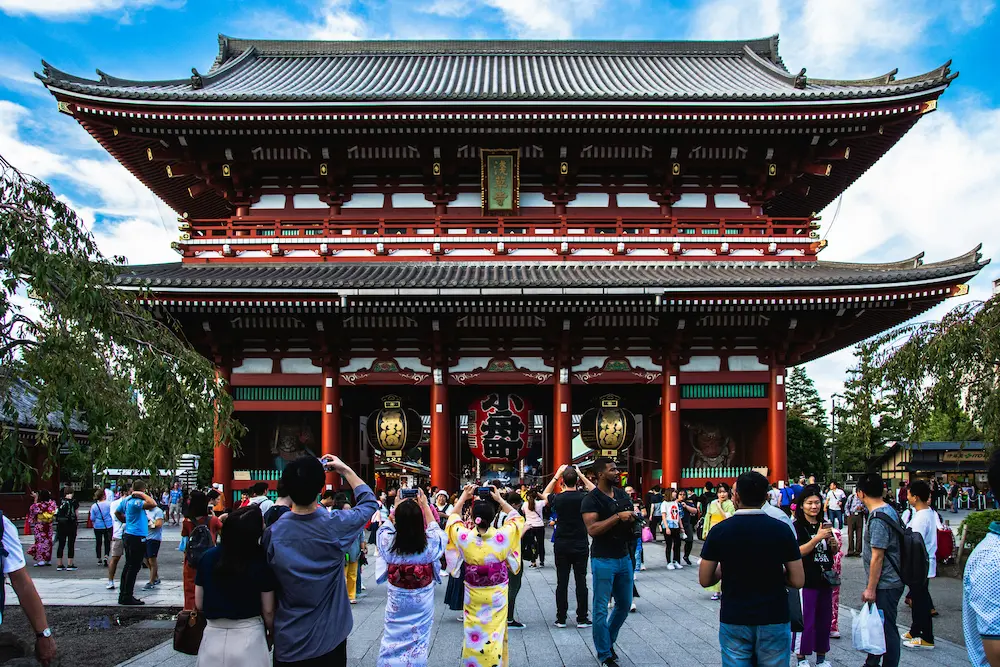
Cities: Tokyo → Kyoto → Osaka
Travel style: Mid-range, comfortable — not luxury, but definitely not shoestring.
We didn’t cut corners on food.
We booked a few special experiences that fit our kids’ comfort level (but not every theme park).
We stayed in family-friendly apartment hotels with space to breathe.
And yes — we traveled during the most expensive season of the year.
What We Actually Spend in Japan Per Day
When I came home and finally added everything up — every train ticket, every bowl of ramen, every cherry-blossom-season hotel night — I almost didn’t want to look at the total.
But here’s what it came to.
For 14 days in Japan during peak cherry blossom season, we spent just over $7,000 (excluding flights) as a family of four.
When I divided that by 14, it worked out to about $506 per day for all of us together.
Or roughly $126 per person per day.
And that wasn’t a stripped-down, budget backpacking trip.
That included:
- Apartment-style hotels in central neighborhoods
- Eating out daily (plus a full Osaka food tour)
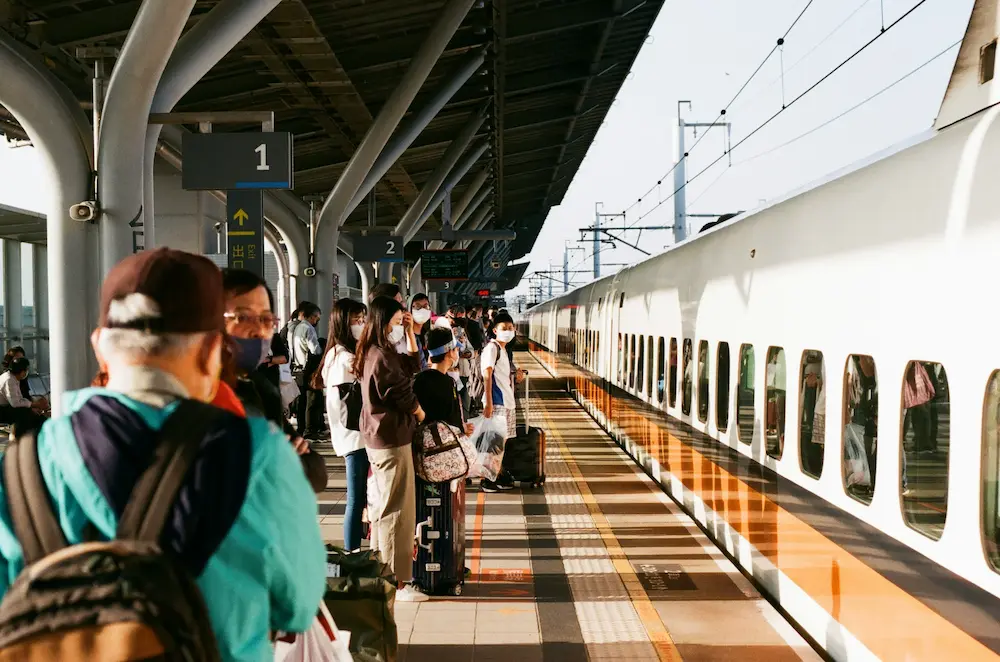
- Shinkasen train ride, including Hello Kitty from Osaka to Kyoto
- Experiences like teamLab Borderless
- SIM cards, so we never got lost
- Travel insurance
- Visas
For cherry blossom season — the most expensive time of year — I genuinely expected the number to be worse.
It wasn’t cheap. But it also wasn’t the “second mortgage” I had built up in my head. If you are looking for the same comfort in the same budget, I swear it is not possible, as 2026 is going to hit hard with increased tourist taxes, deductions on tax-free shopping, and immigration strictness.
Our 2-Week Japan Itinerary With Kids (Because Context Matters)
Before we go deeper into numbers, I want to show you what our trip actually looked like—because cost depends heavily on how you travel.
We visited Japan during peak cherry blossom season, so the peak season hike is automatically added. Here’s how we structured our two weeks in Japan with two kids:
- 4 nights in Tokyo
- 4 nights in Kyoto
- 4 nights in Osaka
With some genuinely recommended day trips from each of the main bases. We flew into Tokyo and flew out of Osaka, so we didn’t have to backtrack—something I highly recommend if you are not going with round-trip flights and your budget allows it.
If Tokyo is your first stop, I’ve shared our full neighborhood breakdown, kid-friendly areas, and what actually works with little ones in my detailed Tokyo with kids guide.
We didn’t rush cities or move hotels every two days.
We built in slow mornings.
Park breaks.
Convenience store snack stops.
And at least one “everyone is tired, let’s just go back” afternoon.
We chose apartment-style hotels in bigger cities for more space — because traveling with two kids in compact rooms adds stress fast.
It was a comfortable, realistic family pace. And every dollar we spent reflects that balance.
Our Budget Breakdown of the Japan trip with kids
When we came home, and I finally sat down to add everything up, I didn’t want to just know the total — I wanted to understand where the money actually went.
Because that’s what helps you plan smarter next time.
And honestly? Seeing it category by category made Japan feel much more manageable.
Accommodation in Japan – What We Paid & Why
We spent about $1,540 on accommodation for 12 nights across Tokyo, Kyoto, and Osaka.
For Japan — during peak cherry blossom season — that number still surprises me.
But we were intentional, booked at least 3 months before i have booked our stays.
In bigger cities, we chose apartment-style hotels instead of traditional compact rooms. With a 5-year-old who needs floor space to decompress and a toddler who naps unpredictably, space matters more than aesthetics when you are tired.
In Tokyo, we stayed at MIMARU Tokyo Akasaka. It was just a short walk from Akasaka Station, and having a small kitchen helped me a lot. I could warm milk, store fruit, keep yogurt for mornings, and not feel like every single meal had to be at a restaurant specially breakfast.
In Kyoto, we stayed at Hotel Imagine Kyoto. Again — more space, less stress.
Were these luxury hotels?
No. But they were comfortable, clean, and incredibly practical for four of us.
And practicality saves money in ways people don’t always factor in — fewer emergency snack purchases, fewer stress-induced takeout splurges, fewer “let’s just upgrade the room” moments.
Food in Japan – Why We Didn’t Cut Corners
Food was our biggest category after flights. We spent roughly $2,500 over two weeks.
And I don’t regret it for a second.
We ate out daily, fully. We tried street food. We sat down for proper dinners when the kids had the patience. And in Osaka, we did a full food tour, which was expensive but honestly one of our favorite memories.
Japan is amazing for food, but traveling with kids means you can’t always chase the cheapest ramen shop down a tiny alley. Sometimes you need a place with space, predictable food, and just need to sit.
Breakfast was often from 7-Eleven or Lawson—yogurt, fruit, egg sandwiches, and onigiri.
Japan’s convenience stores are genuinely good, and that helped balance out the more indulgent dinners.
When I break it down, our food spending came to around $178 per day for all four of us.
For two adults, one growing 5-year-old, and a toddler who somehow eats like a small adult? That felt reasonable.
If you’re deciding whether Osaka is worth adding with kids, I’ve shared our full experience, food spots, and family-friendly areas in this Osaka with kids guide.
Transportation in Japan – Why We Didn’t Use the JR Pass
We spent just over $1,000 on transportation within Japan in whole trip.
That included:
- The Shinkansen ride from Tokyo to Osaka
- A Hello Kitty Shinkansen ride from Osaka to Kyoto (yes, that was entirely my daughter’s wishlist moment)
- Our Narita airport transfer
- Local metro rides across all three cities
We did not buy the JR Pass. And this is more important in 2026.
After running the numbers for our exact route and pace, the pass didn’t make financial sense for us — especially after the recent price increases. We weren’t doing enough long-distance train travel to justify it.
For families planning 2026 trips, this is worth checking carefully. The JR Pass isn’t automatically the cheaper option anymore.
Booking specific Shinkansen seats — especially those with luggage space — was more practical for us than buying a blanket pass.
Attractions & Experiences in Japan with kids
We spent about $1,500 on activities and experiences.
Our biggest splurge was visiting teamLab Borderless with kids in Tokyo. Watching my 5-year-old run through digital light rooms while I carried my toddler on my hip—that memory alone felt worth it.
We also booked several experiences through Klook and used discount codes whenever possible. It wasn’t about booking everything — it was about choosing a few meaningful highlights.
If you add:
- Universal Studios Japan
- Tokyo Disneyland
- Tokyo DisneySea
Your costs will rise quickly—especially once you factor in tickets, express passes, food inside the parks, and transportation.
Still, even then, Japan’s theme parks are generally more affordable than Disney in the US. It just depends on your children’s ages and what kind of trip you’re envisioning.
For 2026 trips, I would personally recommend looking into the newer teamLab experience in Kyoto as well, especially if your kids loved interactive art spaces like ours did. These kinds of immersive experiences feel special—without requiring multiple full theme park days.
Japan offers so many free or low-cost experiences—shrines, parks, neighborhoods, and temple walks—so the paid attractions felt balanced rather than constant.
SIM Cards, Insurance & Visas for Japan
The Practical Costs You Shouldn’t Ignore
A few smaller categories made up the rest of our spending — the kinds of things you don’t think about until you’re already packing.
For connectivity, we spent around $80 total on one eSIM and one physical SIM.
And honestly? If your phone supports it, I recommend setting up an eSIM before you even land.
There’s something very reassuring about stepping off a long flight with two tired kids and already having working data. You can scan a QR Code at immigration, check directions, confirm train platforms, and pull up hotel bookings—without scrambling at an airport kiosk while your toddler is melting down.
Yes, eSIMs can be slightly more expensive.
But that calm, connected first hour in a new country? Worth it.
For travel insurance, we chose a comprehensive family plan that covered all four of us. It cost just under $400.
You may find cheaper options, but personally, I wouldn’t go below $300 for a two-week family policy with proper medical coverage.
Japan’s healthcare system is excellent, but treatment without insurance can become expensive very quickly. Even something small like food poisoning or a sudden fever can add up fast. With kids, that peace of mind matters.
As for visas, we paid about $22 per person. Visa requirements change, and fees vary by nationality, so I always recommend checking the official Japanese immigration website for the most current information if you’re traveling on a US passport.
These aren’t exciting expenses. But they are part of the real cost — and planning for them keeps your budget honest.
When I look back at the full breakdown, nothing feels reckless.
It wasn’t a budget trip. But it also wasn’t out of control.
It was a thoughtfully planned, comfortable, peak-season family adventure—and now you can see exactly how those numbers came together.
What would a Japan Family Trip Cost a US or European Family in 2026?
Now let’s widen this out.
Because while our flights were shorter (we flew from Singapore), If you are planning from the US or Europe, that changes the math.
If I took our exact cherry blossom trip — same cities, same pace, same comfort level — and adjusted it for:
- Long-haul international flights
- Slight hotel price increases
- Peak-season demand in 2026 + increased Taxes
Here’s what I would realistically budget today.
For 2026, long-haul round-trip flights to Japan are realistically landing around:
- $900–$1,400 per adult
- $750–$1,200 per child
That means a family of four should budget approximately:
$3,500–$5,500 total for flights, this is an estimation; you can check and compare prices on Skyscanner before booking.
Once you layer that onto our family trip to Japan, spending, here’s the realistic window for a similar 14-day Japan trip:
| Travel Style | Total With Flights | Without Flights | Approx. Daily Cost (Family) |
|---|---|---|---|
| Budget-Conscious | $8,500 – $10,000 | $5,000 – $6,000 | $360 – $430 |
| Mid-Range (similar to ours) | $10,500 – $13,000 | $7,000 – $8,000 | $500 – $575 |
| Comfort-Focused | $14,000+ | $9,000+ | $650+ |
That’s the realistic range for a family travelling to Japan, no exaggeration. Just the numbers.
Compared to a high-season Disney trip or a summer Europe holiday, Japan doesn’t feel extreme. It feels intentional.
Tips That Saved Us in Japan from Real Stress
(Not Just Money)
There’s the cost of a trip…
And then there’s the cost of stress.
And when you’re traveling across the world with a kindergartener and a toddler, stress can become expensive very quickly.
Here are the small things that made Japan feel smooth for us instead of overwhelming. Hope it helps you too.
1. Stroller vs Carrier in Japan
Before we left, I kept asking myself: should we bring one?
The answer is no. Bring both.
Japan is an incredibly stroller-friendly country— sidewalks are smooth, trains are efficient, and elevators exist in most major stations.
Our lightweight stroller (we used a compact one that folds in seconds and fits in overhead bins) made airport transitions effortless. I could roll right to the gate, fold it, and board without waiting at baggage claim.
But there were moments — crowded subway exits, some subways and temple staircases in Kyoto, busy crossings in Tokyo — when having my toddler in a carrier saved the day.
Kyoto felt slower and more traditional, but it requires a slightly different rhythm with a lot of walking and hiking. I’ve broken down what worked best for us in our Kyoto with kids guide.
The stroller was practical, but the carrier was freedom in Japan.
If you want a deeper breakdown of navigating Japan with little ones, I’ve shared more in my Japan-with-kids planning guide.
2. Diaper Emergency Strategy
(Train Stations Are Your Lifeline)
One of the best things we learned?
If you need a diaper change on a Japanese street and can’t find a public restroom quickly, head straight to a train station.
Major stations almost always have clean, well-maintained restrooms — and many have baby-changing tables. This saved us more than once when we were exploring neighborhoods and suddenly needed a solution fast.
It sounds small. But in a new country, knowing where your “safe base” is reduces anxiety instantly.
3. Where to Buy Diapers in Japan
We realized quickly that diapers aren’t sold everywhere like they are in the US or other parts.
Most commonly, you’ll find them in pharmacies and drugstores in Japan. Look for a green cross symbol, or search “pharmacy” or “drug store” in Google Maps.
That said, I still recommend bringing enough diapers for your first few days.
Not because you can’t find them.
But because landing in a new country, navigating trains, and settling into your hotel is not when you want to be searching for the right diaper size.
4. Carrying Cash in Japan
Japan is modern. Fast. Organized. But it is still very cash-friendly.
We carried at least $500 in cash, and I’m glad we did. Some small eateries, ticket machines, and neighborhood spots prefer cash — and having it meant no scrambling, no declined foreign cards, no awkward moments.
There are change machines everywhere, and paying in cash is completely normal.
It’s not about distrust in cards. It’s about smoothness. so. Carrying cash is helpful in Japan.
5. Oversized Luggage & Shinkansen Seat Booking
If you’re traveling between cities in Japan with full-size suitcases, pay attention when booking your Shinkansen tickets.
Certain seats include designated oversized luggage space. If you don’t reserve properly and show up with large luggage, you may be asked to pay extra or rearrange seating.
When we traveled from Tokyo to Osaka, planning this saved us unnecessary stress.
Also, carry your passport when shopping — you can receive tax deductions on the spot in many stores, not much in 2026, but considerable.
Don’t Forget the Plug Adapter for Japan
Japan uses Type A and Type B flat-pin sockets. So, bringing a proper adapter is cruicial else you have to buy one here.
It sounds obvious — until you’re trying to charge two phones, a camera, and a toddler’s white-noise machine at the same time.
Small preparation avoids late-night frustration.
These are the things no budget spreadsheet captures. But they matter most in Japan. Because when you feel prepared, you don’t overspend out of panic.
You don’t book expensive last-minute taxis, duplicate supplies, or saves you to upgrade rooms because you feel overwhelmed.
You move through the country calmly. And that calmness — especially with kids — is priceless.
So… Is Japan Worth the Cost for Families?
Before we booked, I kept asking myself quietly:
Will this feel worth it?
After two weeks of temples, bullet trains, convenience store breakfasts, neon city lights, and toddler cuddles — my answer is yes.
Not because it’s cheap.
Because it works.
It’s organized. Clean. Safe. Predictable.
We weren’t constantly solving problems or worrying about safety.
That changes the value equation entirely.
Japan gave us culture without chaos, adventure without unpredictability, and structure without stress.
And for our family, that balance was worth it.
FAQ: Planning Japan With Kids in 2026
Is Japan expensive for American families?
Japan is not a budget destination in Asia, but it’s also not as expensive as many families assume. Food, public transportation, and everyday expenses are often more predictable than in the US. Flights are the biggest cost variable. Once you’re inside Japan, it can feel manageable.
Is $8,000 enough for 2 weeks in Japan?
It depends on flights. If flights are separate or booked with points, $8,000 can cover a comfortable two-week in-country experience for a family of four. If that $8,000 includes long-haul flights from the US, it may feel tight — especially during the peak travel season in Japan.
How much does food cost per day in Japan?
For our family of four, we averaged around $170–$180 per day, eating decently daily, mixing convenience-store breakfasts and snacks with sit-down dinners. Families who cook occasionally or focus on simple meals can spend less. Theme park days will naturally increase daily spending.
Is the JR Pass worth it for families in 2026?
Not automatically. Since recent price increases, the JR Pass only makes sense if you’re doing multiple long-distance train journeys within a short window. For our Tokyo–Kyoto–Osaka route, individual Shinkansen tickets were more cost-effective. Always calculate based on your exact itinerary.
How many days in Japan is enough with kids?
Ten days can work well if you focus on two cities and travel at a slower pace. Fourteen days allow for deeper exploration without rushing. With kids, more time often means less stress — especially when adjusting to jet lag.
A Final Planning Note for Japan with kids in 2026
Japan is evolving quickly.
Travel rules, immigration procedures, tax-free shopping policies, and tourist-related regulations have seen updates recently — and more are expected in 2026.
If you’re planning a Japan trip with kids, it’s important to check the most current requirements before booking.
I’ve put together an updated Japan travel tips guide that includes:
- 2026 immigration updates
- Tax-free shopping changes
- Practical arrival advice
- Stress-reducing planning tips
- What to expect when landing with kids
Because stress when traveling with children is normal.
Landing in a new country with two tired kids? Completely normal.
But when you’ve heard from mums who’ve walked that path, it becomes easier to connect the dots and know what to do if something unexpected happens.
Planning Japan with kids doesn’t have to feel complicated.
It just needs to feel informed.
And that’s where confidence begins.
If you’re planning Japan with kids in 2026 and staring at your own spreadsheet right now, I’d love to hear where you’re at.
Are you budgeting for peak season?
Trying to decide between 10 days or two weeks?
Drop your questions below — I read every comment, and I’m always happy to share what worked (and what I’d do differently).