
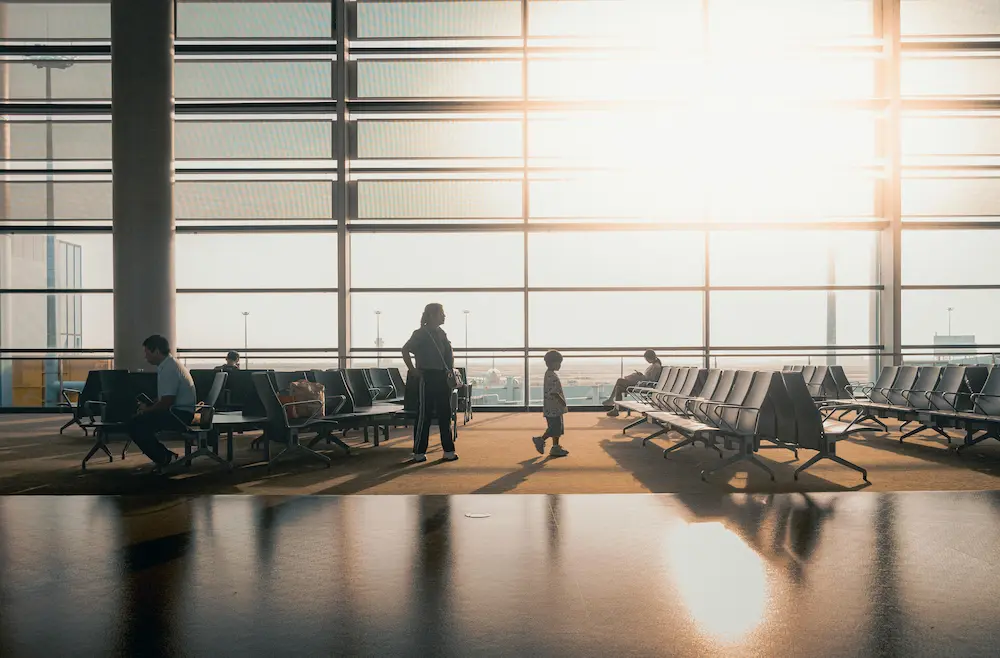
Planning a long-haul flight to Asia with kids and wondering how you’ll get through 12… 14… maybe even 16 hours on a plane?
If you’re imagining a restless toddler, broken sleep, and feeling quietly judged by fellow passengers, you’re not overthinking this.
Every parent feels that “pre-flight panic.” As a mum of two who has navigated 15+ Asian countries (from the unique logistics of traveling to China with kids to figuring out the best Japan family travel tips), I’ve lived the chaos so you don’t have to.
Now, I’ll be honest—many of our flights from Singapore have been shorter (around 4–7 hours), which is much easier.
Here is the truth: 14 hours from London or NYC is a different beast, especially with a toddler who doesn’t sit still, skips naps, and wants to explore everything. It requires more than just snacks; it requires a tactical survival plan.
This guide is for you if:
- You’re nervous about the “mid-Pacific meltdown.”
- You want practical, realistic tips (not just “pack snacks and toys”)
- You’re planning your first big trip to Asia as a family
Long-haul flights with kids aren’t perfect. So, to tackle this, you need a strategy that works for your kids.
You need to be prepared. And that’s exactly what this guide will help you with—step by step.
If you’re still in the early stages and wondering if Asia is actually safe for your family, start there first.
Let’s get you ready for flying to Asia with kids.
What Long-Haul Flights with Kids Are Actually Like
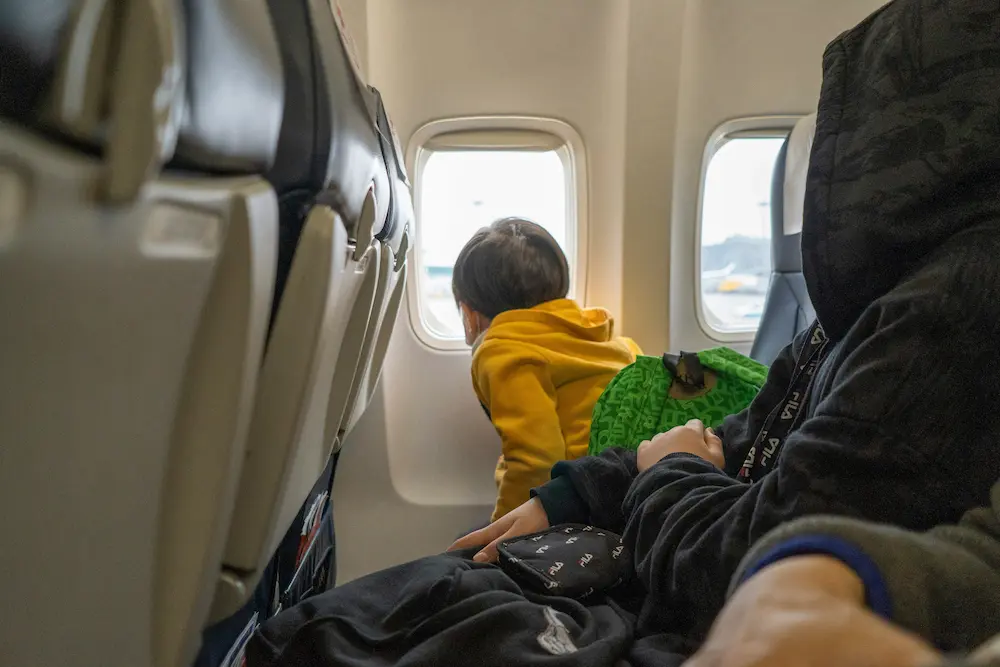
Before we get into tips and strategies, let’s talk about what a long-haul flight with kids really feels like.
Because most guides either make it sound easy… or completely overwhelming. The truth sits somewhere in between, but knowing how to survive a 14-hour flight with a toddler starts with understanding the rhythm of the journey.
⏱️ The First 2–3 Hours Are the Hardest
This is the part no one prepares you for. You’ve just boarded, and while you might be dealing with some flight anxiety with toddlers—wondering if they’ll sit still—they are likely overstimulated. This is when:
- Snacks come out early.
- Entertainment loses its novelty faster than expected.
- You might already be thinking, “How are we going to do 10 more hours?”
👉 This is a completely normal part of the long-haul experience. Once the initial excitement settles, things usually get easier.
💤 Sleep Rarely Goes as Planned
Even if your child is a great sleeper at home, sleeping on long flights with kids is a different environment. You might worry about airplane etiquette for families if your child is restless, but remember: the seat isn’t their bed, and the cabin sounds are unfamiliar.
👉 Instead of aiming for “perfect sleep,” aim for enough rest to get through the flight. That mindset shift makes a big difference.
🎒 Boredom Comes in Waves
Kids don’t stay entertained the way we expect them to.
Something that works for 20 minutes… might not work again for the next 2 hours.
You’ll likely go through phases like:
- Curious and excited
- Settled and engaged
- Restless and fidgety
- Calm again
👉 This is why flexibility matters more than having the “perfect” set of toys or activities.
👀 Yes, You Might Feel Judged (But Honestly… No One Cares)
This is one of the biggest hidden parenting travel stress points. You might feel like you need to enforce strict toddler airplane etiquette to avoid disturbing others. But here’s what actually happens:
- People put on noise-canceling headphones.
- Cabin lights dim.
- Everyone focuses on their own journey.
👉 You’re not being judged as much as it feels in your head. Focus on being your child’s safe space, not the stranger in 14B.
❤️ The Part Most People Don’t Say Enough
In between all of this, there are also quiet, surprisingly sweet moments.
- Watching your child look out of the window in awe
- Snuggling together when they finally fall asleep
- Sharing snacks, stories, or just sitting still for a while
It’s not perfect.
But it’s not as scary as it feels before takeoff, either.
✈️ So What Should You Expect?
When flying to Asia with kids, the sheer duration adds a layer of complexity. You aren’t just surviving a flight; you are prepping for the jet lag kids face in Asia once you land.
On long-haul carriers like Singapore Airlines or Cathay Pacific, the cabin crew are often incredibly family-oriented and can be your biggest allies when things get tough.
How to Choose the Right Flight When Traveling to Asia with Kids
Before you even think about snacks, your flight choice itself is the foundation of your long-haul flight planning with kids.
A well-timed departure can be the difference between a restful journey and a 14-hour meltdown.
🌙 Day Flight vs. Night Flight: What’s the Best Flight Time with a Toddler?
This is one of the most common questions parents ask:
“Should we book a night flight so they can sleep?”
While most people default to night flights, the “best” choice depends on your child’s temperament.
- Night Flights (The “Sleep Bet”): Great for kids who can sleep anywhere. The cabin lights dim, aligning with their natural rhythm, and you also get some rest (if you’re lucky). However, if they don’t sleep, it can feel like a very long night.
- Day Flights (The “Activity Play”): Highly underrated. There is zero pressure to “make them sleep.” You can focus on keeping a toddler busy on a plane with snacks and play, arriving at your destination ready for a full night’s sleep.
👉 Simple rule:
If your child naps easily anywhere, → try night flights
If your child struggles with sleep, day flights are often less stressful
🔁 Direct Flights vs. Layovers: What’s Less Exhausting?
When flying to Asia from the US or UK, the “Direct vs. Layover” debate is real. While a direct flight is faster, a 2–4-hour layover at a kid-friendly hub like Singapore Changi or Seoul Incheon lets kids burn off energy. A well-timed break can actually make a 16-hour journey feel shorter.
💺 The Strategic Seating Guide: Bulkhead vs. The “Empty Middle.”
Your seat strategy is your biggest survival tool on a long-haul flight with kids.
- The Window + Aisle Trick: In a 3-seat row, book the window and aisle. If the flight isn’t full, that middle seat often stays empty, giving your family a feel of “business class” for free.
- The Bulkhead Advantage: Essential if you have an infant and need a bassinet. Pro-tip for 2026: Always check the airline’s weight and height limits for bassinets before booking, as these vary wildly between carriers like British Airways and Singapore Airlines.
- The “Aft” Strategy: Choosing seats at the very back of the plane means you’re closer to the bathrooms and the galley—perfect for quick snack requests or “aisle walks” to calm a restless child.
✈️ What About Airlines?
Not all airlines handle families the same way.
Some are incredibly supportive with:
- bassinets
- kid-friendly meals
- helpful cabin crew
Others… not so much.
Flights are usually the biggest expense of an Asian family vacation. Before booking, check our Asia Family Trip Cost Guide to understand how airfare affects your overall travel budget.
There’s no such thing as a “perfect” flight with kids.
But choosing:
- the right timing
- the right route
- and the right seats
…can make your journey feel significantly easier.
And when you start your trip feeling calmer and more prepared, everything after that becomes smoother, too.
🧳 What to Pack for a Long-Haul Flight with Kids (Minimal but Smart)
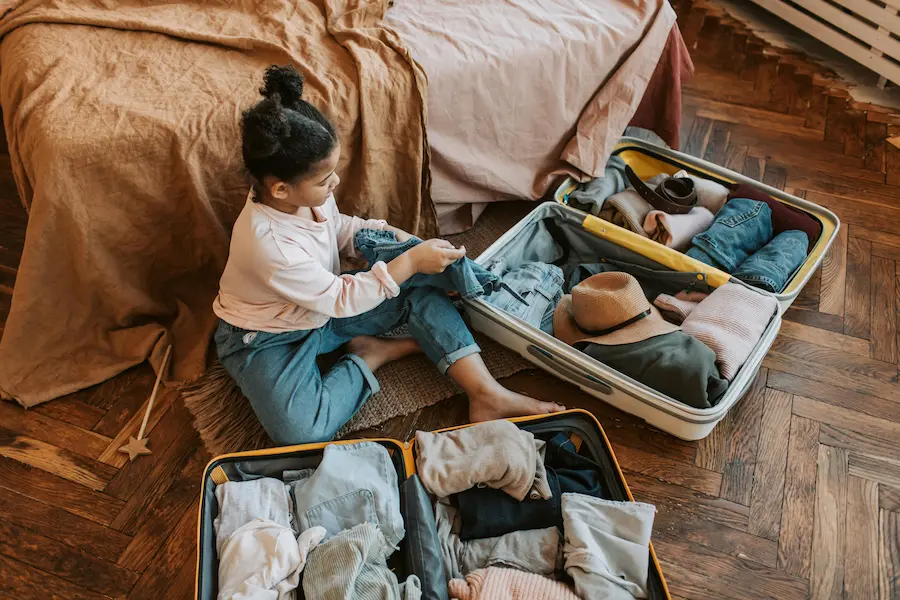
When we think about what to pack for a long-haul flight with kids, most probably we make it to bring half the playroom. But after taking almost 20+ flights with kids in Asia, we know better: more stuff = more stress. > To stay organized in a cramped cabin, think of your carry-on in three simple “Survival Tiers.”
🎒 Tier 1: The Sanity Essentials (High-Impact Only)
These are the best travel toys for toddlers—the ones that actually buy you 30+ minutes of peace.
- The “Screen & Audio” Duo: A tablet with offline content is a given. But the breakout star of 2026 is the Yoto Player (Mini). It provides screen-free audio that keeps kids engaged during those “quiet hours” when the cabin lights dim.
- Volume-Limited Headphones: Ensure you have comfortable, noise-canceling headphones for kids. Pro tip: Look for ones with a “share plug” so two kids can watch the same show.
- The “Surprise Toy” Rule: Bring one new, lightweight item. Magnetic tiles or reusable puffy sticker pads are the gold standard—they don’t make noise and are easy to clean up.
- Familiar Comfort Snacks: Don’t rely on the “Kids Meal.” Pack high-protein, low-sugar snacks (like beef sticks or dried mango) to avoid the dreaded sugar crash at 30,000 feet.
🧼 Tier 2: Mess Management (The “Reset” Kit)
This is your backup plan for the inevitable spill or “mid-flight accident.”
- The “Change of Clothes” Truth: Pack a full change for the kids and a spare t-shirt and bottoms for you. If you get vomited on over the Pacific, you’ll thank me for it.
- Ziploc “Silos”: Pack each kid’s outfit in a large Ziploc bag. It keeps them clean and gives you a waterproof bag for the “messy” clothes later.
- Wet Wipes & Sanitizer: Now we’ve moved beyond tiny packs. Bring a full-sized pack of biodegradable wipes for trays, faces, and sticky armrests.
🔌 Tier 3: The 2026 Tech Upgrade (Zero-Stress Charging)
- The 65W GaN Multi-Charger: Stop carrying four different “bricks.” One compact GaN charger can fast-charge your laptop, iPad, and phone simultaneously using a single outlet.
- AirTag Your Gear: Put an AirTag in your child’s backpack and your stroller bag. Knowing your stroller actually made it onto the plane to Tokyo provides immense peace of mind.
Not sure what belongs in your checked luggage? Our Asia Packing List for Families covers everything from travel documents to baby essentials and destination-specific packing advice.
What NOT to Pack (This Is Where Most Parents Overdo It)
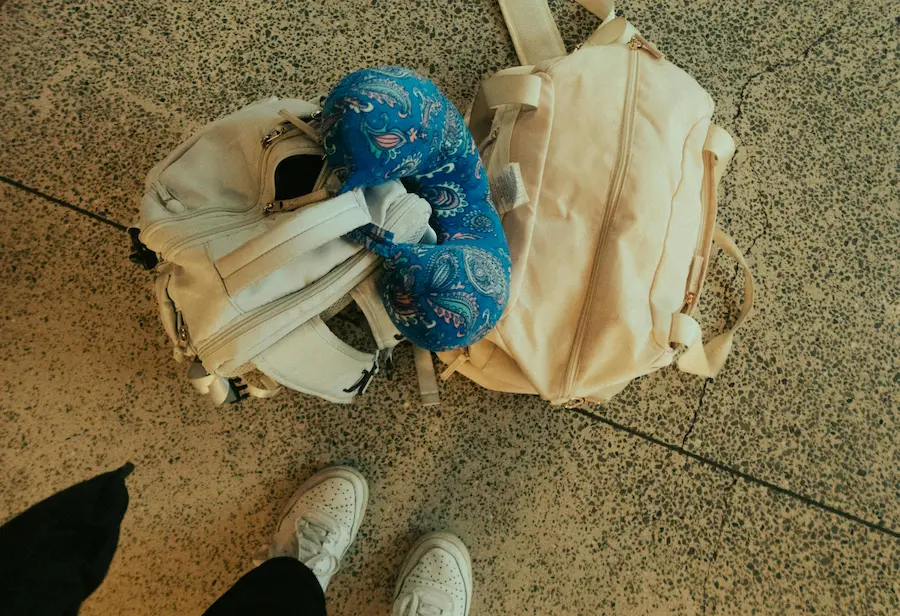
This is where most packing lists go wrong.
They tell you to bring more.
But on a long-haul flight with kids, less—but smarter—always works better.
❌ The “Tiny Toy” Trap
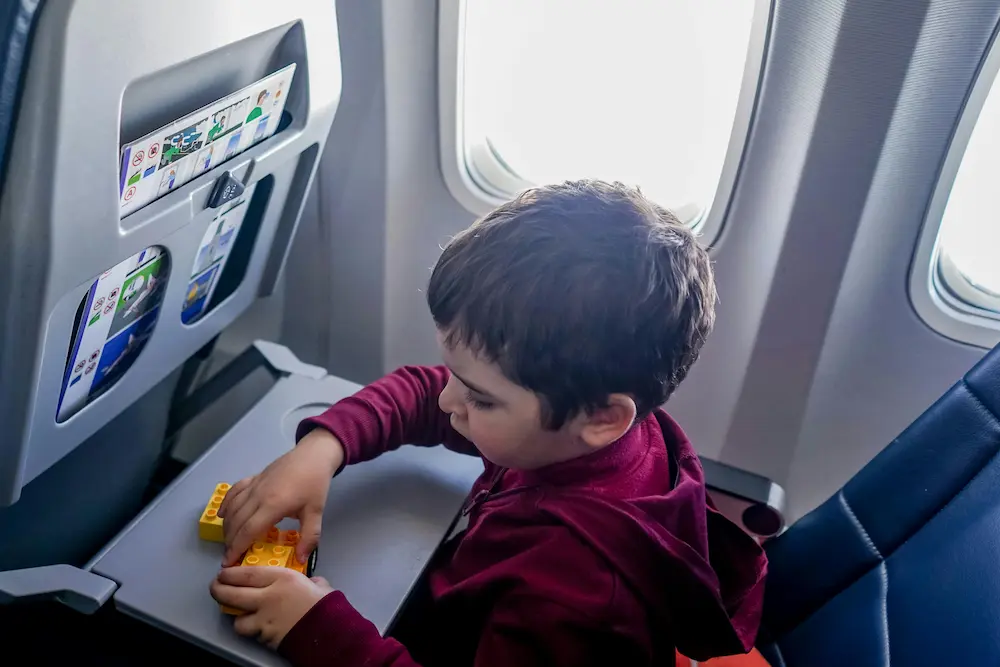
Avoid anything with lots of small pieces—like Lego sets, beads, or mini figurines.
They seem like a great idea… until:
- Pieces roll under seats
- You’re trying to find them in a tight space
- Your child loses interest after a few minutes
👉 If it’s small enough to disappear under the seat, it’s not worth the stress.
❌ The “New Toy” Myth
The idea of a “surprise new toy” works—but only if it’s simple.
If it:
- Needs setup
- Has tricky parts
- Requires an app or instructions
…it can quickly turn into frustration mid-flight.
👉 Always test new items at home first.
Keep surprises simple and easy to use.
❌ Bulky “Just in Case” Items
Large travel pillows, extra gadgets, or things you might use…
They take up space—and rarely get used.
👉 If it doesn’t serve a clear purpose on the flight, skip it.
❌ Trying to Recreate Your Full Routine
You won’t be able to recreate your full bedtime routine on a plane—and that’s okay.
Stick to:
- Pajamas
- One comfort item
- A familiar sleep cue
👉 Keep it simple and flexible.
❌ Untested Tech
This one catches a lot of parents off guard.
- Apps not downloaded
- Devices not charged
- Headphones not working
👉 Set everything up the day before your flight—not at the gate.
⚠️ A Small but Important Warning (From our Experience)
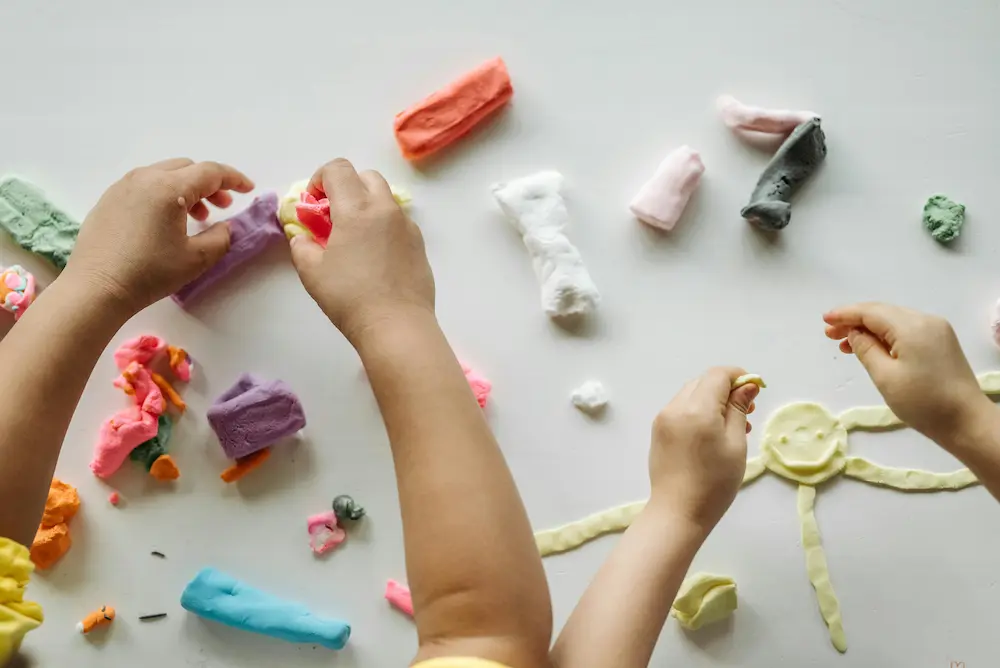
Avoid messy play items like Play-Doh, slime, or kinetic sand.
They might seem like a good way to keep kids busy, but on a plane:
- They stick to tray tables and seats
- Fall into hard-to-clean spaces
- Pick up dirt quickly once dropped
Some airport security checks may also take a closer look at slime since it behaves like a gel.
👉 It’s simply not worth the clean-up or stress mid-flight.
If it’s messy at home, it’s much harder to manage on a plane.
And if it doesn’t solve a real problem during the flight—
You probably don’t need to pack it.
🏃 Airport Strategy: Burn Energy Before Boarding
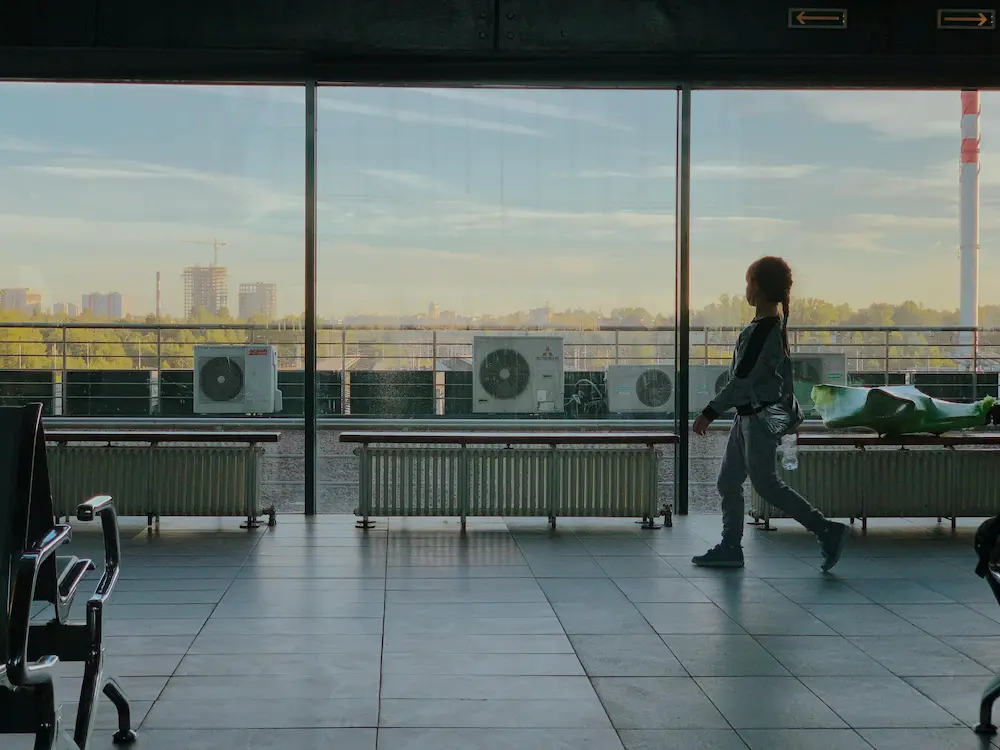
The airport isn’t just a place to wait before your flight.
With kids—especially toddlers—it’s your best chance to make the first few hours of your flight easier.
Think of it as your buffer before a long journey.
⏰ Arrive Early… But With a Plan
Yes, you need extra time when flying with kids.
But how you use that time matters more than how early you arrive.
👉 The goal isn’t to sit at the gate—it’s to move, reset, and prepare.
What works best:
- Clear security without rushing
- Have around 60 minutes before boarding
- Use that time intentionally
Airports like Heathrow Terminal 5 or JFK Terminal 4 are increasingly family-friendly, with smoother security and more space—but even smaller airports can work just as well if you use the time right.
🏃 Let Them Move (This Is More Important Than Any Toy)
Before a long-haul flight, your biggest goal is simple:
👉 Let your child use up their energy on the ground—not in the air
If your airport has a play area, use it. If not, keep it simple:
- Walk the terminal together
- Watch planes from the window
- Explore open spaces near your gate
From our experience, this makes a noticeable difference.
A child who has been sitting still before boarding
= a child who struggles to sit once the flight begins
🌏 A Quick Note on Family-Friendly Airports
Some airports go above and beyond for families. As I mentioned above, the Incheon International Airport and Changi Airport are well known for:
- Indoor play zones
- Open spaces
- Family-friendly facilities
You can plan a perfect layover there. But even if your departure airport is simpler, your strategy still works.
🍽️ The Final Reset Before Boarding
Don’t wait until you’re in your seat to handle the basics. Take 10–15 minutes before boarding to:
- Offer a light snack
- Do a diaper change or bathroom visit
- Refill water bottles
- Organize your essentials
👉 This small reset makes your first hour on the plane much smoother.
✈️ Boarding Strategy: Don’t Rush It
Most airlines offer early boarding for families. But this doesn’t always mean you should use it.
Early boarding works if:
- You need extra time to settle in
- You’re traveling with a baby or lots of gear
Waiting works better if:
- Your child is active
- Sitting longer will make them restless
👉 A simple approach that works well for many families:
If you’re traveling with another adult:
- One parent boards early to set up
- The other stays back with the child until closer to the final boarding
This helps:
- Reduce time spent sitting on the plane
- Start the flight with a calmer child
🧭 A Small Mindset Shift That Changes Everything
Instead of trying to keep your child calm at the airport…
Focus on:
👉 letting them move, explore, and release energy
Because once you’re on the plane, movement becomes limited.
And that’s when all that unused energy shows up.
Airports can feel overwhelming with kids. But when you use this time intentionally, it becomes one of your biggest advantages.
A well-used hour at the airport can make the start of your flight feel much easier.
✈️ How to Survive a 10–16 Hour Flight with Kids
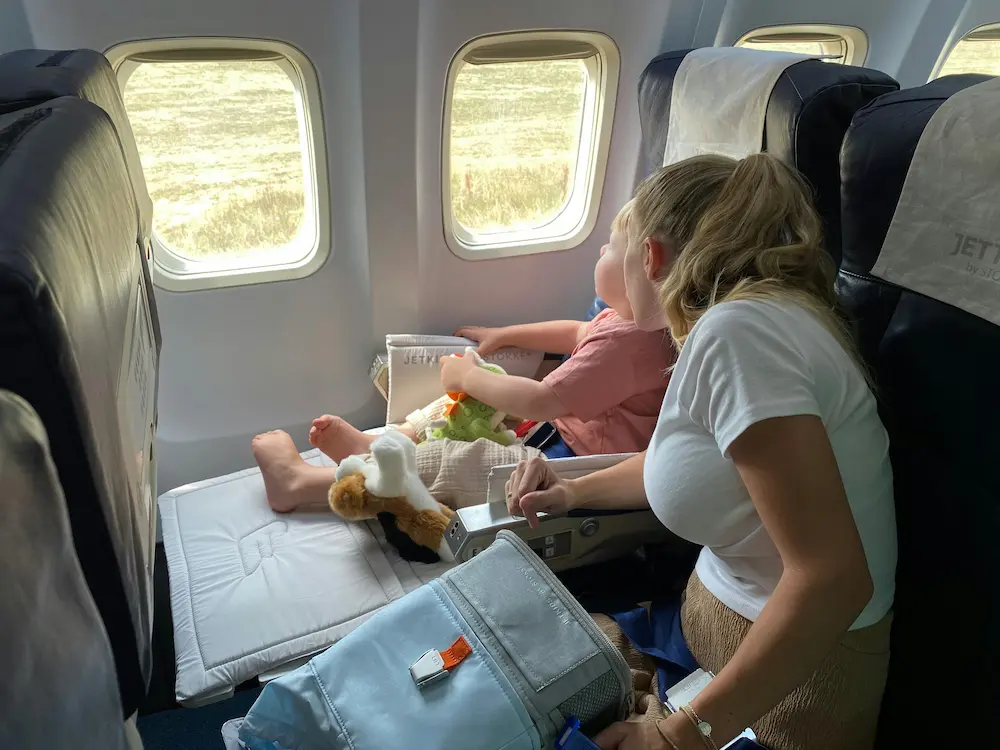
Once the cabin door shuts, you are officially in “survival mode.” The key to surviving long-haul travel with kids isn’t perfection—it’s phases. If you can manage the flight in 2-hour blocks, a 14-hour journey feels much less like a marathon.
Sleep, snacks, entertainment, movement… and a few unpredictable moments in between.
You don’t need everything to go perfectly.
💤 Sleep Strategy: Rest > Perfection
Sleep is usually the biggest concern—and the most unpredictable part. Some kids sleep well.
Some don’t.
In 2026, aircraft like the Airbus A350 and Boeing 787 Dreamliner have revolutionized cabin comfort with higher humidity and lower “cabin altitude” (pressurized to 6,000ft instead of 8,000ft), which helps kids (and you) feel less “dried out” and restless. But routine still matters more than anything else.
- Recreate the “Home Signal”: Even if they don’t sleep for 8 hours, use “sleep triggers.” Change them into pajamas, use a familiar-smelling blanket, and let the natural cabin dimming do the work.
- 2026 Sleep Hack: If your child is between 2 and 4 years old, consider a Flypal inflatable footrest or similar. It turns their economy seat into a flat bed. Note: Check if your airline (like Singapore or Emirates) allows these, as rules vary!
- Mindset Shift: If they are lying still and quiet, count that as a win. Rest is a spectrum.
🍿 Food & Snacks: The “Familiarity” Rule
Airplane food has improved, but kids are still picky—especially when they are tired.
- Pre-Order is Vital: Always pre-book the “Child Meal” (CHML) at least 48 hours before flying. On top-tier 2026 carriers like Singapore Airlines or Qatar Airways, these meals are surprisingly good (think pasta, fruit, and treats).
- The “Snack Tackle Box”: Pack a small container with their favorite low-sugar snacks. Avoid the “sugar high” at all costs—you don’t want a toddler with a sugar rush in a confined space.
Keep hydration in mind, too:
Cabin air is dry, so regular sips of water can help avoid crankiness that often comes from dehydration.
📱 Entertainment: Survival is the Only Rule
For us, screen time is survival, not failure. * The Tablet Strategy: Download everything. Do not rely on “Free Starlink WiFi” (though carriers like British Airways and JetBlue now offer it). If the connection drops, so does your sanity.
- Screen-Free Sensation: The Yoto Mini is the 2026 “IT” travel gadget. It allows kids to listen to audiobooks and music without a screen, which is perfect for “winding down” phases.
- The Rotation Method: Don’t give them everything at once. Introduce the “Surprise Toy” at Hour 6, the iPad at Hour 8, and the sticker book when they get fidgety.
🚶 Movement: The “Aisle Walk” Reset
Kids aren’t built for 12 hours of sitting.
- The 5 minutes: When the seatbelt sign is off, take a walk to the galley.
- The “Secret” Galley Snack: On airlines like Emirates or Cathay Pacific, the back galley often has a “snack bar” for long-haul passengers. A quick walk to “pick out a snack” can reset a grumpy toddler’s mood instantly.
😭 When Things Go Wrong (The “Meltdown” Management)
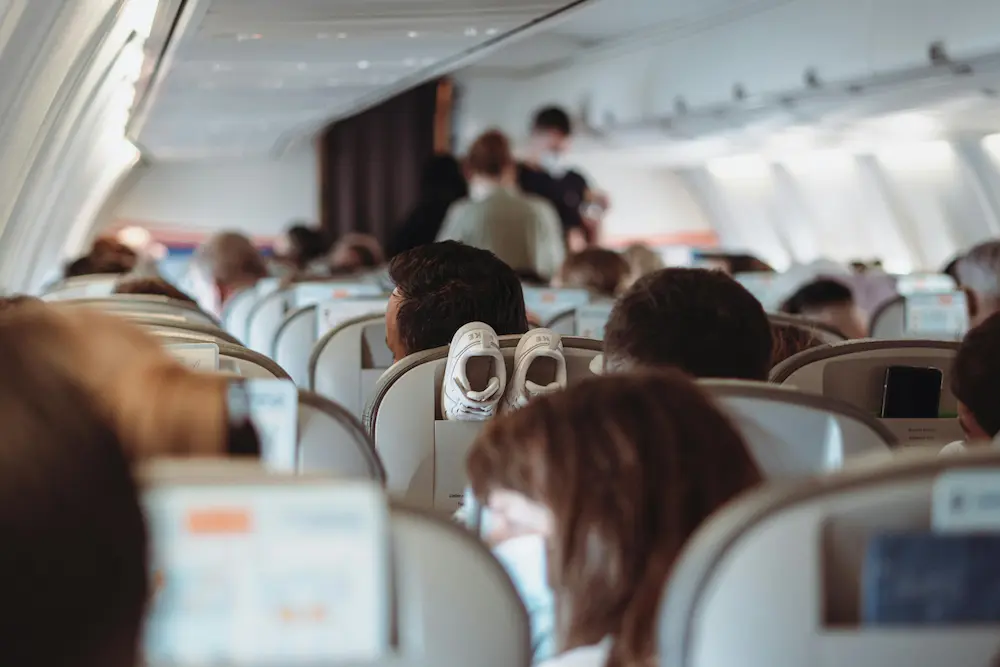
At some point, things might get loud. And that’s okay!
- Stay in Your Bubble: You will feel like 300 people are judging you. They aren’t. Most are wearing noise-canceling headphones or have been in your shoes.
- The Reset: If a meltdown starts, change the sensory input. Move to the galley, offer a cold drink, or try a different audio track on the Yoto.
- The “Human” Element: In 2026, cabin crews on Asian carriers are famously helpful. If you’re struggling, ask them for a warm towel or an extra pillow. They are your best allies.
The “Why” Behind the 14 Hours
In between the snacks and the screens, there are the “magic” moments: watching them see the sunrise over the Himalayas or seeing them snuggled up asleep on your lap.
This flight is just the bridge to your adventure. Once you land in Tokyo, Beijing, or Hanoi, these 14 hours will feel like a very small price to pay for the memories you’re about to make.
And once you shift your expectations from perfect to manageable flight with kids—
Everything feels a lot more in control.
🌏 What Makes Flights to Asia Harder (and How to Handle It)
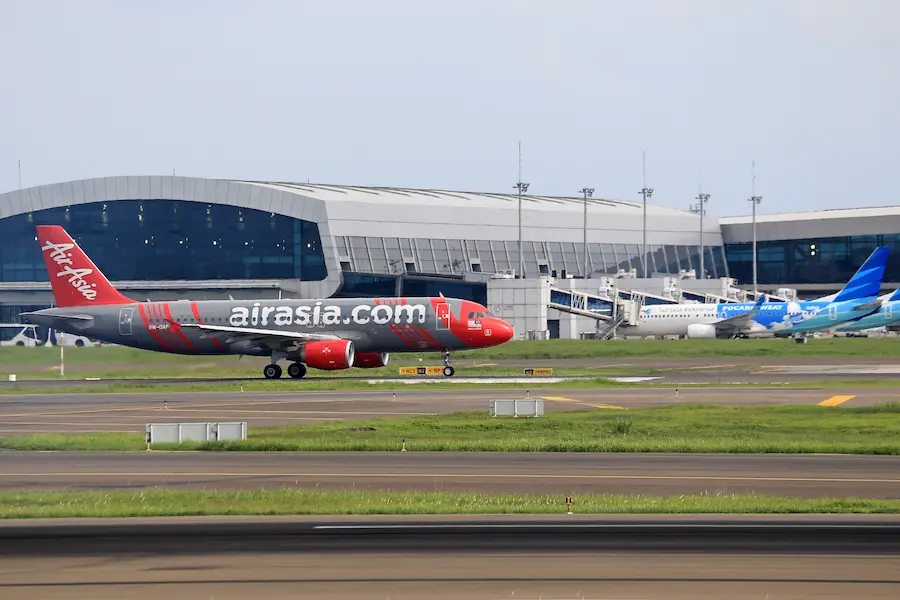
Here are the four things that no one talks about—and exactly how we handle them.
1. The “East-Bound” Jet Lag Reality
Most parents don’t realize that flying East (from the US/UK to Asia) is biologically harder than flying West. You are “losing” time, and your child’s internal clock will be screaming for a 3 AM play session.
- The Survival Hack: Don’t fight it on Night One. If they are wide awake at 4 AM in Tokyo, let them watch a show or eat a snack.
- Our Strategy: Get them into natural sunlight by 8 AM. Sunlight is the fastest way to reset their circadian rhythm. Plan a simple morning walk to a local park to let the sun do the work.
2. The Asia-Specific Food Shift
Once you land, the “Kid Menu” changes. Nuggets and pasta are replaced by rice, noodles, and unfamiliar textures.
- The Reality Check: Arrival fatigue makes kids extra picky. This is not the day to try “authentic spicy Sichuan” food.
- The Strategy: Start with “Safe” Asian foods. In Japan, it’s Inari (sweet tofu rice) or plain Udon. In Vietnam, it’s Pho Ga (chicken noodle soup). In China, steamed buns (Mantou) are a lifesaver.
- Pro Tip: Keep those “Safety Snacks” from home in your bag for the first 48 hours. They are a bridge to the new culture.
3. Navigating the 2026 “Mega-Hubs.”
If you have a layover, you aren’t just waiting; you’re in a family wonderland.
- The “Golden Hubs”: In 2026, Seoul Incheon (ICN) was ranked the #1 Family-Friendly Airport, even beating out Singapore Changi. If you’re transiting here, look for the “K-Culture” play zones—they are free and designed to exhaust toddlers before the final leg of the flight.
4. Arrival Fatigue vs. The “Asia Buzz.”
Landing in a city like Hanoi or Hong Kong is a sensory explosion. The sights, smells, and humidity can be overwhelming for a tired 5-year-old.
- Have your transport pre-booked. Apps like Grab (for Southeast Asia) or Didi (for China) make this easy. Do not try to figure out a foreign subway system with four suitcases and a jet-lagged toddler.
- The Goal: Get to the hotel, have a bath, and do an early dinner. If you survive the first 24 hours without a major meltdown, the rest of the trip is a breeze.
If you’ve already booked your tickets, you’re in the right place. But if you’re still narrowing down your list, check out our top 11 family-friendly destinations in Asia for 2026 to see where we recommend landing first.
🌙 The Jet Lag Loop: Handling the Eastbound Shift
If the flight is the hurdle, jet lag is what follows.
And when you’re flying from the US or UK to Asia, it’s not just about being tired—it’s a full shift in your child’s body clock.
🌍 Why the “Eastbound” Shift Feels Harder
When you fly west to east, your body is trying to adjust to an earlier time.
👉 In simple terms:
Your child’s body might think it’s lunchtime… when it’s actually 3 or 4 AM.
👉 This is why the first couple of days can feel a bit off:
- Early wake-ups
- Low energy during the day
- Slightly unpredictable sleep
🌅 The Mindset That Makes It Easier
Instead of trying to force your normal routine immediately:
👉 Think of jet lag as a gradual reset—not something to fix overnight.
🕒 A Simple “First 48 Hours” Flow That Works
Let’s keep this realistic and easy to follow.
🗓️ Day 1: Gentle Reset
👉 Your goal is simple: stay awake until early evening
- Step outside for fresh air and light
- Keep activities light and flexible
- Aim for an early dinner and early sleep (around 7–8 PM)
👉 Don’t worry if sleep isn’t perfect.
Even a shorter night helps start the reset.
🌅 Day 2: Early Wake-Up (Completely Normal)
Most kids will wake up early—sometimes very early.
Instead of stressing:
👉 Keep things calm and low-pressure
- Offer a quiet activity
- Give a light snack
- Avoid turning it into “full daytime” too soon
Once there’s daylight:
👉 Step outside as soon as you can
A simple walk to nearby convenience stores like 7-Eleven or Lawson can work surprisingly well:
- Easy breakfast options
- A small, low-effort outing
- Helps shift the body clock naturally
☀️ The Most Powerful Reset Tool: Daylight
If you do one thing right—make it this.
👉 Morning sunlight helps reset your child’s internal clock faster than anything else.
Even 20–30 minutes outdoors can make a noticeable difference.
💤 Sleep Tips That Actually Help
- Allow short naps (20–45 minutes) if needed
- Avoid long, late naps
- Keep bedtime early for the first few days
👉 Skipping naps completely often backfires—overtired kids struggle more at night.
🧭 What to Focus On while Jet lag in Asia (And What to Ignore)
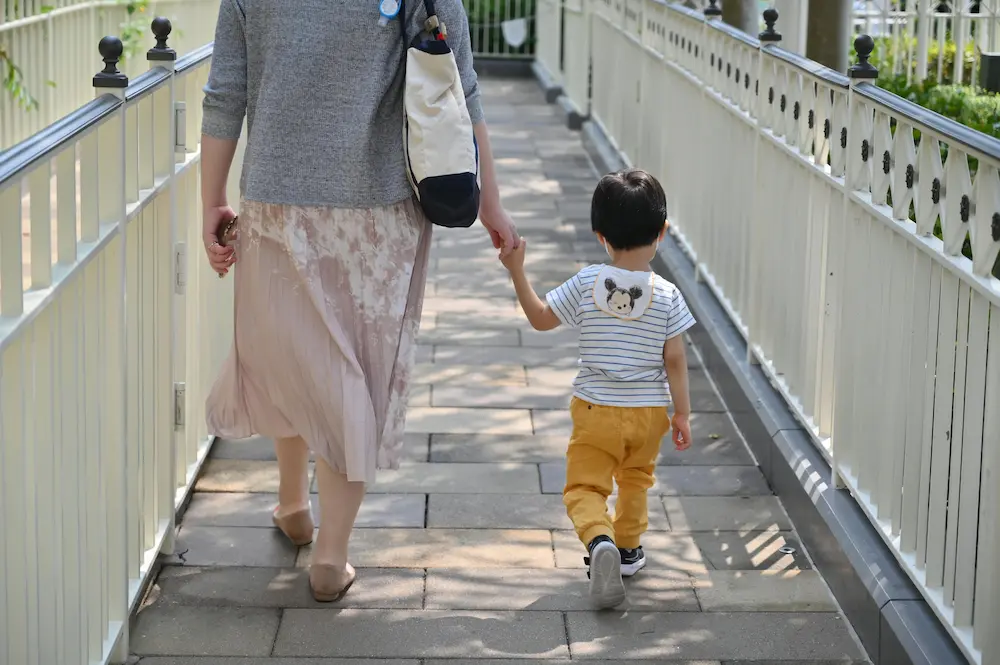
Focus on:
- Light exposure
- Gentle routines
- Keeping things flexible
Ignore:
- Perfect schedules
- Exact nap timing
- Trying to “fix everything” on Day 1
A Small Reframe That Helps Mums
Jet lag feels messy in the moment, but it’s temporary.
Within a couple of days, most kids settle into a new rhythm.
And those early morning walks in a new country?
They often become some of the most memorable parts of your trip.
👉 If you are looking for a detailed step-by-step plan, we have shared our full routine here:
(Complete Jet Lag Guide for Families Traveling to Asia )
✈️ Best Airlines for Long-Haul Flights with Kids
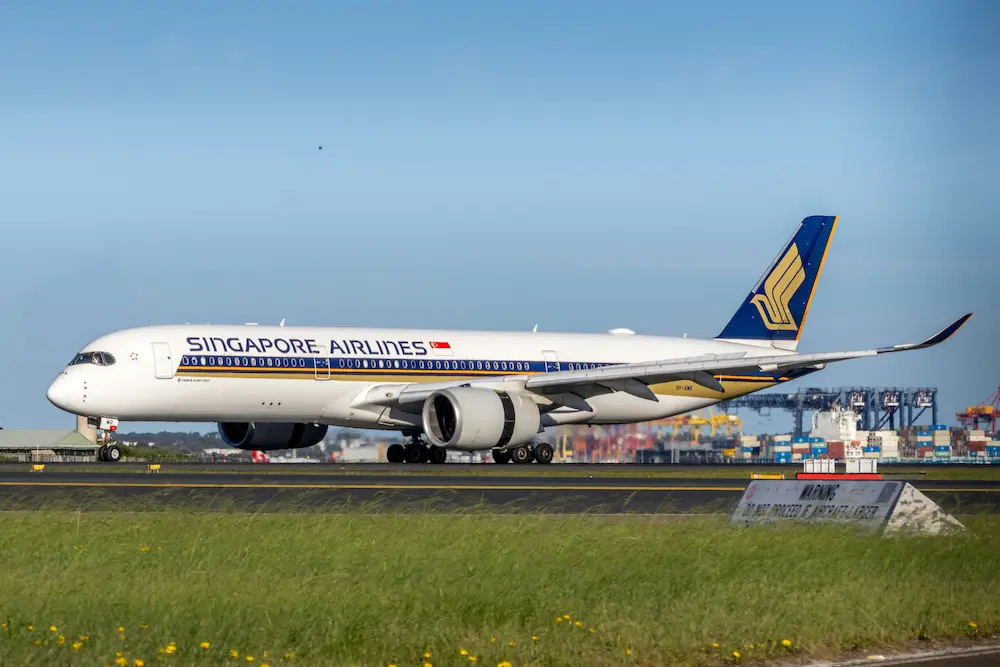
When you’re flying 10–16 hours with kids, the airline you choose can make a noticeable difference.c
It’s not about finding the “perfect” airline—
But choosing one that makes the journey feel a little easier for your family.
🧭 What Actually Makes an Airline Family-Friendly?
From our experience, it’s not just about toys or kids’ meals.
It comes down to a few things that really matter mid-flight:
- Space: How comfortable the seating feels for long hours
- Service: How supportive and patient the cabin crew are
- Entertainment: Options that actually keep kids engaged
- Small touches: Flexibility, early meals, and thoughtful service
🌟 Airlines Many Families Find Comfort for Long-Haul Travel
✈️ Singapore Airlines
- Consistently smooth long-haul experience
- Calm, attentive cabin crew
- Good quality child meals and service
👉 A reliable choice for families flying to Asia
✈️ Emirates
- Strong in-flight entertainment system
- Kid-focused amenity kits
- Spacious cabins on many routes
👉 Especially helpful for keeping kids occupied
✈️ STARLUX Airlines
- Newer airline with modern cabins
- Fresh, comfortable interiors
- Growing reputation among long-haul travelers
✈️ Cathay Pacific
- Comfortable long-haul seating
- Reliable service across Asia routes
- Smooth connections through Hong Kong
👉 The key takeaway:
You don’t need the “best” airline—
You need one that feels manageable for your specific route and schedule.
👶 Bassinet & Bulkhead Seats (What to Know)
If you’re traveling with a baby, bassinet seats can help—but they come with limits.
- Usually located in bulkhead rows
- Limited availability → request early
Many airlines have strictly enforced weight limits (usually 10–12kg). If your 18-month-old is a “big kid,” they won’t fit. Check the airline’s specific bassinet dimensions before you pay extra for that seat!
🍽️ The “Pre-Order” Rule (24-Hour Warning)
Don’t wait until the cart is in the aisle.
- Request a CHML (Child Meal): These are served before the adult meals. This is a game-changer because you can feed the kids, get them settled, and then eat your own meal in (relative) peace.
🌏 Layovers Can Work in Your Favor

If your journey includes a stop, the airport matters more than you think.
Airports like Incheon International Airport and Changi Airport have a good reputation for being the most family-friendly in Asia. If your airline (like Korean Air or Singapore Air) stops here, your “exhaustion break” is actually a luxury experience for the kids. They are well known for being:
- spacious
- clean
- and family-friendly
Many offer:
- indoor play areas
- rest zones
- open space for movement
👉 A well-planned layover can:
- break up a long journey
- help kids reset
- make the next flight easier
🧭 A Simple Way to Choose the Best Airline
Instead of focusing on rankings, choose based on:
- Flight timing
- Layover comfort
- Overall convenience
Then use the strategies in this guide to make it work for your family.
❤️ What Worked for Us: From One Kid to Two
We’ve navigated multiple long-haul flights across Asia, but the biggest learning curve wasn’t the flight time—it was the jump from traveling with one child to two.
Having now taken both our kids through the high-speed trains of China and the busy streets of Japan, our perspective has shifted. If you are currently staring at your packing cubes, wondering how you’ll manage, here is the “real talk” on what actually changed for us.
The “Double-Kid” Seating Strategy
When we had one child, we could tag-team. With two, it’s a zone defense.
- Setting up two kids on a 14-hour flight is significantly more complicated. You aren’t just managing a toddler; you’re managing the sibling dynamic in a 17-inch-wide seat.
- The Conflict Phase: Expect the first 2 hours to be a struggle for “territory” (who gets the window, who has the charger).
- The Sweet Spot: Once the “nest” is built and they both settle into their own rhythm, something magical happens. They start to engage with each other. A shared snack or a movie they both like can actually buy you more peace than you had with just one child.
Lessons from Our Experience of China & Japan
Traveling through these two specifically taught us about stamina. * China requires a lot of logistical “brain power” (apps, maps, and crowds). Japan requires a lot of walking.
We realized that the flight is just the “loading screen” for the adventure. Now that our toddler is older and more engaged with their sibling, the “stress” has been replaced by a much more manageable “system.” They know the drill now, and that makes the long-haul journey feel like a family ritual rather than a chore.
❌ The Biggest “Two-Kid” Mistake We Made
Not having “Individual Sanity Kits.” We used to put everything in one big bag. When my toddler wanted a sticker, and my girl wanted a drink, we were digging through one giant mess.
- The Learning: Now we give each child their own small, accessible pouch. It empowers them to manage their own boredom and stops you from being the “flight attendant” for two different people at once.
Long-haul flights aren’t as overwhelming as they feel when you’re staring at the booking confirmation. You figure it out—minute by minute, snack by snack.
Now, as we look back on our trips to Chongqing or Tokyo, we don’t remember the 14-hour flight. We remember our kids’ faces when they saw the Great Wall or a Shinkansen for the first time.
The flight is temporary. The memories are permanent.
🙌 You Can Do This (Even If It Feels Overwhelming)
Planning a long-haul flight with kids can feel like a lot.
But once you’re on that plane, you stop overthinking and just take it one moment at a time.
👉 You don’t need a perfect plan.
👉 You just need to be prepared enough.
And when you land in places like Japan, China, or Bali…
That long flight becomes a very small part of the journey.
🧭 What to Read Next
- Planning Your Route? Start with our Tips Guide to Japan with Kids or the China Family Survival Itinerary.
- Feeling the Gear Stress? Check out our Minimalist Japan Packing Checklist.
- Don’t let the 12-hour flight scare you—we will share how we handle Jet Lag with Kids in Asia.
- Choosing Asia for the First Time: How to Pick the Right Spot.
- After surviving the flight, the next thing that makes family travel easier is packing smart. Here’s our detailed Asia packing guide for parents.
- Before booking, check our Asia Family Trip Cost Guide to understand how airfare affects your overall travel budget.
It might feel overwhelming now.
But you’ll figure it out—step by step.
And once you do, you’ll wonder why you worried so much.

FOUNDER • FAMILY TRAVEL WRITER • MUM OF TWO
About the Author
Hi, I’m Shivani, the founder of Roaming Crew.
Based in Singapore and having lived in different parts of Asia—including two years in India—I’ve explored 18+ destinations across the region, with 12+ of those journeys taken alongside my young kids.
From choosing family-friendly destinations and navigating local transport to budgeting, accommodation, and practical travel logistics, Roaming Crew is created with a parent-first mindset.